
Quick Checklist for Perfect TV Stand Height:
- Measure your eye level while seated (typically 38-42 inches)
- Divide your TV's height by 2 to find its center point
- Subtract TV's half-height from your eye level
- Shop for stands within 2 inches of your calculated height
- Choose shorter stands when between sizes
Ever wonder why movie marathons leave your neck aching? Your modern TV stand might be the problem. Most people obsess over style and storage when shopping, completely missing the one measurement that separates comfort from chronic pain: stand height. Getting it wrong by just three inches forces your neck into hours of strain. Below, you'll learn the exact formula for calculating your ideal height, which stand types work best for different screen sizes, and common mistakes that lead straight to discomfort.
Why TV Stand Height Affects Your Viewing Comfort
Your body wasn't designed to tilt your head up or down for hours. When your TV sits too high or too low, you're forcing your neck muscles to work overtime, leading to tension headaches and shoulder strain.
The ideal viewing position keeps your eyes level with the center or slightly below the center of the screen. This neutral position allows your neck to stay relaxed while you watch. For most adults sitting on a standard sofa, this means the middle of your TV screen should be approximately 42 inches from the floor.
Beyond physical comfort, proper height affects your visual experience. Screens positioned too high create glare issues and force you to view at an angle that distorts colors and contrast. A well-positioned modern TV stand ensures you're seeing your content exactly as filmmakers intended.

Types of TV Stands and Their Heights
Before calculating exact measurements, you need to know what options exist. Different stand types offer varying height ranges that affect your viewing experience.
Standard Media Consoles with LED Lighting
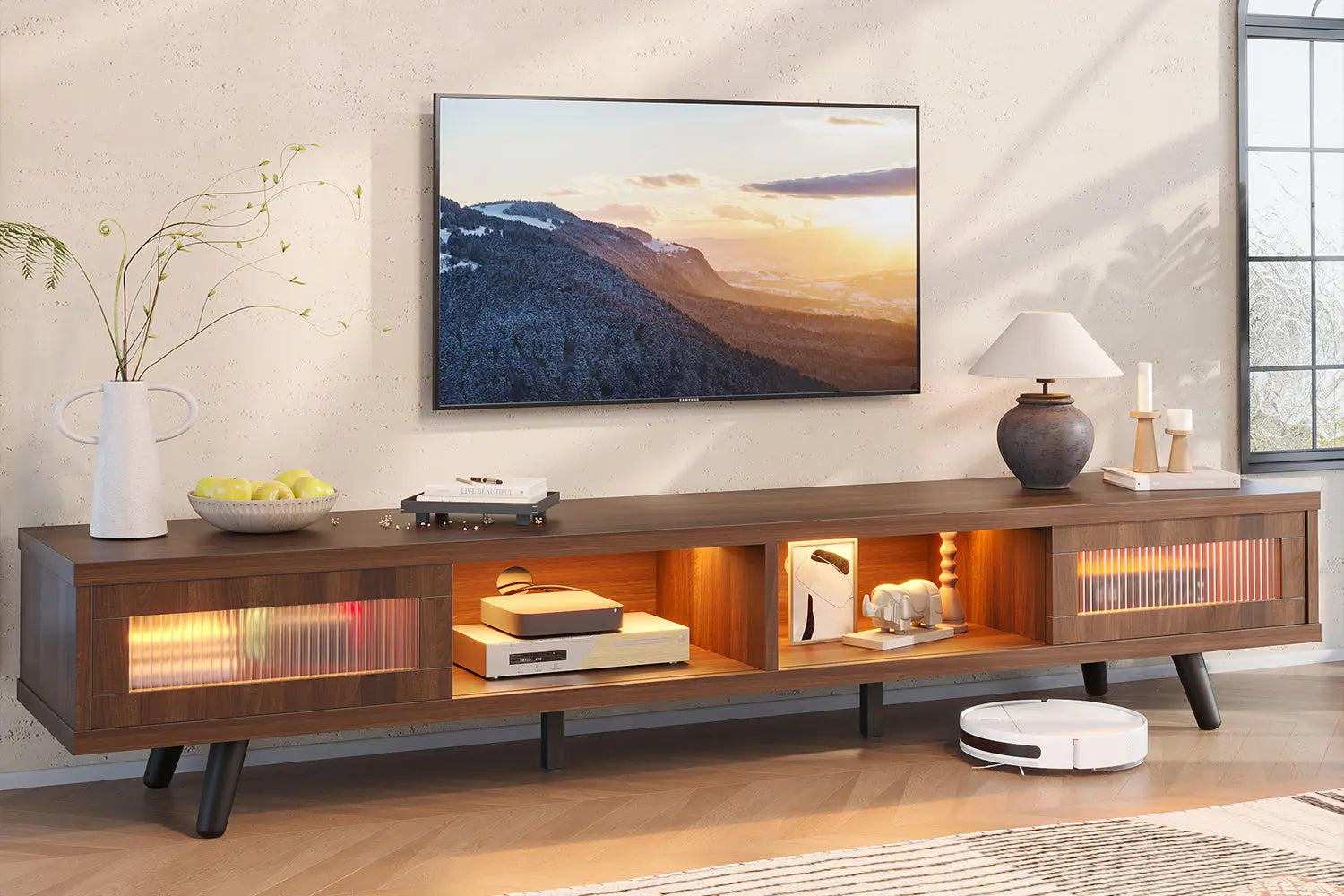
These are the most common modern TV stands, typically measuring 18 to 22 inches tall. LED TV stands feature built-in lighting with multiple color modes and work best for average-height sofas. They provide open shelving plus enclosed storage for gaming consoles and media devices.
Low-Profile Entertainment Centers
Standing 16 to 19 inches high, these sleek designs create a minimalist look perfect for contemporary spaces. The best TV stand for 65-inch TV often uses this lower profile to keep larger screens at a comfortable eye level. These work particularly well with deep sectional sofas or floor-level seating arrangements.
Tall Entertainment Centers
Rising 24 to 28 inches or higher, tall stands suit bedrooms where you're viewing from an elevated mattress position. They also work in spaces with bar-height seating or high-backed chairs. Some models include adjustable shelving that lets you customize storage height.
Electric Fireplace TV Stands
Electric Fireplace TV Stands typically measure 22 to 26 inches tall to accommodate the fireplace unit below the TV platform. The added height works well in formal living rooms but requires careful calculation to ensure the screen doesn't sit too high for comfortable viewing.
4 Key Factors to Consider When Choosing TV Stand Height
Several variables determine your perfect stand height. Ignoring any of these means you're guessing rather than calculating.
Your Seating Position
Measure from your floor to your eye level while sitting in your usual viewing spot. This number becomes the foundation for all other calculations. Different furniture creates dramatically different eye levels. A deep sectional puts you lower than a firm dining chair.
Screen Size Matters
Larger screens need different positioning than smaller ones. The best TV stand for 75-inch TV requires more careful planning because the screen itself occupies more vertical space. The bottom edge of a 75-inch screen sits much lower than a 55-inch screen when both are centered at the same point.
Viewing Distance and Angle
Sit closer to your screen? You might prefer the center point slightly lower. Farther back? A centered position works better. The relationship between distance and height affects your neck angle more than most people realize. Entertainment centers with adjustable shelving let you fine-tune positioning after installation.
Room Function and Layout
Your bedroom needs different calculations than your living room. In bedrooms, viewers typically recline, shifting the optimal screen position higher. Living rooms with upright seating require lower positioning. Consider whether you'll view from multiple seating areas, which might require compromise in stand height selection.

How to Calculate the Perfect Height for Your Modern TV Stand
Now for the practical math. This formula works regardless of your specific setup.
Step 1: Measure Your Eye Level
Sit in your primary viewing position. Have someone measure from the floor to your eyes. For most adults on standard sofas, this averages 38 to 42 inches.
Step 2: Find Your TV's Vertical Center
Measure your TV's height and divide by two. A 65-inch TV (measuring roughly 32 inches tall) has its center point 16 inches from the bottom edge.
Step 3: Calculate Stand Height
Subtract your TV's half-height from your eye level measurement. If your eyes sit at 40 inches and your TV's center is 16 inches from its bottom, you need a stand approximately 24 inches tall.
Let me show you how this works for common scenarios:
| TV Size | Screen Height | Eye Level (Seated) | Recommended Stand Height |
| 55" | 27 inches | 40 inches | 26-28 inches |
| 65" | 32 inches | 40 inches | 24-26 inches |
| 75" | 37 inches | 40 inches | 21-23 inches |
Notice how stand height decreases as screen size increases because larger screens need lower positioning to keep their centers at your eye level.
For a best TV stand for 65-inch TV in a typical living room with standard 18-inch seat height, look for stands between 22 and 26 inches tall. This range accommodates most viewing angles while maintaining comfort during extended watching sessions. When selecting a stand for 65-inch TV or larger, remember these screens look massive up close. Stand in your actual viewing spot before finalizing your choice because the perspective from across the room differs dramatically from showroom distances.
Gaming entertainment centers often measure slightly lower, around 18 to 20 inches, because gamers typically sit on lower furniture or even floor cushions during intense sessions.
Get Your TV Stand Height Right the First Time
Getting the perfect TV stand height comes down to three measurements: your seated eye level, your TV's vertical center, and simple subtraction. Use the formula above to calculate your ideal stand height before you shop. Remember: when choosing between two heights, always go shorter. A screen slightly below eye level beats neck strain every time. Measure this weekend, calculate your number, and finally enjoy comfortable viewing sessions without the post-marathon aches.
FAQs
Q1. Should I Adjust My Stand Height if I Replace My Sofa?
Yes. It will change your eye level from a seated position, since this will affect the height at which the TV should sit. The softer the cushions on your sofa, the lower they will sit, thereby lowering your eye level as well. Measure your eye level from the new seating position and compare that to your current setup to determine if a different height is needed.
Q2. Can LED Lighting on Entertainment Centers Cause Glare Problems?
LED strips positioned below or behind your TV can reduce eye strain by providing ambient backlighting that minimizes contrast between bright screens and dark rooms. However, LED lights on the front of stands at eye level may create distracting reflections on glossy TV bezels. Choose entertainment centers with rear-mounted or under-cabinet lighting for the best viewing experience.
Q3. What if My Calculated Stand Height Doesn't Match Available Products?
Most furniture retailers offer stands in standard height increments of 2 to 3 inches. If your ideal calculation falls between available options, choose the shorter stand rather than the taller one. A screen positioned slightly below eye level causes less neck strain than one positioned above. You can also add adjustable furniture risers under shorter stands to achieve your exact target height while maintaining stability.
Q4. Do Corner TV Stands Require Different Height Considerations?
Corner stands often sit at angles that change your viewing geometry compared to wall-facing setups. Since you're viewing from the side rather than straight on, you may need to position the screen slightly lower than standard calculations suggest. Test your actual viewing angle from your primary seating spot when considering corner entertainment centers, as diagonal sight lines can add strain if positioned incorrectly.
