


Creating a dedicated coffee bar in a small apartment often feels impossible when counter space is already claimed by daily appliances. A bakers rack coffee station solves this by moving your espresso machine, mugs, beans, and syrups into vertical storage that frees up precious horizontal real estate while adding style to the room.

This guide shows how to select, organize, and style a bakers rack specifically for an apartment coffee bar so your morning routine stays efficient and your kitchen remains uncluttered. You will find practical layout rules, safety considerations, and organization strategies that work in real studio and one-bedroom kitchens.
Why a Bakers Rack Works Well for Apartment Coffee Bars
Apartment kitchens frequently lack the room for a full coffee cart or island. A slim bakers rack offers narrow depth yet tall vertical space, making it ideal for tight footprints. The open shelving displays your favorite mugs and accessories while keeping everything within arm’s reach.
Many renters appreciate that a freestanding rack requires no permanent installation. When chosen in black metal with wood accents, it complements modern industrial or minimalist decor common in 2026 apartments. The design also allows easy access to power outlets behind the unit for your espresso machine and grinder.
As noted in small-space design resources, apartment coffee bars have become a popular way to carve out a personal ritual corner without major renovation. A bakers rack gives you both storage and a focal point that feels intentional rather than makeshift.
Choosing the Right Bakers Rack Size and Style for Small Spaces
Measure your available floor space first. Most successful apartment setups use a rack no wider than 24–30 inches and no deeper than 16 inches. Taller models (60–72 inches) maximize vertical storage without eating into walkways.

Look for models with at least four adjustable shelves so you can create clearance for taller appliances like an espresso machine on a lower level. Black metal frames with wood shelves offer the durable, moisture-resistant combination that handles daily coffee spills better than all-wood units.
Pay attention to weight capacity per shelf. An espresso machine plus grinder can easily exceed 25 pounds; place that load on the bottom shelf for stability. Check that the rack includes adjustable feet to level it on uneven apartment floors.
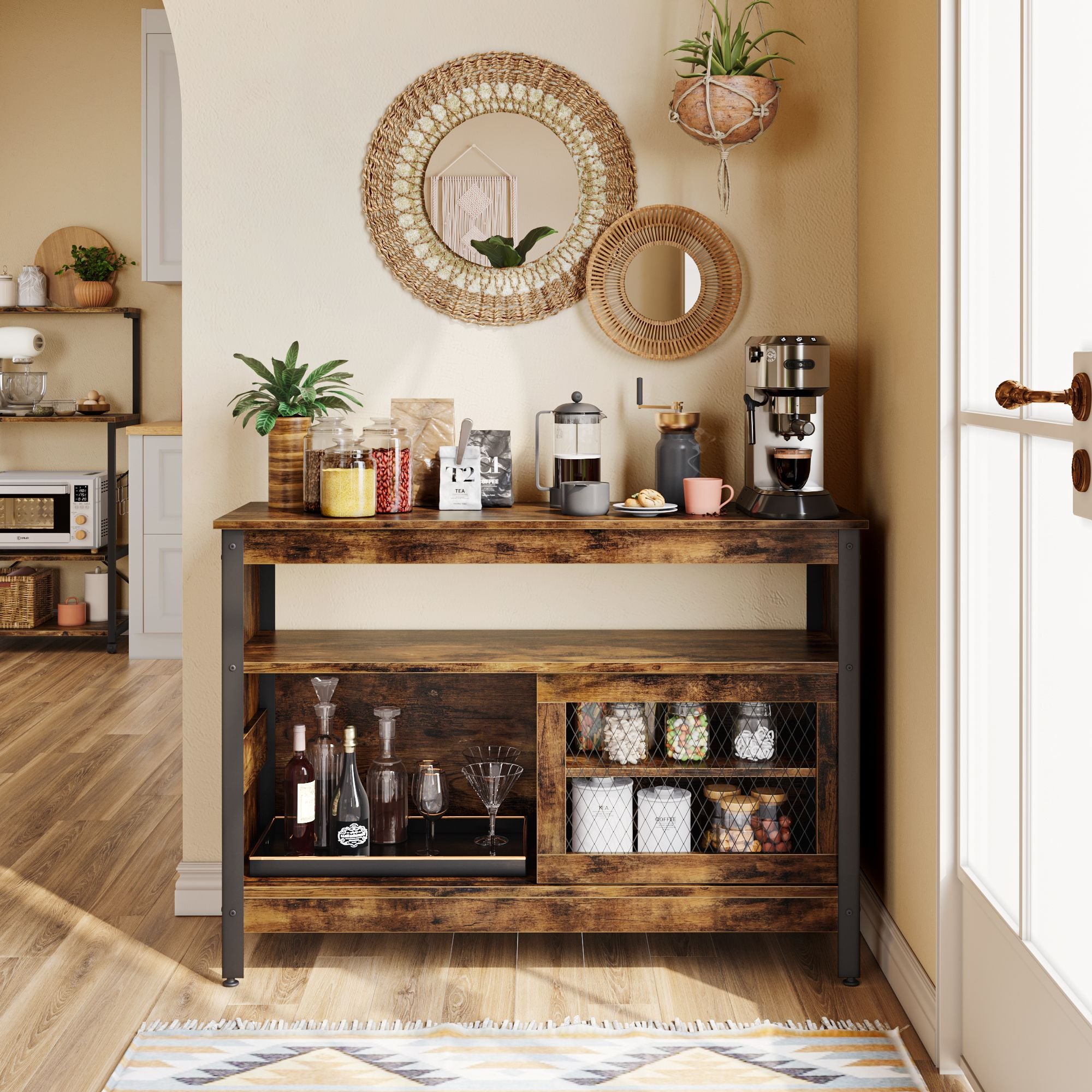
For a cleaner look, select racks that offer optional baskets or doors on lower shelves. These hide syrup bottles, spare filters, and cleaning supplies while keeping the upper display shelves open and airy.
Before purchasing, verify the rack can be anchored to the wall if it will hold heavy appliances. Tall or top-heavy furniture in an apartment should be anchored or otherwise stabilized to reduce tip-over risk, according to the U.S. Consumer Product Safety Commission.
Safety and Stability Essentials for Your Coffee Station
Safety becomes critical when combining electrical appliances with open shelving. Always place heavier items like the espresso machine and bean grinder on the lowest shelf. This lowers the center of gravity and reduces tipping risk.
Heavy items are safer when stored on lower shelves rather than high shelves on a freestanding rack. Follow this rule and you gain both stability and easier daily access.
Keep at least three inches of clearance around heat-producing appliances. Avoid stacking paper filters, wooden utensils, or flammable packaging near the machine. Fire and electrical safety matter when arranging countertop appliances, cords, and power strips in a coffee station; tidy cords and never overload outlets.
For rentals where wall anchoring may be restricted, choose a wider, lower-profile rack and test stability before loading it fully. If you notice wobbling, relocate the station or add anti-tip straps that do not require drilling.
How to Organize Your Bakers Rack Coffee Station
Effective organization turns a simple rack into a true workflow station. Use the chart below as a heuristic guide for shelf placement that balances safety, convenience, and accessibility.
Heuristic Shelf Placement Guide for a Bakers Rack Coffee Bar
Higher scores indicate a better fit for tip-over risk reduction and daily convenience in a small apartment coffee station.
View chart data
| Category | Espresso machine | Coffee beans / grinder | Mugs / cups | Light decor / filters |
|---|---|---|---|---|
| Bottom shelf | 5.0 | 1.0 | 0.0 | 0.0 |
| Middle shelf | 1.0 | 5.0 | 1.0 | 0.0 |
| Top shelf | 0.0 | 2.0 | 5.0 | 4.0 |
Heuristic guide built from the article's scenario matrix, dont_buy_if safety notes, and CPSC stability guidance: keep heavy items low, place frequently used items at comfortable reach, and avoid putting tall/heavy items high on an unanchored bakers rack. Scores are relative placement fit only, not measured data.
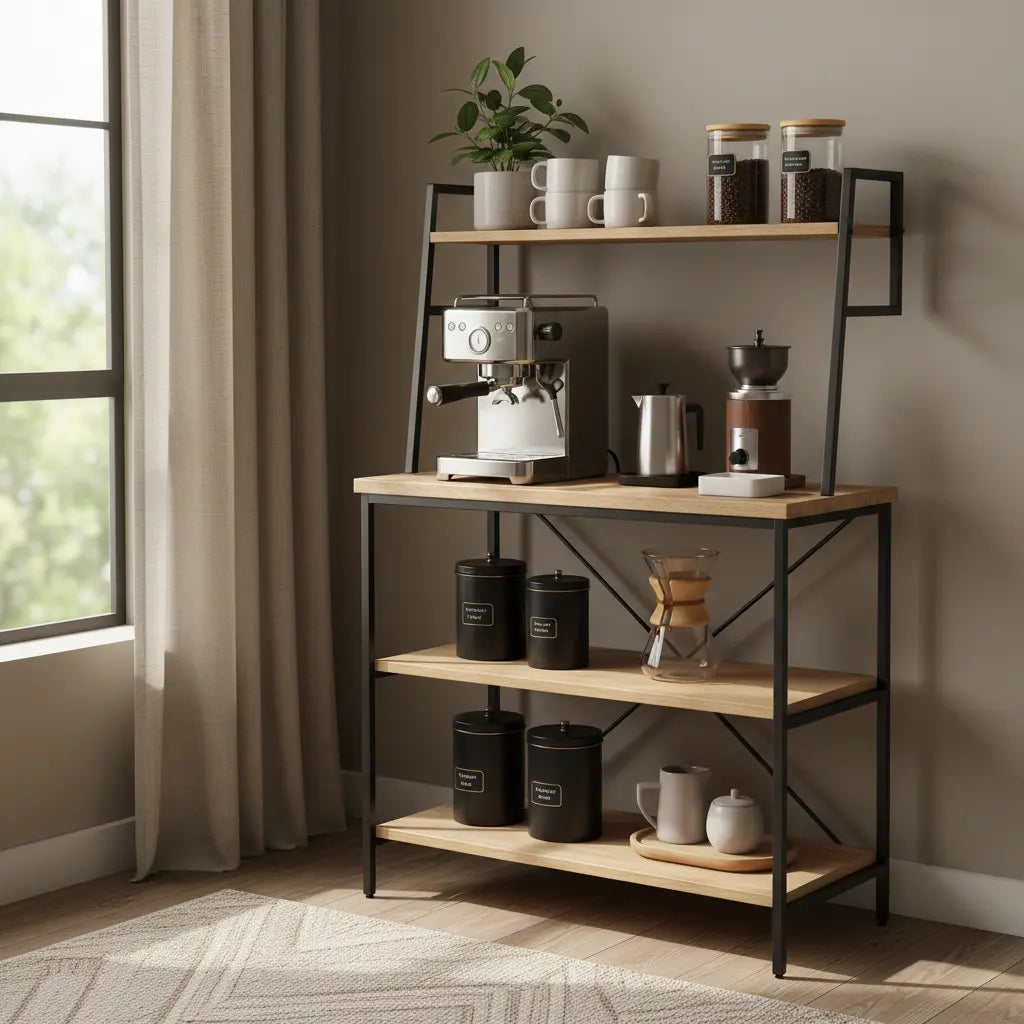
Start at the bottom shelf with your espresso machine and any large water reservoir. The middle shelf works best for the grinder, sealed jars of beans, and frequently used syrups. Reserve the top shelf for lightweight mugs, cups, and decorative items that you reach for every morning.
Use clear glass jars or labeled canisters for beans and pods so you can see inventory at a glance. Tiered risers or small wooden crates on deeper shelves create levels within levels, preventing items from getting lost at the back.
Baskets or fabric bins on the lowest shelf hide spare filters, cleaning cloths, and less attractive supplies. This keeps the visible station looking polished while maintaining easy access.
Styling Tips to Match Modern Apartment Decor
A black metal bakers rack coffee setup blends beautifully with contemporary interiors. Choose matte black frames paired with light or medium wood tones to create contrast without overwhelming small rooms.
Add a few cohesive elements: matching ceramic mugs hanging from hooks, a small tray that corrals daily tools, and a single plant or herb on the top shelf. These touches make the station feel like intentional decor rather than storage overflow.
For a minimalist look, limit visible items to three colors and keep surfaces mostly clear. Industrial-style apartments benefit from exposed metal and raw wood textures, while softer modern spaces can incorporate woven baskets and warmer wood tones.
If your rental has strict rules about wall alterations, lean the rack slightly against the wall or position it in a corner where two walls provide natural stability. This approach still frees counter space while looking built-in.
Hidden Storage Solutions for a Cleaner Look
Open shelving displays your collection but can also create visual clutter. Integrate hidden storage by using the bottom shelf for enclosed baskets or by adding a small fabric skirt that conceals supplies below eye level.
Many modern bakers racks now include optional cabinet attachments or sliding doors for the lower half. These keep syrup bottles, extra milk frothers, and seasonal flavors out of sight while protecting them from dust.
Consider a narrow drawer unit that slides under the bottom shelf for small tools like tampers and scoops. This keeps the station looking tidy without sacrificing the open, airy feel that makes bakers racks popular.
Maintenance and Daily Use Checklist
A coffee station in a small apartment sees heavy daily use, so maintenance prevents buildup and extends the life of both the rack and your equipment.
Wipe shelves weekly with a damp cloth to remove coffee residue and dust. Check that the rack remains level and that no shelf feels overloaded. Rotate mugs and accessories so no single item sits in the same spot for months, reducing wear patterns.
Inspect cords monthly for fraying and ensure the area around the espresso machine stays clear of combustible materials. Regular cleaning helps keep a small coffee station more sanitary and easier to use day to day.
When a Bakers Rack Coffee Station May Not Be the Best Choice
While versatile, a bakers rack is not ideal for every situation. Skip it if your only available spot sits in a high-traffic walkway or directly next to the sink where steam and splashes will require constant cleaning.
If your espresso machine plus accessories push the total weight beyond what feels stable on a freestanding unit, consider a rolling cart with locking wheels instead. Units that must be moved frequently for deep cleaning also benefit from mobility rather than a fixed rack.
In extremely tight studios under 10 square feet of usable corner space, wall-mounted shelves or a compact counter tray may create less visual weight. Always prioritize stability and realistic daily workflow over trendy aesthetics.
Final Checklist Before You Set Up Your Apartment Coffee Bar
- Measure your floor space and confirm at least 24 inches of width plus clearance for walking
- Verify the rack’s weight capacity meets or exceeds your heaviest appliance
- Plan power access so cords stay hidden and do not cross walkways
- Choose a model that can be anchored if it stands taller than 60 inches
- Prepare organization containers and labels before assembly
- Test the full loaded setup for wobble before committing to the location
Following these steps helps you build a coffee station that improves both function and style without adding stress to your small apartment living.
A well-planned bakers rack coffee station can transform rushed mornings into a calm ritual. By keeping heavy items low, maintaining clearance around appliances, and using vertical space intelligently, you gain counter space while creating a beautiful focal point that fits your lifestyle.
This approach works especially well for renters and anyone balancing coffee enthusiasm with limited square footage. The result is a practical, attractive setup that supports your daily routine for years to come.
Important Note on Comfort and Safety
This article discusses setup and organization advice for home coffee stations. It does not constitute medical advice, diagnosis, or treatment. Coffee equipment involves heat and electricity; always follow manufacturer safety guidelines. If you experience persistent discomfort or have existing health conditions, consult qualified professionals. Furniture stability depends on proper anchoring and correct loading—check your specific product instructions.
