
L-Shaped vs Straight Desk: Core Differences for Dual-Monitor and Gaming Use
Choosing between an L-shaped desk and a straight desk for dual monitors and gaming depends heavily on your room layout, primary activities, and how you use peripherals. In smaller rooms, a straight desk often provides better chair clearance and centered monitor alignment. In corner-friendly spaces or mixed work-and-gaming setups that benefit from separate zones, an L-shaped desk typically maximizes usable surface without sacrificing too much floor space.

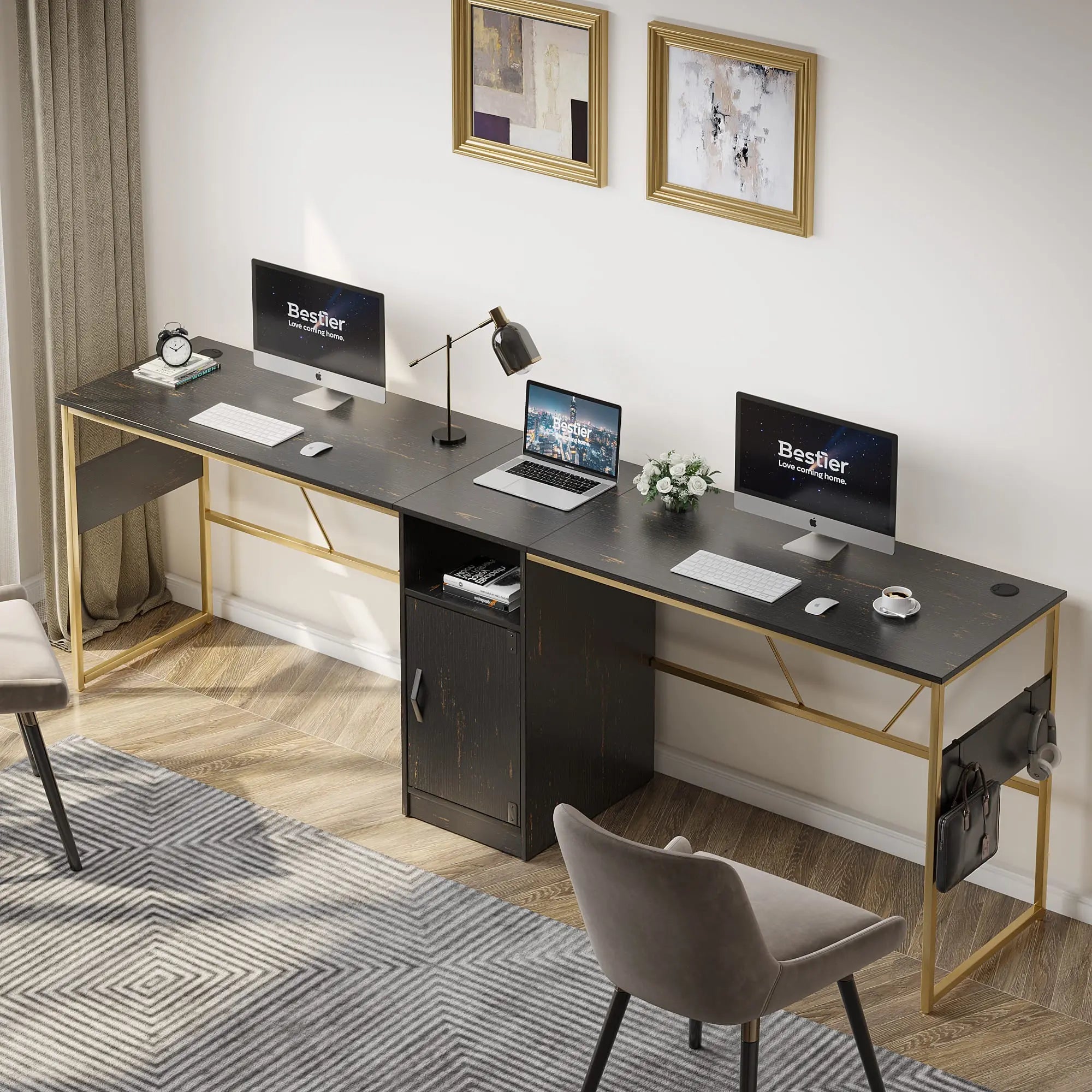
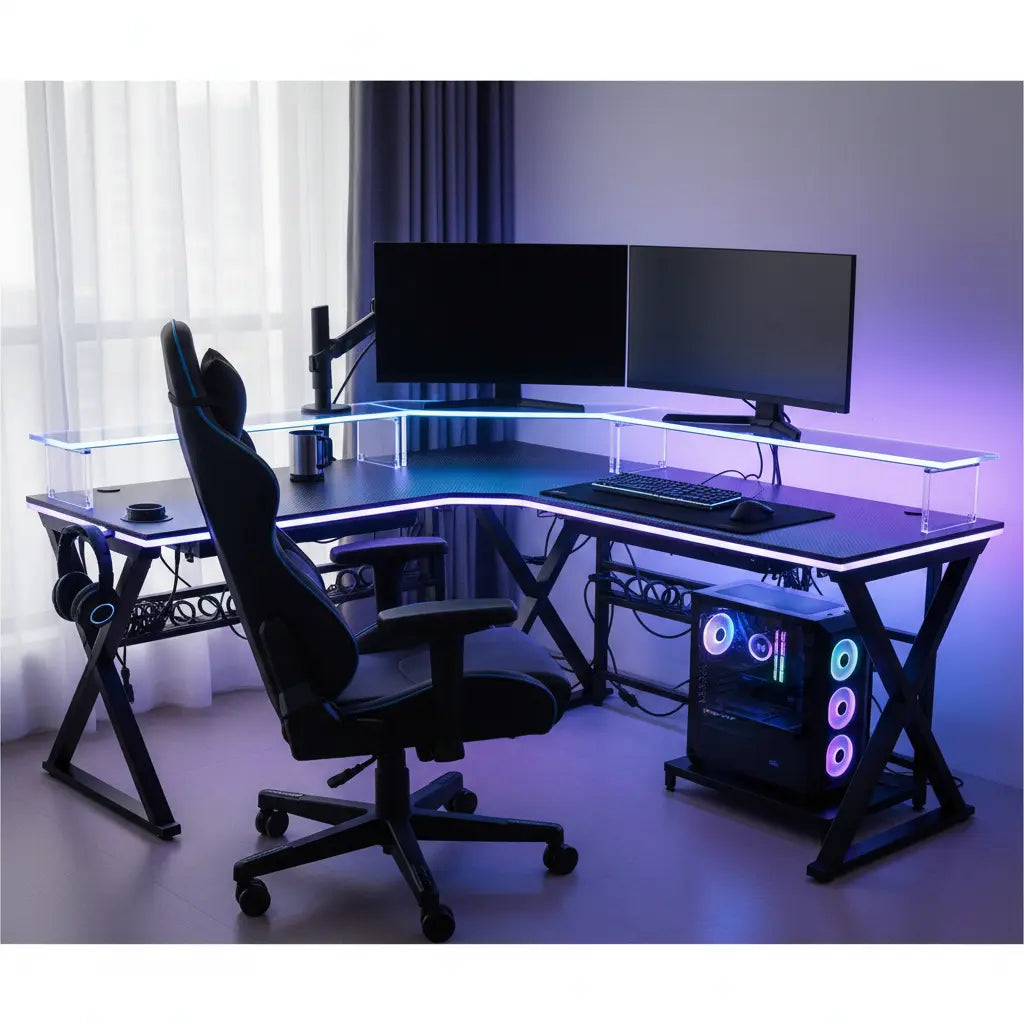
An L-shaped desk wraps around a corner, giving you two connected surfaces that effectively double your workspace while fitting neatly into room corners. A straight desk offers one continuous rectangular surface, which is simpler to center in a room and often easier to position for symmetrical monitor viewing.
For dual monitors, the L-shape lets you place one monitor on the main section and the second on the return wing, which can reduce neck strain when glancing between screens if the angle is set correctly. A straight desk keeps both monitors side-by-side in a single arc, which many gamers prefer for competitive play where the primary screen stays centered.
Gaming setups frequently involve extra peripherals such as controllers, headsets, microphones, and RGB lighting. L-shaped desks absorb these items more gracefully because the extra wing keeps the main playing area uncluttered. Straight desks require more careful organization or additional shelving to avoid a crowded feel.
Space and Room Layout Considerations
Room size is often the deciding factor. In apartments or shared bedrooms where every square foot counts, an L-shaped desk can feel space-efficient when tucked into a corner, freeing up the center of the room for movement. However, the same desk can consume more total floor area than a straight model if the room lacks a suitable corner.
A common rule of thumb for home offices is the 10x10 foot threshold. In rooms smaller than this, a standard 60-inch straight desk frequently preserves better circulation space. This is because a typical office chair requires about 30–36 inches of "pull-back" space to remain comfortable. In a tight room, the return wing of an L-shaped desk can "box in" the user, making movement difficult. Above this room size, or when a clear corner is available, the L-shape delivers more practical workspace without forcing awkward positioning.
Small-room users should measure carefully before buying. Leave at least 3 feet behind the chair for comfortable movement, and ensure the L-shape does not block doors or windows. Straight desks are generally more forgiving in narrow rectangular rooms because they can sit flush against a long wall.
Dual Monitors: Placement, Ergonomics, and Viewing Angles
Dual-monitor setups benefit from proper height and distance to reduce eye strain and neck fatigue. An L-shaped desk often allows one monitor to sit directly in front while the secondary screen angles naturally on the wing, creating a comfortable viewing arc. This layout works especially well when the primary monitor is for gaming and the second is for chat, streaming, or reference material.
Straight desks keep both monitors in one plane, which simplifies alignment but can require monitor arms to achieve ideal depth and angle. Without arms, the outer edges of wide monitors may sit too far away or force you to turn your head excessively.
Ergonomics ultimately depend more on monitor height, chair adjustment, and viewing distance than on desk shape alone. Aim for the top of each screen at or slightly below eye level, with the screen about an arm's length away. Both desk styles can support these guidelines when paired with proper accessories such as monitor stands or arms.
This article only discusses comfort and setup advice. It does not constitute medical advice, diagnosis, or treatment. If you experience persistent discomfort or have existing eye conditions, consult qualified professionals.
Gaming Performance and Immersion Factors
Gamers often prioritize a focused, immersive experience. A straight desk supports this by allowing easy centering of the main monitor and providing a wide, uninterrupted mouse pad surface for sweeping movements. Many competitive players report that the linear layout helps them stay oriented during fast-paced play.
L-shaped desks shine in streaming, content creation, or hybrid gaming setups where you need space for a webcam, additional lights, or quick-access controls on the side wing. The extra surface also accommodates larger towers, speakers, or even a laptop for multitasking without crowding the main gaming zone.
Stability matters for both styles when supporting multiple monitors and heavy gear. While specific ratings vary by manufacturer, a safe heuristic for a dual-monitor setup (including a PC tower and peripherals) is to look for a desk with a weight capacity of at least 150–200 lbs. This ensures the frame can handle the static load of the equipment plus the dynamic pressure of a user leaning on the surface.
Myth vs Reality: Common Misconceptions
Several myths persist in online discussions about desk shapes:
- Myth: L-shaped desks always save space. Reality: They are efficient in corners, but their footprint is often larger than straight desks, which can make narrow rooms feel cramped.
- Myth: Straight desks are always more stable. Reality: Stability depends on frame construction (e.g., steel vs. thin wood) and leg design rather than the shape of the desktop.
- Myth: L-shape is automatically better for dual monitors. Reality: It simplifies task separation, but a straight desk with a monitor arm can offer a more seamless "cockpit" feel for gaming.
- Myth: L-shaped desks are inherently more ergonomic. Reality: Ergonomics come from your chair height and monitor placement. An L-shape can actually encourage "neck twisting" if you don't rotate your entire chair to face the second wing.
Quick Comparison: Which One Should You Choose?
| Feature | Straight Desk | L-Shaped Desk |
|---|---|---|
| Best For | Focused gaming, small rooms | Multitasking, corner placement |
| Dual Monitor Setup | Side-by-side (linear) | Primary + Side wing (angled) |
| Space Efficiency | High in narrow rooms | High in corners |
| Ease of Assembly | Usually simpler | More complex/Reversible options |
| Peripheral Storage | Limited to main surface | Ample (dedicated side wing) |
Scenario-Based Decision Framework
The best desk choice often flips based on specific conditions:
- Small room (under 10x10 ft) and gaming-first: Straight desk usually wins for better chair pull-back space and centered posture.
- Corner-friendly room and mixed work/gaming: L-shaped desk often wins by providing separate zones for monitors and peripherals.
- Dual monitors used equally: L-shaped layout helps reduce neck twisting when screens face different directions, provided you rotate your chair.
- One primary gaming screen plus support monitor: Straight desk remains strong when both can stay in a shallow arc in front of you.
- Large peripherals (Mixers, Hotas, etc.): L-shaped desk absorbs the extra equipment more comfortably when room allows.
Desk Type Suitability by Room Size and Use Case
Heuristic suitability scores (1-10) modeled from editorial scenarios; not measured data.
View chart data
| Category | L-shaped Desk | Straight Desk |
|---|---|---|
| Small Room Gaming | 4.0 | 8.0 |
| Small Room Mixed | 8.0 | 5.0 |
| Large Room Gaming | 7.0 | 6.0 |
| Large Room Mixed | 9.0 | 6.0 |
Note: The chart above illustrates relative suitability based on common user feedback. These scores are illustrative and meant to highlight decision points rather than represent laboratory measurements.
When to Avoid Each Desk Type
Skip an L-shaped desk if:
- Your room cannot dedicate a permanent corner.
- Clearance for the chair becomes tight on the open side.
- You frequently rearrange your furniture (L-shapes are harder to move).
Avoid a straight desk if:
- You need to keep multiple monitors, peripherals, and work materials spread out simultaneously.
- You want clear "mental zones" for switching between gaming and productivity.
How to Choose and Set Up Your Desk
Follow this practical checklist:
- Measure Twice: Mark the exact corner or wall position with painter's tape on the floor to visualize the footprint.
- Define Primary Use: Focused gaming favors centered straight layouts; mixed tasks favor zoned L-shapes.
- Mockup the Layout: Use cardboard pieces representing your monitors to see if they fit comfortably on the desk depth (usually 24–30 inches).
- Evaluate Cable Management: Look for built-in grommets or power strips, especially for L-shaped desks where cables have further to travel.
- Check Weight Capacity: Ensure the frame is rated for your specific gear (especially if using heavy monitor arms).
- Consider Future Needs: Will you upgrade to an ultrawide display? Ultrawides often require the deeper surface area found on straight desks or the center corner of an L-shape.
Recommended Options from Bestier
Bestier offers several L-shaped gaming desks designed specifically for dual-monitor and hybrid setups. The Bestier L-Shaped Gaming Desk with Power Outlets, LED Lighting and Monitor Stand provides ample corner space and an ergonomic monitor platform that comfortably supports two or more screens.
For more compact rooms, the Bestier 52 Inch L-Shaped Gaming Desk with USB Ports combines reversible storage, lighting, and power features while keeping a smaller footprint. Larger setups may prefer the Gaming Desk with Power Outlet, 71.5 inch LED Computer Desk with Monitor Stand that easily handles multiple monitors and peripherals.
If you prefer a straight layout, explore the broader Bestier L Shaped Desk collection or All Desks to compare dimensions side by side. Many models include reversible designs that let you configure the return on either side to match your room.
For deeper guidance on optimizing your space, read our Best L-Shaped Desk Setups for Dual Monitor Productivity (2026 Guide) or Small Bedroom Office Layouts: L-Shaped vs. Corner Desks.
Final Thoughts
Neither L-shaped nor straight desks are universally superior for dual monitors and gaming. The right choice depends on your room dimensions, whether you need zoned workspaces, and how you balance immersive gaming with productive multitasking. By measuring your space, clarifying your main activities, and testing layouts before purchasing, you can select a desk that feels comfortable and efficient for years to come.
This article only discusses comfort and setup advice. It does not constitute medical advice, diagnosis, or treatment. If persistent discomfort occurs or existing eye conditions are present, consult qualified professionals.

