



Why a Bakers Rack Makes Sense for Small Kitchen Pantry Storage
Small kitchens often lack dedicated pantry cabinets, forcing cooks to improvise with limited counter or cabinet space. Vertical storage addresses this by turning unused wall or corner space into functional storage without major renovations. Official guidance from extension services supports this idea, noting that small kitchens benefit from tall shelves and vertical solutions to keep counters clearer.
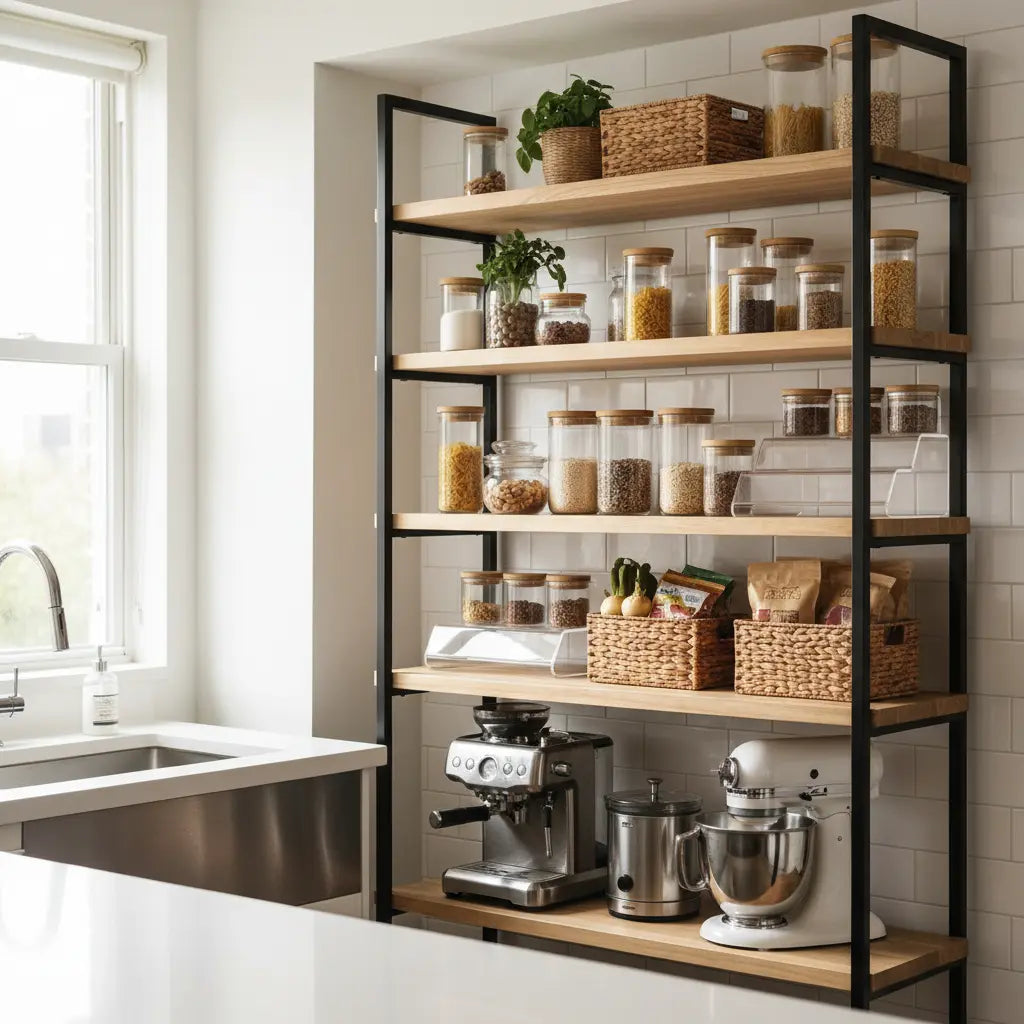
A bakers rack offers multiple open shelves, hooks, and sometimes cabinets or power outlets, allowing you to store everything from canned goods and pasta to spice jars and a stand mixer. The open design provides quick visibility and access, which can make meal prep and shopping more efficient by helping you see exactly what you have on hand.
However, this setup is best viewed as pantry-style storage rather than a full replacement for a traditional enclosed pantry. Nutrition and food safety guidance consistently recommends keeping pantry storage cool, dry, dark, and away from heat-producing appliances to maintain food quality. This advice from EatRight.org emphasizes those conditions, which is important to follow when positioning your rack.

Key Constraints: When a Bakers Rack Works as a Pantry
Before investing in a bakers rack pantry setup, run a quick constraint check. The rack performs best when it remains in a cool, dry area away from ovens, stoves, dishwashers, or direct sunlight. Keep the lowest shelf at least six inches off the floor, as many food safety resources recommend storing dry goods above ground level to reduce contamination risks and facilitate cleaning.
Use the rack primarily for shelf-stable dry goods, boxed items, sealed spices, and lightweight appliances that you use frequently. Avoid storing items that need moisture protection—such as flour in humid climates—unless they are in secondary airtight containers. The open design exposes contents more than closed cabinetry, so items prone to pests or light sensitivity require extra care.
The chart below illustrates scenario fit using an illustrative scale based on common small-kitchen layouts and needs. Scores are heuristic guides synthesized from storage best practices.
When a Multi-Tier Bakers Rack Fits as a Pantry Substitute
Use this chart to compare scenario fit, not to measure exact performance.
View chart data
| Category | Illustrative suitability (0-10) |
|---|---|
| Tiny apartment with stable wall | 9.0 |
| Galley kitchen | 6.0 |
| Needs hidden storage | 3.0 |
| Clutter-prone / humid area | 2.0 |
| Bulk appliances or heavy goods | 2.0 |
Illustrative relative scoring based on the article's scenario guidance: strongest when the kitchen is tiny, cool/dry, and the rack can stay off the floor with shelf-stable dry goods; weaker when hidden storage, dust/humidity protection, heavy items, or heat exposure matter. Scores are heuristic, not measured data.
The Quick Decision Checklist: Do’s and Don’ts
To help you decide if this setup fits your kitchen, use this summary of best practices:
- What to Store: Shelf-stable dry goods (pasta, rice, canned goods), sealed spices, oils (in dark bottles), and frequently used small appliances.
- Ideal Conditions: Place in a "dead corner" or against a wall away from the "steam zone" (sink/stove). Ensure the area is well-ventilated.
- Safety Check: Verify the manufacturer’s weight capacity for each shelf. Place the heaviest items (gallons of oil, heavy mixers) on the lowest sturdy shelf to maintain a low center of gravity.
- What to Avoid: Perishables (bread, produce) near heat sources; open bags of flour or sugar (use sealed bins instead); and heavy bulk items that exceed shelf load ratings.
- Maintenance: Wipe down wire shelves monthly to prevent dust and grease buildup, which occurs more quickly on open racks than in closed cabinets.
How to Set Up Your Bakers Rack as a Functional Pantry
Start by measuring your available space carefully. Look for a narrow footprint model that fits against a wall or in a corner without blocking traffic flow. Many modern bakers racks include adjustable shelves, hooks, and even integrated power outlets, making them versatile for both storage and small appliance use.
Choosing Accessories: The Tradeoff Decision
When selecting bins and baskets, consider these three factors to optimize your workflow:
- Visibility vs. Protection: Clear acrylic bins allow you to see inventory at a glance (great for snacks), while opaque or tinted glass jars protect light-sensitive items like high-quality olive oil or certain spices.
- Airflow vs. Containment: Wire baskets are excellent for root vegetables like onions or potatoes that need ventilation. However, for small packets or "floppy" bags (like dried beans), solid-bottomed bins prevent items from slipping through or tipping over.
- Frequency of Use: Use "open-front" bins for items you grab daily (coffee pods, salt) and "lidded" containers for items used less often to minimize dust accumulation.
Position the rack in the coolest, driest part of your kitchen. Clean all shelves thoroughly before stocking. Use the bottom shelves for heavier items like canned goods or a small appliance, keeping weight distributed evenly. Reserve upper shelves for lighter items such as teas and snacks.

Organization Ideas for Dry Goods, Spices, and Appliances
Group items by category and frequency of use. Place everyday spices and oils at eye level for quick access during cooking. Store baking supplies like flour, sugar, and extracts together on a dedicated shelf. Crucial Tip: In open-shelf environments, always transfer bagged powders (flour, sugar, cornstarch) into gasket-sealed containers. This mitigates the risk of moisture absorption and pest intrusion that open cabinetry usually prevents.
Small appliances such as blenders, toasters, or air fryers can occupy the lower, sturdier shelves. Ensure there is at least 4–6 inches of clearance around heat-generating appliances to allow for proper ventilation. For models with hooks, hang utensils, measuring cups, or towels to free up drawer space.
In narrow galley kitchens, a slim bakers rack can act as a room divider while providing storage on both sides if accessible. For shared family kitchens, assign specific shelves to different household members or meal types to prevent disorganization.
Choosing the Right Bakers Rack for Your Space
Look for models constructed with durable materials that meet relevant safety standards for indoor furniture. Features like adjustable height, locking casters for mobility, and integrated outlets add convenience. Pay close attention to depth and width to ensure it fits your layout without crowding walkways.
Budget-conscious buyers can start with a basic multi-tier model and upgrade with aftermarket organizers. Popular additions include stackable bins, spice racks that mount to the side, and under-shelf baskets that utilize every inch of vertical space.
For those furnishing a first apartment or studio, a bakers rack offers one-piece versatility that can later transition to other rooms if needed. Its open design also contributes to a lighter, airier feel compared to bulky closed cabinetry.
Safety and Maintenance Tips for Long-Term Use
Treat your bakers rack pantry as a practical solution for dry goods rather than long-term storage for all pantry items. Avoid overloading shelves beyond the manufacturer's specified weight limits, and never place the unit near heat sources that could affect food safety or the rack's stability.
When to switch to sealed storage: If your kitchen experiences high humidity (above 60%) or if you live in an area prone to pantry pests (like weevils), open shelving requires that all grains, cereals, and flours be kept in airtight, hard-sided containers. Do not rely on the original cardboard or plastic film packaging.
Regular maintenance includes dusting shelves, checking for any signs of wear on hooks or joints, and inspecting stored items for expiration. In humid climates, consider using moisture-absorbing packets in sealed containers for sensitive dry goods.
This article discusses comfort and setup advice for small kitchen organization only. It does not constitute advice on food safety standards, medical recommendations, or structural engineering. If you experience persistent issues with kitchen workflow, food spoilage, or have specific health or allergy concerns, consult qualified professionals. Individual results depend heavily on your specific room conditions, product model, and usage habits.
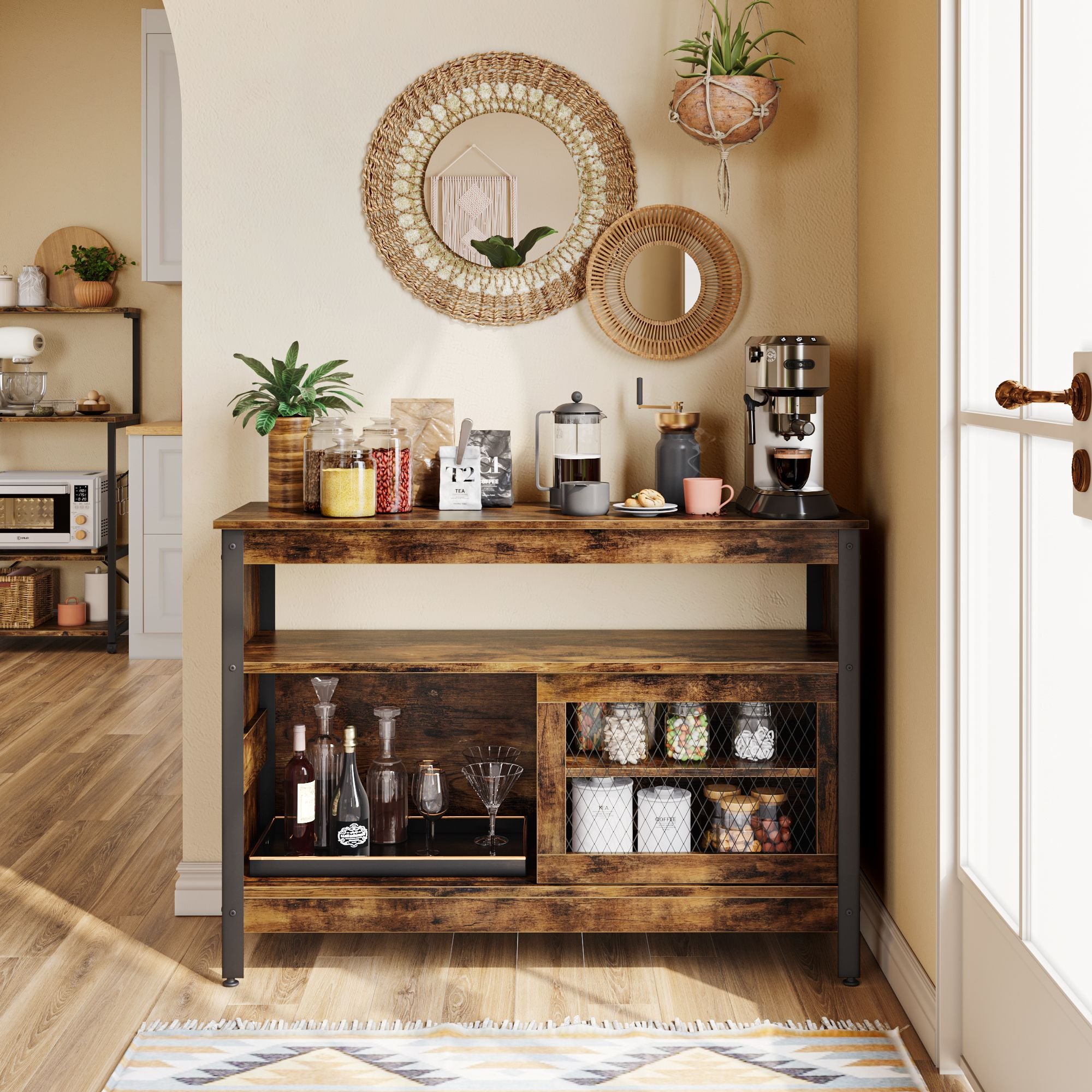
When your needs evolve, a well-chosen bakers rack can continue providing value beyond pantry duties, adapting to serve as a coffee station or plant display. For more inspiration, explore related guides on kitchen bakers rack organization or styling a bakers rack in modern kitchens.
Many shoppers find success with versatile options like the Bestier 60 inch Bakers Rack with Power Outlet or the Bestier Microwave Stand with Storage Cabinet, which combine shelving and convenience features tailored for compact spaces. Browse the full Bestier Baker's Racks collection to find the right fit for your layout.
