



A TV stand can totally change how a room feels. Some homes need clean lines and open floor space. Others need flexible placement and more storage. Floating and floor TV stands both work well, just for different layouts and lifestyles. Here’s a straightforward way to compare them, understand the trade-offs, and pick the right one.
What Is a Floating TV Stand and When Does It Work Best?
A floating TV stand mounts to the wall and leaves the floor open. That simple change can make a room feel lighter and way easier to clean. It works great with a modern look, especially in small or minimalist spaces.
Why Floating TV Stands Feel So Clean in Modern Rooms
A floating design cuts down on visual clutter. The TV area looks tidy, and you can hide cords behind the unit. A black floating TV stand can add nice contrast against light walls. A white floating TV stand blends in and keeps the wall feeling bright.
Pros That Matter in Daily Life
Floating options really help when space is tight or you have a lot of foot traffic.
- More open floor space for walking and cleaning
- Sleeker “built-in” look that feels modern
- You control the height — mount it at a comfortable viewing level.
- Works great with wall-mounted TVs and soundbars
Cons to Think About Before You Buy
A wall-mounted unit asks more from your wall and takes more planning.
Floating designs have weight limits, especially if you want a TV stand with storage packed with books, consoles, and speakers. Installation can be tricky on drywall without proper studs or anchors. You also lose the option to quickly move the stand to another wall without patching holes and repainting.

What Is a Floor TV Stand and Why Does It Still Fit So Many Homes?
A floor TV stand sits on the ground and supports your TV like regular furniture. This classic approach is still popular because it’s simple to set up and easy to change later. It’s also a solid choice when you want a TV stand with storage that can handle heavier stuff.
Why Floor TV Stands Stay Flexible Over Time
A floor unit can move with you. It can shift for a new sofa layout, a bigger TV, or a new apartment. That flexibility matters in real homes where rooms change all the time.
Pros That Make Floor Options Practical
A lot of people go with a floor TV stand for stability and convenience.
- Usually easier to put together and place
- Often has more storage and can handle heavier loads.
- Easier cable access behind the TV and devices
- Easy to replace or move around without fixing walls
Cons That Can Show Up in Smaller Rooms
- Floor units take up floor space.
- In a tight living room or bedroom, a deeper cabinet can push your seating forward or block walkways.
- Some styles can also feel visually heavy. That said, low-profile designs can still look clean, especially when the width matches your TV.
Floating vs. Floor TV Stand: Differences That Affect Comfort and Layout
Once you know the basics, the decision comes down to space, safety, and how you actually use your media area. These points connect to daily comfort, not just how things look in photos.
Space, Cleaning, and Visual Weight
Floating units keep the floor clear, which makes vacuuming easier and helps a small room feel less crowded. Floor units offer more surfaces and shelves, but they create more corners and edges on the ground.
Storage Needs and Device Count
A TV stand with storage matters more when you have multiple devices. Game consoles, routers, streaming boxes, and accessories add up fast. Most floor units give you more shelf space and deeper compartments. Floating units can still hold a lot, but they work best with a lighter, more streamlined setup.
Safety With Kids, Pets, and Daily Bumps
Floating setups can reduce tip-over risks from kids pulling on drawers — but only if the mount is secure. Floor units can be stable, but a taller, narrower model might need anti-tip straps. If kids climb or pets sprint through the room, stability becomes a real concern.
Set Up Difficulty and Long-Term Flexibility
A floating TV stand usually takes more effort upfront. A floor TV stand might take more effort later if you don’t like the footprint and want the room to feel bigger. Think about which kind of “effort” you’d rather deal with.
Quick Comparison: Floating vs. Floor TV Stands
| Factor | Floating TV Stand | Floor TV Stand |
|---|---|---|
| Floor space | Frees up space below | Takes up floor space |
| Install effort | Higher — needs wall work | Lower — just place and adjust |
| Moving to a new layout | Harder — need to patch the wall | Easy — slide or relocate |
| Storage capacity | Usually moderate | Usually higher |
| Cable hiding | Clean if planned well | Easy access, can look messy |
| Best fit | Minimal, modern looks | Traditional, storage-heavy setups |
Choosing TV Stands by Room Type for Real-Life Use
Different rooms have different needs. A bedroom needs calm. A living room needs balance. A gaming room needs access and airflow. The right stand supports how you actually use the room.
Bedroom TV Setups That Feel Calm and Uncluttered
A bedroom usually benefits from keeping things visually quiet. A floating TV stand can help, especially when you want the floor open and the furniture light. A white floating TV stand keeps the wall soft and reduces contrast. If you need storage for extra linens or media, go with a floating model that has closed cabinets — just keep the load reasonable.
A floor TV stand can still work great in a bedroom, especially if you rent and don’t want to drill into walls. Look for a lower unit with doors so the space feels less busy.
Living Room Setups That Balance Style and Storage
The living room is where “pretty” meets “practical.” If the room is large and you want a centerpiece, a floor TV stand with wide cabinets can anchor the wall. It’s a common way to get a TV stand with storage for board games, remotes, and extra cables.
If the living room is small, a floating TV stand can create breathing room. A black floating TV stand can ground the wall and pair well with a larger TV. Keep the depth slim if walkways are tight. In a dedicated entertainment center, you can mix both styles for maximum impact.

Gaming Room Setups That Keep Gear Accessible
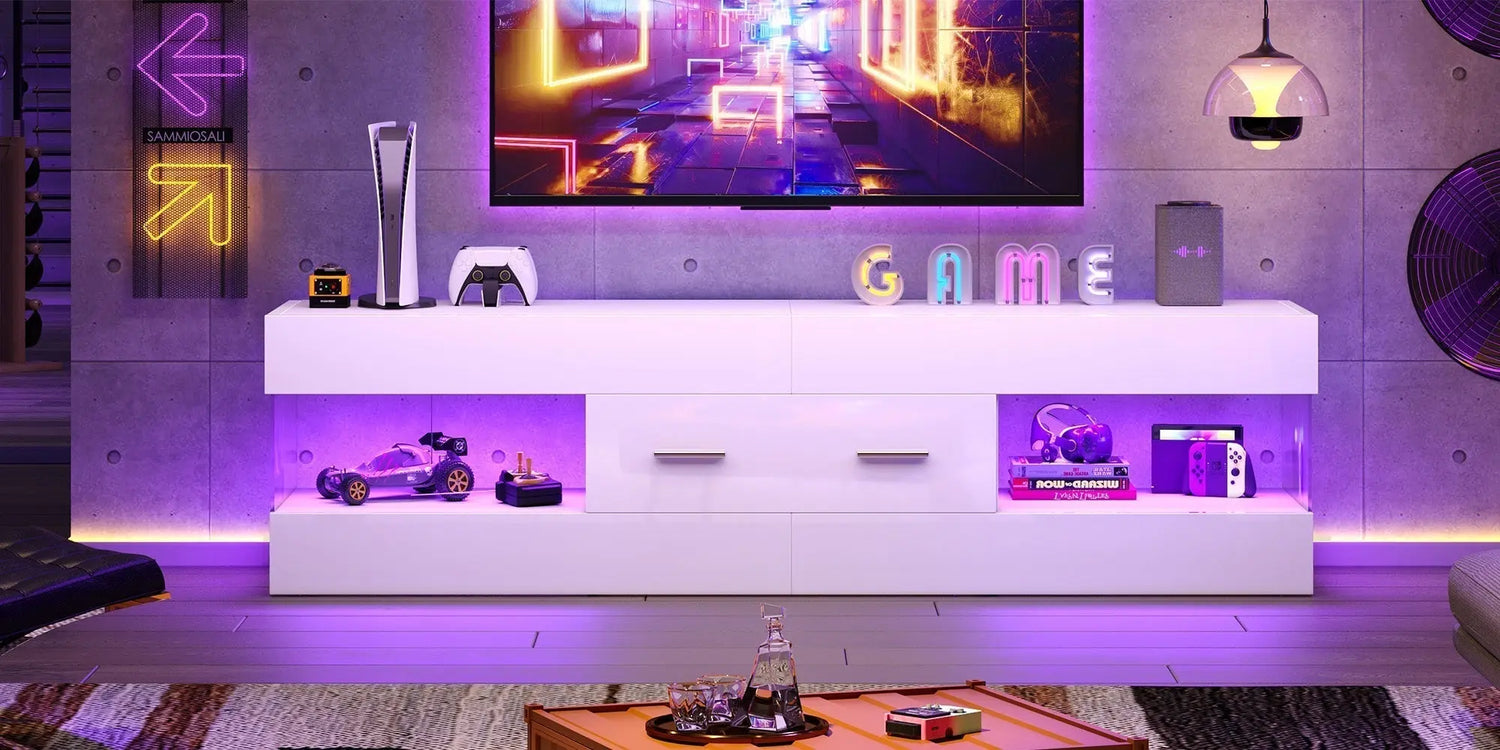
A gaming TV stand has different priorities. Consoles and PCs generate heat, and you might swap cables often. A floor TV stand tends to make life easier here because you can reach ports quickly and rearrange shelves as your gear changes.
Floating can still work for gaming, especially with open shelving and smart cable routing. Just plan for ventilation. Don’t seal hot devices in tight compartments. Leave space behind the unit for airflow and power bricks.
Common Installation Mistakes to Avoid for Both Stand Types
This is where a lot of setups go wrong. A few careful choices can prevent crooked screens, messy cables, and avoidable wall damage.
Wall Mounting Errors That Cause Problems
- A floating TV stand needs proper support. Mounting into weak spots can lead to sagging or shifting over time. Use a level — even a small tilt looks obvious once the TV is on.
- Cable planning often gets skipped. Measure where your outlets are, decide where devices will go, then route cables so doors can close cleanly.
Floor Placement Errors That Make Rooms Feel Awkward
A floor TV stand can look off if it’s too small for your TV's width. It can also feel cramped if it sticks out too far into the room. Try to keep walkways comfortable, especially in front of sofas and near door swings.
Storage and Ventilation Mistakes That Hurt Performance
Crowded shelves trap heat and make devices act up. Keep air gaps around consoles and routers. If you go with a TV stand with storage and closed doors, look for ventilated backs or leave a door slightly open during long gaming sessions.
Shop With Confidence and Pick the Best Fit
A smart choice usually matches your room constraints first, then your style.
- A floating TV stand works great for small spaces, modern looks, and people who like a clean floor.
- A floor TV stand works well for renters, people who rearrange often, and homes that need lots of storage.
Pick the style that fits your wall, your device load, and how often your room changes.
FAQs About TV Stands
Q1: Which option is better for small rooms with limited floor space?
A floating TV stand is usually the better fit. It opens up the floor and cuts down on visual bulk. Just keep storage expectations realistic and make sure your wall can support the load.
Q2: Which stand type works best as a gaming TV stand for lots of devices?
A floor TV stand is usually the safer bet. It tends to offer easier access, more shelf space, and simpler cable changes. Look for ventilation space and adjustable shelves.
Q3: Are black floating TV stands and white floating TV stands hard to keep clean?
Neither is super hard, but black shows dust more. White can show scuffs and fingerprints depending on the finish. A matte surface hides marks better than glossy finishes.
Q4: Which type is better if you want a TV stand with storage for heavy items?
A floor TV stand is usually the better match. Most floor units handle heavier loads and deeper storage. Floating units can still hold a lot, but weight limits and wall support become more important.
