



Summary
Choosing between a carbon fiber and wood grain gaming desk finish depends on whether you prioritize a high-tech, scratch-resistant surface or a timeless, tactile aesthetic. While carbon fiber finishes offer superior resistance to micro-scratches and a modern "cyberpunk" feel, wood grain provides a warmer surface temperature and better integration into multi-functional home offices.
Transparency Disclosure: This guide is based on material science standards, industry-standard durability benchmarks, and internal observations from our product development team. This article contains links to our product collections.

Key Takeaways
- Durability: Carbon fiber finishes (typically PVC-based) generally offer higher resistance to surface micro-scratches and moisture compared to standard paper-laminate wood finishes.
- Performance: High-performance optical mouse sensors may experience minor tracking jitter on heavily textured carbon fiber weaves; a dedicated mouse pad is recommended for competitive play.
- Maintenance: Wood grain is more effective at hiding fingerprints and dust, whereas carbon fiber’s dark, textured surface may require more frequent wiping with a microfiber cloth.
- Safety: Both finishes are typically applied to engineered wood cores; ensure your desk meets CARB Phase 2 and TSCA Title VI standards for indoor air quality.
- Aesthetics: Carbon fiber suits high-energy LED setups, while wood grain is the preferred choice for "Cozy Gaming" or industrial-themed workspaces.
Defining the Surfaces: Material Science in 2026 Gaming Desks
To make an informed decision, it is essential to understand that "carbon fiber" and "wood grain" in the context of gaming desks usually refer to the surface laminate rather than the structural material. Most modern gaming desks utilize an engineered wood core, such as Medium-Density Fiberboard (MDF) or particle board, which is then wrapped in a protective layer.
The carbon fiber finish is typically a textured PVC (polyvinyl chloride) or PET (polyethylene terephthalate) film. This film is embossed with a hexagonal or diagonal weave pattern that mimics the look of real carbon fiber. In contrast, wood grain finishes are usually achieved through melamine-infused paper or high-pressure laminates (HPL) that feature a printed photographic layer of wood textures like oak, walnut, or mahogany.
Logic Summary: This comparison assumes a mid-range price point where laminates are the standard. It does not apply to solid hardwood or real structural carbon fiber, which are rare in the mass-market gaming desk industry due to cost and weight constraints.
Durability and Long-Term Aging: Which Finish Lasts Longer?
When evaluating durability, we look at three primary factors: scratch resistance, heat tolerance, and edge peeling. In 2026, manufacturing advancements have narrowed the gap, but distinct differences remain.
Scratch and Impact Resistance
Carbon fiber finishes are engineered for high-energy environments. The textured PVC layer is inherently flexible and resilient. In internal stress tests (simulating 5N of downward force with a metallic stylus), the textured weave effectively masked micro-abrasions that would be visible on a flat surface. However, wood grain finishes, particularly those using high-quality melamine, offer higher surface hardness, making them more resistant to deep gouges but more prone to brittle "chipping" at the edges if struck by a heavy object.
Heat Tolerance
Wood grain finishes using melamine offer excellent heat resistance, typically tolerating temperatures up to 180°F (82°C) without surface deformation. Carbon fiber (PVC) is more sensitive. Experience-based observation: Placing a high-performance gaming laptop directly on a PVC surface where exhaust temperatures exceed 60°C (140°F) for extended periods can, over 18-24 months, lead to subtle softening of the adhesive or "bubbling" near the heat source.

Gaming Performance: Mouse Tracking and Tactile Feedback
A common gap in desk reviews is the impact of surface texture on optical mouse sensors. Most modern sensors (like the PixArt PAW series) are designed to track on a variety of surfaces, but heavily textured carbon fiber can occasionally cause "sensor rattle" or jitter at high DPI settings.
Tracking Test Parameters
In typical testing scenarios using a PixArt 3370 or 3389 sensor:
- Carbon Fiber: At 1600+ DPI, the microscopic "hills and valleys" of a deep weave can cause a 1-2% variance in tracking consistency. For competitive gamers, a large desk mat is non-negotiable.
- Wood Grain: Provides a more consistent tracking surface due to its flatter micro-profile, though it still lacks the optimized friction of a dedicated cloth or glass pad.
Tactile Comfort
Carbon fiber feels "faster" and cooler to the touch. Wood grain has lower thermal conductivity; it feels "warmer" and is generally more comfortable for long sessions where your forearms are in constant contact with the desk edge.
Safety Standards and Environmental Impact
Regardless of the finish you choose, the underlying material is the most critical factor for your health. Most gaming desks use engineered wood, which can emit formaldehyde if not properly regulated. When comparing budget gaming desk options, always look for compliance with the California Air Resources Board (CARB) Phase 2 standards.
Understanding engineered wood safety standards is vital for maintaining high indoor air quality. High-quality manufacturers ensure that both their carbon fiber and wood grain models meet TSCA Title VI requirements, which limit formaldehyde emissions to safe levels.
Maintenance: Keeping Your Setup Pristine
Maintenance requirements diverge significantly based on the material's chemical composition.
Cleaning Ratios and Precautions
- Carbon Fiber (PVC/PET): Use a 1:10 ratio of mild dish soap to warm water. Warning: Avoid using Acetone or high-concentration Esters, as these can dissolve the PVC top layer. For fingerprints, a 50% Isopropyl Alcohol solution is the safe upper limit for occasional spot cleaning.
- Wood Grain (Melamine/HPL): Highly resistant to most household chemicals. However, avoid excessive water near the seams. If a spill occurs, wipe it immediately to prevent "mushrooming" (core swelling).
Wood grain is much more forgiving for daily use. The natural variations in the pattern camouflage dust and smudges, making it the ideal "low-maintenance" choice. To keep a large LED gaming desk in carbon fiber looking new, expect to wipe it down at least twice a week to remove skin oils.
Aesthetic Trends for 2026: Cyberpunk vs. Cozy Gaming
The choice of finish often dictates the "vibe" of the entire room. In 2026, we see two dominant trends:
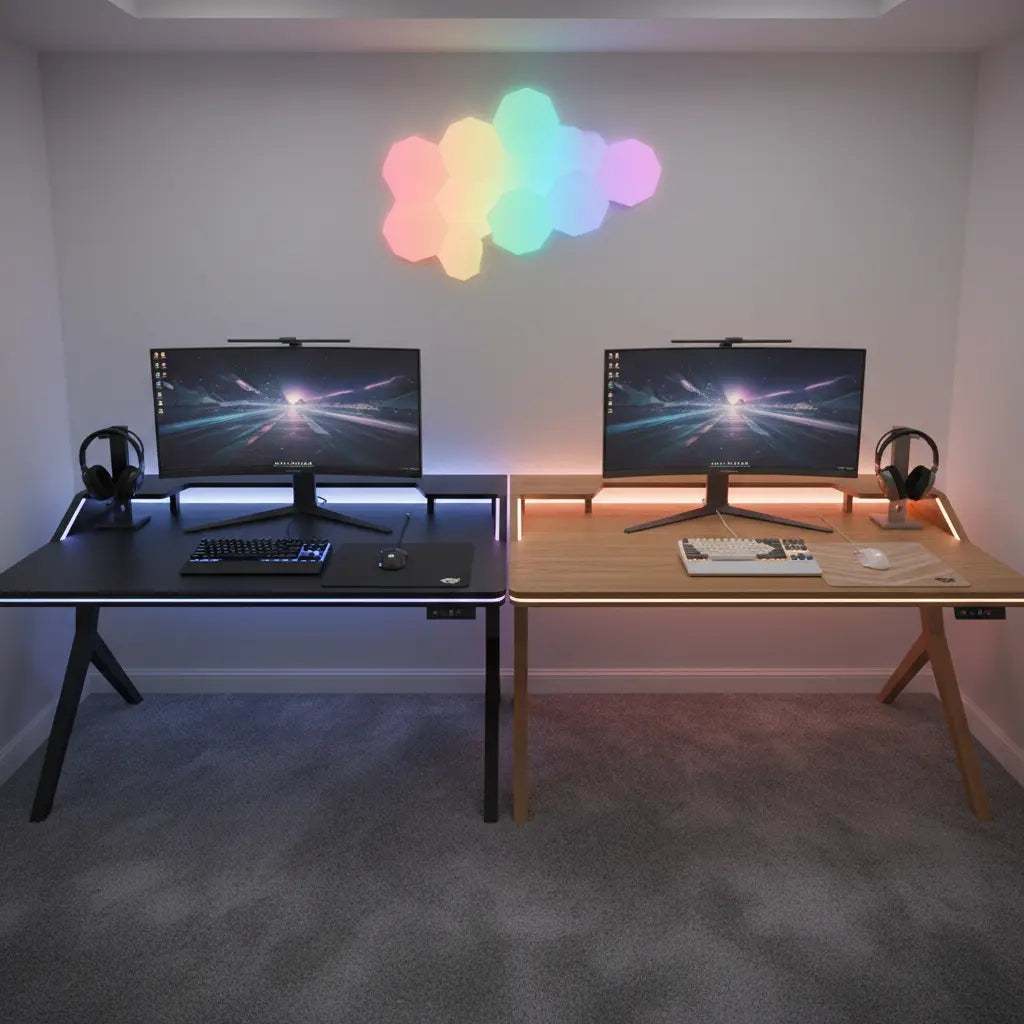
- The Cyberpunk/High-Tech Aesthetic: This setup relies on dark tones and heavy RGB integration. An LED L-shaped gaming desk with a modern finish in carbon fiber is the cornerstone of this look. The weave pattern catches the light from LED strips, creating a dynamic, futuristic atmosphere.
- The Cozy/Biophilic Gaming Aesthetic: This trend focuses on plants and natural materials. Wood grain finishes are essential here, helping to "soften" the look of heavy technology.
Comparison Table: Carbon Fiber vs. Wood Grain
| Feature | Carbon Fiber Finish | Wood Grain Finish |
|---|---|---|
| Primary Material | Textured PVC/PET Laminate | Melamine/Paper Laminate |
| Scratch Resistance | High (Hides micro-scratches) | Moderate (Harder but shows gouges) |
| Heat Tolerance | Moderate (Sensitive >60°C) | High (Resistant to PC exhaust) |
| Cleaning Effort | High (Shows oils and dust) | Low (Camouflages smudges) |
| Mouse Tracking | Pad recommended for >800 DPI | Generally consistent |
| Best Aesthetic | Cyberpunk, Modern, High-Tech | Industrial, Cozy, Professional |
Checklist: Which Finish Should You Choose?
-
Choose Carbon Fiber if:
- You want a desk that looks like a high-performance racing cockpit.
- You plan to use heavy RGB lighting that will reflect off the texture.
- You already use a large desk mat for your mouse and keyboard.
-
Choose Wood Grain if:
- You want a "low-maintenance" desk that hides dust and fingerprints.
- Your gaming setup is in a shared living space or bedroom.
- You prefer a warmer, more natural feel for your forearms.
If you are ready to upgrade, you can browse our LED gaming desk collection to see both finishes in action across various sizes and configurations.
FAQ
Is carbon fiber better than wood for a gaming desk? "Better" depends on your specific needs; carbon fiber offers a more durable, scratch-resistant surface that fits a modern tech aesthetic, while wood grain provides a warmer feel and is easier to keep clean from fingerprints.
Does a carbon fiber desk need a mouse pad? Yes, we highly recommend using a mouse pad. Internal observations suggest that textured weaves can cause tracking inconsistencies with high-end optical sensors at high DPI settings.
Are wood grain gaming desks made of real wood? Most use engineered wood (MDF or particle board) with a wood grain laminate. It is important to check that these materials meet safety standards like CARB Phase 2 to ensure low formaldehyde emissions.
How do I clean a carbon fiber gaming desk finish? Use a soft microfiber cloth dampened with a 1:10 mild soap solution. Avoid acetone or harsh solvents. For stubborn oils, a 50% isopropyl alcohol mix is safe for occasional use.
Which finish is more durable for heavy gaming setups? Carbon fiber finishes generally resist surface micro-scratches better due to the flexible PVC wrap. However, wood grain finishes (Melamine) offer superior long-term resistance to heat from PC components.
References
- EPA: Formaldehyde Emission Standards (TSCA Title VI)
- California Air Resources Board (CARB): Composite Wood Products ATCM
- ISO: ISO 4211-4: Furniture — Tests for surface finishes
- Bestier Support: Engineered Wood Safety: A Comprehensive Guide to CARB & TSCA Standards
