




Engineered Wood Safety: A Comprehensive Guide to CARB & TSCA Standards

Executive summary
The safety of engineered wood products has become a focal point for health-conscious consumers, particularly as the demand for affordable, flat-pack furniture continues to grow. This guide provides a comprehensive analysis of the two primary regulatory frameworks governing formaldehyde emissions in the United States: the California Air Resources Board (CARB) Phase 2 standards and the Environmental Protection Agency's (EPA) Toxic Substances Control Act (TSCA) Title VI. These regulations represent some of the most stringent air quality standards globally, designed to mitigate the risks associated with formaldehyde off-gassing from composite wood materials such as Medium Density Fiberboard (MDF), particle board, and hardwood plywood.
Our analysis indicates that while the emission limits for CARB Phase 2 and TSCA Title VI are identical, the national implementation of TSCA Title VI has established a unified compliance landscape. Key findings highlight that compliant products must undergo rigorous third-party certification (TPC) and bear specific labels to ensure transparency. Furthermore, this guide addresses critical real-world factors—such as humidity and temperature—that influence the rate of off-gassing, providing consumers with actionable strategies to maintain optimal indoor air quality. By adhering to these standards, brands like Bestier demonstrate a commitment to consumer health and material integrity in the budget furniture sector.
Scope & definitions
To navigate the complexities of engineered wood safety, it is essential to define the materials and regulatory terms central to this discussion. This guide focuses exclusively on composite wood products as defined by the EPA and CARB.
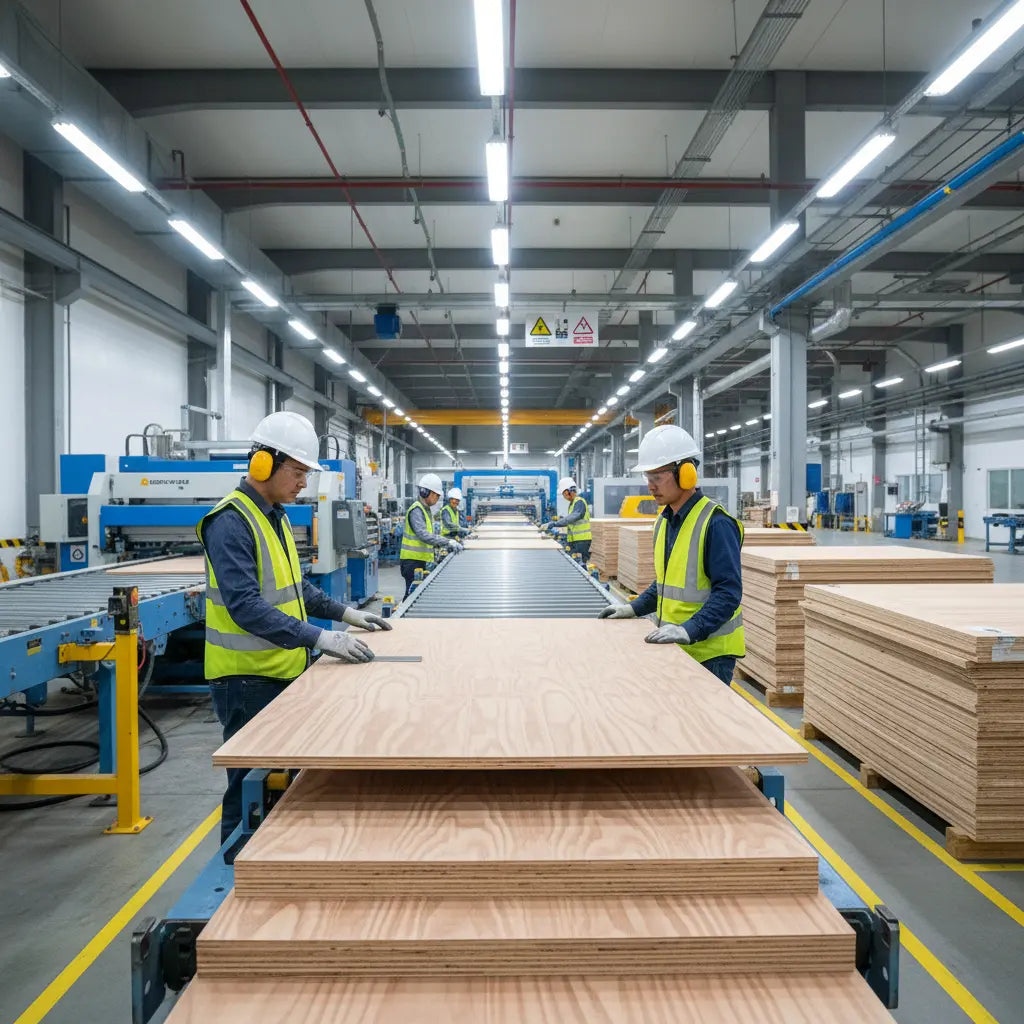
- Engineered Wood (Composite Wood): Materials manufactured by binding wood fibers, particles, or veneers together with adhesives or resins. This includes Hardwood Plywood (HWPW), Particle Board (PB), and Medium Density Fiberboard (MDF).
- Formaldehyde: A colorless, strong-smelling gas used in the production of resins (such as urea-formaldehyde) that act as glues. It is classified as a known human carcinogen by the International Agency for Research on Cancer (IARC).
- CARB Phase 2: A California regulation (ATCM 93120) that set strict limits on formaldehyde emissions.
- TSCA Title VI: The federal "Formaldehyde Standards for Composite Wood Products Act," which established national emission standards identical to CARB Phase 2.
- Off-gassing: The process by which volatile organic compounds (VOCs), such as formaldehyde, are released from a material into the air over time.
- Third-Party Certifier (TPC): An independent laboratory recognized by the EPA or CARB to verify that a manufacturer's products meet emission standards through regular testing and audits.
Note: This scope is limited to formaldehyde emissions from core composite wood panels. It does not cover solid wood (which naturally contains trace amounts of formaldehyde but is not regulated under TSCA Title VI) or non-wood components like metal frames.
Key findings
The transition from state-level (CARB) to national (TSCA) standards has created a robust safety net for consumers. The following findings summarize the current state of regulation:
- Regulatory Alignment: Since 2018, the EPA's TSCA Title VI has effectively nationalized the CARB Phase 2 standards. Products labeled TSCA Title VI compliant are generally accepted as meeting CARB requirements.
- Stringent Emission Thresholds: Regulations mandate extremely low levels of formaldehyde release. For instance, the limit for particle board is 0.06 parts per million (ppm), while MDF is capped at 0.11 ppm.
- Mandatory Certification: Manufacturers cannot self-certify. They must work with EPA-recognized TPCs who conduct quarterly inspections and routine testing.
- Labeling Transparency: Every finished good must be labeled with the manufacturer's name, production date, and a statement of compliance (e.g., "TSCA Title VI Compliant").
- Environmental Sensitivity: Off-gassing is dynamic. Higher indoor temperatures and humidity levels can significantly accelerate the release of formaldehyde, even from compliant products.
Understanding Formaldehyde in Engineered Wood
Formaldehyde is an ubiquitous chemical, but its presence in homes is primarily attributed to the resins used in engineered wood. When choosing quality wooden furniture, it is crucial to understand why this chemical is used and how it behaves.
Resins like Urea-Formaldehyde (UF) have historically been favored because they are cost-effective and provide excellent bonding strength. However, UF resins are prone to hydrolysis—a chemical reaction with moisture in the air that breaks down the resin and releases formaldehyde gas.
In response, the industry has shifted toward Ultra-Low Emitting Formaldehyde (ULEF) and No-Added Formaldehyde (NAF) resins. NAF resins, such as those made from soy or methylene diisocyanate (MDI), do not use formaldehyde as a raw material, significantly reducing off-gassing potential. This distinction is vital when selecting home office desks or other pieces used in close proximity for long hours.
The Evolution of Safety Standards: CARB Phase 2 vs. TSCA Title VI
The journey toward safer engineered wood began in California in 2007 with the Airborne Toxic Control Measure (ATCM). Recognizing the need for a uniform national standard, the U.S. Congress passed the Formaldehyde Standards for Composite Wood Products Act in 2010, adding Title VI to the Toxic Substances Control Act (TSCA).
Comparison of Regulatory Frameworks
While the emission limits are identical, CARB continues to oversee compliance within California, often conducting retail-level "sting" operations. The EPA's TSCA Title VI provides the overarching legal framework for the entire U.S. market, including imported goods. For consumers, a product labeled as TSCA Title VI compliant is legally allowed to be sold in all 50 states. When browsing a home office furniture collection, these certifications are the most reliable indicators of material safety.

How to Verify Compliance: Labels and Certifications
Verification is the bridge between regulatory theory and consumer safety. Under TSCA Title VI, manufacturers of finished goods (like a desk or a TV stand) must provide a label on every individual item or its packaging.
What to Look for on a Label:
- Manufacturer/Fabricator Name: The entity responsible for the finished product.
- Production Date: The month and year of manufacture.
- Compliance Statement: "TSCA Title VI Compliant" or "California 93120 Compliant for Formaldehyde Phase 2."
- TPC Number: The identification number of the Third-Party Certifier (e.g., TPC-1 or TPC-30).
Example of a Compliance Document
While consumers rarely see the "Mill Certificate," you can request a Certificate of Compliance from reputable retailers. A valid certificate should include:
- The TPC Logo: (e.g., SCS Global Services, Intertek, or Benchmark Holdings).
- The Standard Referenced: Explicitly mentioning TSCA Title VI or CARB Phase 2.
- The Panel Type: Specifying if it covers MDF, PB, or Plywood.
This level of transparency is essential when evaluating living room furniture options or TV stand material considerations.
Beyond the Label: Real-World Factors Influencing Off-Gassing
A "compliant" label means emissions are below a safe threshold under laboratory conditions. However, several factors influence how furniture behaves in your home.
The Role of Temperature and Humidity
Formaldehyde release is highly sensitive to the environment. According to the Agency for Toxic Substances and Disease Registry (ATSDR), environmental factors can cause significant fluctuations in VOC levels. In some controlled studies, it has been observed that formaldehyde concentrations in a home can approximately double with every 10°F (5.5°C) increase in temperature, particularly when combined with high humidity.
Practical Tip: In extreme climates (high heat/humidity), even compliant furniture may contribute to higher VOC levels. Maintaining indoor humidity below 50% and using air conditioning can significantly mitigate this risk.
The "New Furniture Smell" and Decay Rates
The highest rate of off-gassing typically occurs in the first few weeks after manufacture. Emissions follow an exponential decay curve, usually reaching a "steady state" of negligible release within 6 to 12 months. If you are sensitive to smells, allow new furniture to "air out" in a well-ventilated garage or spare room for 72 hours before final placement.
Safety for High-Sensitivity Populations
For certain individuals, even "compliant" levels of formaldehyde can trigger adverse reactions. If your household includes the following, extra precautions are recommended:
- Infants and Children: Their respiratory systems are still developing, and they spend more time near floor-level where some gases may settle.
- Pregnant Women: Minimizing VOC exposure is a standard prenatal health recommendation.
- Asthma or COPD Sufferers: Formaldehyde is a known respiratory irritant that can trigger exacerbations.
Recommendations:
- Prioritize NAF (No-Added Formaldehyde): Look specifically for NAF-certified products rather than just "compliant" ones.
- Extended Ventilation: Air out new furniture for at least two weeks in a non-occupied space.
- Air Purification: Use air purifiers equipped with activated carbon filters, which are specifically designed to capture VOCs (standard HEPA filters do not capture formaldehyde gas).
Testing Methodologies: How Safety is Verified
The integrity of these standards rests on two primary testing methods:
- Large Chamber Testing (ASTM E1333): The "gold standard." A full-sized panel is placed in a controlled chamber to simulate real-room behavior.
- Small Chamber Testing (ASTM D6007): Used for routine quality control. Manufacturers must prove these results correlate with large chamber data.
Edge Sealing and Finished Goods
Emission limits apply to the raw panel. Once a panel is turned into a desk and covered with laminate or veneer, emissions are further reduced. However, the "edges" remain the primary exit points. High-quality manufacturers use edge-banding to seal these areas. This is a critical detail to look for when browsing a complete furniture collection.
Evidence-backed guidance: Consumer Safety Checklist
| Action Item | Rationale | Source/Standard |
|---|---|---|
| Check for TSCA Title VI Label | Ensures the product meets federal emission limits. | EPA 40 CFR Part 770 |
| Prioritize NAF/ULEF Materials | Eliminates the primary source of added formaldehyde. | CARB ATCM 93120 |
| Verify Edge Banding | Sealing exposed edges significantly reduces emission rates. | Industry Best Practice |
| Maintain Humidity < 50% | Lower humidity slows the chemical breakdown of resins. | CDC / ATSDR |
| Increase Ventilation | Fresh air exchange prevents VOC buildup. | WHO Air Quality Guidelines |
Data snapshots: Formaldehyde Emission Limits (ppm)
| Product Category | CARB Phase 2 Limit (ppm) | TSCA Title VI Limit (ppm) | Primary Test Method |
|---|---|---|---|
| Hardwood Plywood (HWPW-VC) | 0.05 | 0.05 | ASTM E1333 / D6007 |
| Particle Board (PB) | 0.06 | 0.06 | ASTM E1333 / D6007 |
| Medium Density Fiberboard (MDF) | 0.11 | 0.11 | ASTM E1333 / D6007 |
| Thin MDF (≤ 8mm) | 0.13 | 0.13 | ASTM E1333 / D6007 |
Source(s): EPA (40 CFR § 770.10), California Air Resources Board (ATCM § 93120.2).
Limitations & open questions
- Cumulative Effects: Standards are set for individual products. A room filled with multiple new pieces may have higher cumulative concentrations.
- Unregulated VOCs: TSCA Title VI targets formaldehyde. Other VOCs in finishes remain largely unregulated at the federal level, though Greenguard Gold addresses them voluntarily.
- Counterfeit Labels: There is a risk of non-compliant products with fraudulent labels. Purchasing from established, transparent brands is a critical layer of protection.
FAQ
What is the difference between CARB Phase 2 and TSCA Title VI? Jurisdiction. CARB Phase 2 is California-specific; TSCA Title VI is federal. The emission limits are identical.
Does "formaldehyde-free" furniture exist? Technically, no. Wood naturally contains trace amounts. However, NAF (No Added Formaldehyde) products are the safest, as they use no formaldehyde-based glues.
How long does it take for furniture to stop off-gassing? The most significant release occurs in the first 1–6 months. Rates typically become negligible after one year.
Is MDF more dangerous than particle board? MDF has a higher limit (0.11 ppm) because it is denser and uses more resin. However, both are safe when TSCA Title VI compliant.
Are imported furniture pieces held to the same standards? Yes. All composite wood products imported into the U.S. must comply with TSCA Title VI.
Disclosure: This guide is provided by Bestier to help consumers make informed safety decisions. While we highlight our commitment to CARB and TSCA standards, we encourage users to verify labels on all furniture purchases.
References
- U.S. EPA. (2024). Formaldehyde Emission Standards (TSCA Title VI).
- California Air Resources Board. (2023). Composite Wood Products Program.
- ATSDR. (2023). Toxicological Profile for Formaldehyde.
- ASTM International. (2022). ASTM E1333 & D6007 Test Methods.
- World Health Organization. (2010). Guidelines for Indoor Air Quality.
