

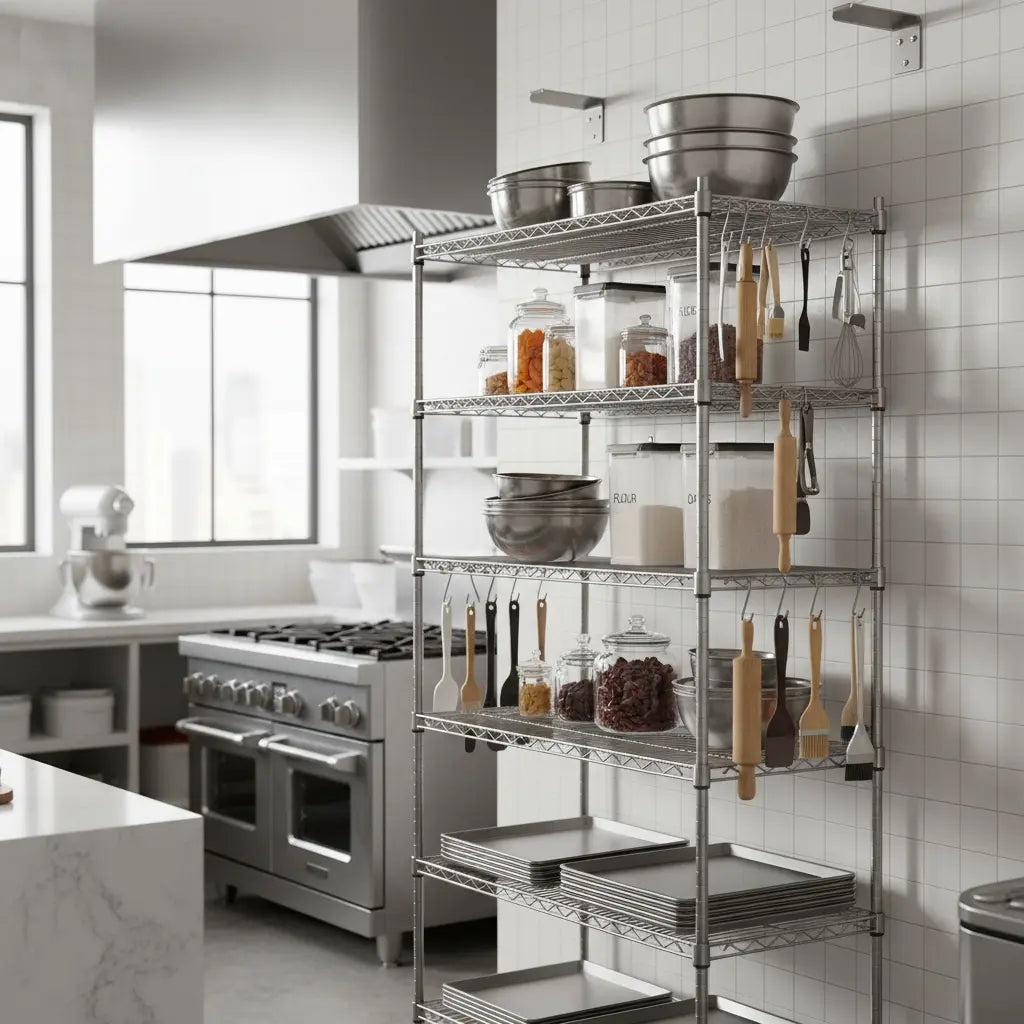
Summary
Securing a tall bakers rack is a critical safety step that involves anchoring the unit to a wall stud using specialized anti-tip hardware to prevent accidental tipping. This process ensures stability in homes with children or pets and complies with modern safety standards like the STURDY Act and ASTM F2057-23.
Key takeaways
- Mandatory Anchoring: Always secure any furniture taller than 27 inches to a wall stud using an anti-tip kit.
- Weight Distribution: Place the heaviest kitchen appliances on the bottom shelves to lower the center of gravity.
- Hardware Selection: Use steel brackets or nylon straps rated for the specific weight of your bakers rack and its contents.
- Floor Considerations: Ensure the rack is level on the floor surface before anchoring to prevent structural tension.
- Regular Inspections: Check the tension and security of wall anchors every six months, especially in high-traffic kitchen areas.
Understanding furniture tip-over risks and safety standards
The risk of furniture tipping over is a significant safety concern that has led to major regulatory shifts in recent years. As of 2026, the Consumer Product Safety Commission (CPSC) continues to emphasize the importance of furniture anchoring, particularly following the implementation of the STURDY Act. This legislation mandates that clothing storage units meet rigorous stability tests, but the principles apply to all tall, freestanding furniture including kitchen bakers racks.
The ASTM F2057-23 standard provides the technical framework for these safety requirements. While primarily focused on dressers, these standards have influenced the design and safety recommendations for all tall storage units. For instance, when considering the materials of your furniture, understanding engineered wood safety standards is essential. This guide explores the critical safety standards governing engineered wood products, such as CARB Phase 2 and EPA TSCA Title VI, which are crucial for maintaining indoor air quality and structural integrity.
Logic Summary: Safety standards like ASTM F2057-23 are used as a benchmark for furniture stability. While bakers racks are often metal-framed, the anchoring principles remain the same: prevent the unit from moving forward when weight is applied to the upper sections.
Step-by-step guide to securing your tall bakers rack
Securing a bakers rack requires a few basic tools and a systematic approach. Whether you are setting up a 5-tier bakers rack with outlets or a traditional metal unit, the following steps will ensure a secure installation.
1. Identify the wall studs
The most secure way to anchor furniture is directly into a wall stud. Use a stud finder to locate the vertical wooden supports behind your drywall. Marking the center of the stud is crucial for maximum screw retention. If a stud is not available at the exact location of your rack, you must use heavy-duty toggle bolts or specialized drywall anchors rated for at least 100 lbs.
2. Prepare the anti-tip kit
Most modern furniture includes an anti-tip kit. If yours did not, purchase a high-quality kit featuring steel cables or heavy-duty nylon straps. Avoid plastic "zip-tie" style anchors as they can become brittle over time in kitchen environments with fluctuating temperatures and humidity.
3. Attach the bracket to the furniture
For metal-framed bakers racks, attach the bracket to the highest possible point on the rear frame. Ensure the bracket is secured to a structural member of the rack, not just a decorative wire shelf. If you are working with a wooden unit, pre-drilling pilot holes will prevent the wood from splitting. Following proper furniture assembly techniques during this phase ensures that the rack's structural integrity is maintained.
4. Secure the bracket to the wall
Align the furniture bracket with your marked wall stud. Drill a pilot hole into the stud and secure the wall bracket using the screws provided in your kit. Ensure the screw is long enough to penetrate at least 1.5 inches into the wood stud.
5. Connect and tension the system
Once both brackets are installed, connect them using the provided cable or strap. Pull the strap tight enough to remove slack but not so tight that it pulls the rack away from the wall at the base. The rack should sit flush and level on the floor.

Optimizing stability through weight distribution
Beyond physical anchoring, the way you load your bakers rack significantly impacts its stability. A top-heavy rack is much more prone to tipping, even if anchored.
| Shelf Level | Recommended Items | Stability Impact |
|---|---|---|
| Bottom Shelf | Stand mixers, gallon jugs, heavy cast iron | Lowers center of gravity significantly |
| Middle Shelves | Microwaves, coffee makers, cookbooks | Maintains central balance |
| Top Shelves | Spices, light linens, decorative items | Minimizes leverage during a tip event |
| Hanging Hooks | Lightweight mugs, utensils | Negligible impact if distributed evenly |
Logic Summary: This distribution heuristic assumes a standard 5-tier rack. The goal is to keep at least 60% of the total weight on the bottom two shelves. This reduces the force applied to the wall anchor in the event of a child climbing or an accidental pull.
Floor surface impact on furniture stability
The surface your bakers rack sits on plays a vital role in its overall safety. Friction and levelness are the two primary factors to consider.
- Hardwood and Tile: These surfaces offer high stability but can be slippery. Use rubberized furniture pads under the feet to increase friction and prevent the base from "kicking out" if the top is pulled.
- Carpet and Rugs: Carpet can create a "diving" effect where the front feet sink deeper than the back feet, naturally tilting the rack forward. Use furniture shims to ensure the unit is perfectly vertical or slightly tilted toward the wall before anchoring.
- Uneven Floors: In older homes, floors may not be level. Always use the adjustable leveling feet found on many Bestier units to compensate for floor slope. If your rack remains unstable, consult our guide on furniture stability solutions for advanced leveling techniques.

Decorative and functional considerations
Safety doesn't have to compromise style. Once your rack is securely anchored, you can focus on the aesthetic aspects of your kitchen setup. Whether you are looking for bakers rack styling ideas or exploring the complete bakers rack collection, remember that the most beautiful furniture is safe furniture.
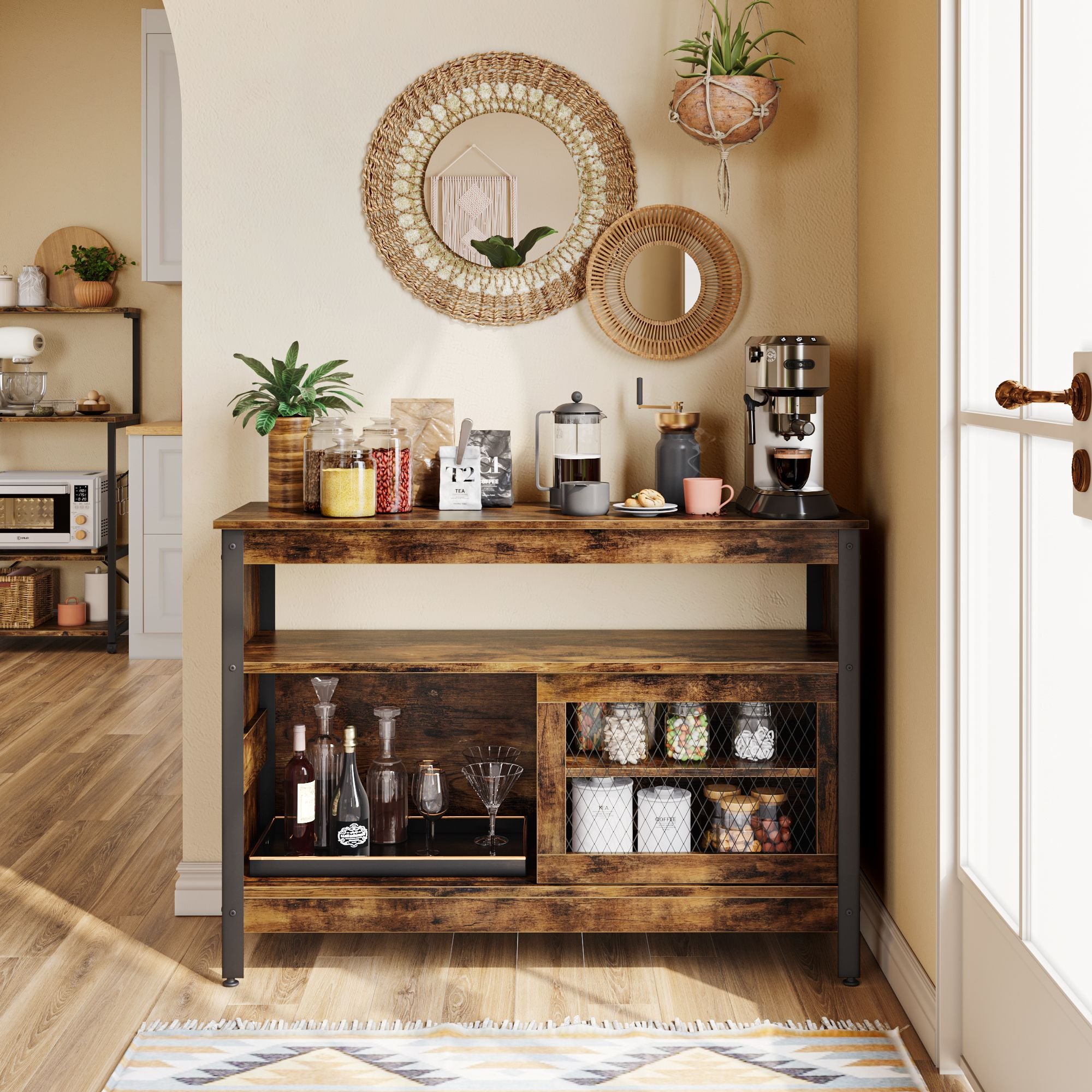
When styling, ensure that hanging items do not obstruct the anti-tip straps. If you use the rack as a coffee station, keep water reservoirs on lower or middle shelves to prevent top-heavy spills.
FAQ
Do I really need to anchor my bakers rack if I don't have children? Yes, anchoring is highly recommended for all tall furniture regardless of household members. Unexpected events like earthquakes, accidental bumps during cleaning, or even a heavy pet jumping on a shelf can cause a tall, narrow unit to tip. In a kitchen environment, a tipping rack with heavy appliances or glassware poses a severe injury risk to anyone nearby.
Can I use adhesive anti-tip kits instead of drilling? Adhesive kits are generally considered a secondary safety measure and are not a substitute for mechanical anchoring into a stud. While some high-strength adhesives claim to hold significant weight, they are subject to failure due to paint peeling, humidity, or surface contamination. For a tall bakers rack, a screw-in wall anchor is the only method that meets professional safety recommendations.
What should I do if my wall stud doesn't line up with the rack? If the wall stud is not directly behind the rack's frame, you have two reliable options. You can install a horizontal "cleat" (a piece of 1x4 wood) across two studs and then anchor the rack to the cleat. Alternatively, use heavy-duty toggle bolts, which provide significantly more holding power in drywall than standard plastic expansion anchors.
How often should I check the safety anchors? It is a best practice to inspect your furniture anchors every six months. Check for any signs of the wall screw loosening, the strap fraying, or the bracket bending. In kitchens, the constant vibration from appliances and changes in humidity can occasionally cause hardware to settle or loosen over time.
Does the STURDY Act apply to metal bakers racks? Technically, the STURDY Act specifically targets "clothing storage units" like dressers and chests. However, the safety principles and testing methodologies established by the act are being adopted across the entire furniture industry. Manufacturers are increasingly applying these stability standards to all tall units, including metal bakers racks, to ensure consumer safety and reduce liability.
Can I anchor a bakers rack to a brick or masonry wall? Yes, but you will need a masonry drill bit and specialized masonry anchors or Tapcon screws. Standard wood screws will not hold in brick or mortar. Ensure you drill into the brick itself rather than the mortar joints for the most secure hold, as mortar can crumble under tension.
References
Government / Standards / Regulators
- CPSC - Anchor It! Campaign
- STURDY Act Legislation - Congress.gov
- ASTM F2057-23 Standard Safety Specification
Industry Associations / Research Institutes
- American Home Furnishings Alliance (AHFA) Safety Resources
- Eurofins Furniture Stability Testing Guide
Platform Official Docs & Policies
Community
- Reddit r/DIY - Furniture Anchoring Discussion (Intent only; not authoritative)
