

Summary
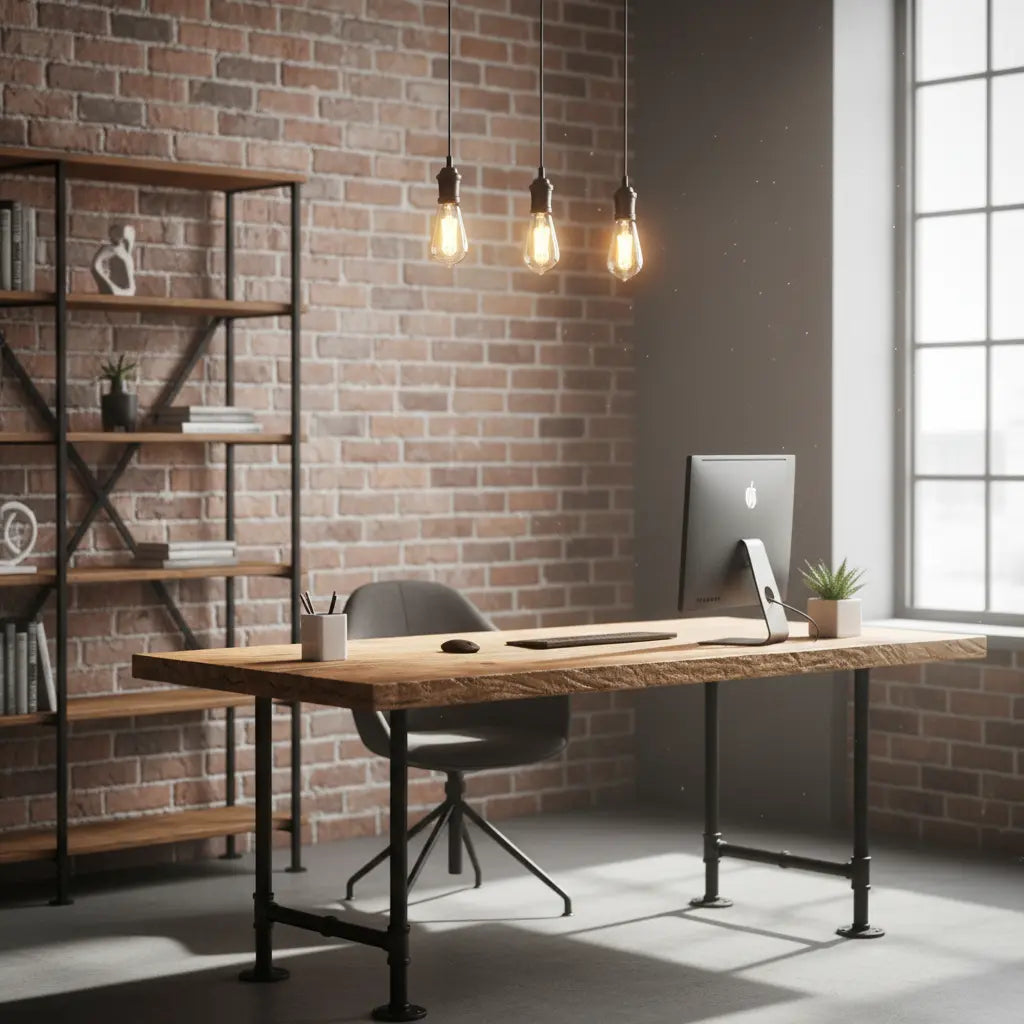
Creating an industrial home office in 2026 centers on the sophisticated balance between rugged structural elements and warm, organic textures. By pairing powder-coated steel frames with high-quality wood-grain finishes, you can establish a workspace that feels both professionally disciplined and creatively inviting. This aesthetic is not merely about a "factory look" but about intentionality—selecting durable materials that meet modern safety standards while optimizing for productivity and ergonomic health.
Key takeaways
- Material Synergy: The core of the industrial look is the contrast between cool, matte metal and warm, textured wood.
- Safety First: Prioritize furniture that meets CARB Phase 2 and EPA TSCA Title VI standards to ensure healthy indoor air quality.
- Ergonomic Integration: Industrial design often uses rigid lines, so incorporating adjustable monitor arms and ergonomic chairs is essential for long-term comfort.
- Space Optimization: L-shaped desks and vertical shelving are the most effective ways to implement industrial aesthetics in smaller home offices.
- Maintenance: Regular care for both metal and wood surfaces ensures the longevity and professional appearance of your setup.
How to Define the Modern Industrial Aesthetic in 2026
The industrial aesthetic has evolved from the raw, unrefined loft styles of the early 2000s into a more polished, "modern industrial" movement. In 2026, this style is defined by clean lines, functional minimalism, and a focus on material integrity. It moves away from overly distressed "fake" aging and toward authentic-looking textures that provide a tactile experience. When designing your space, look for pieces that showcase their construction—visible bolts, steel cross-bracing, and thick wood tops.
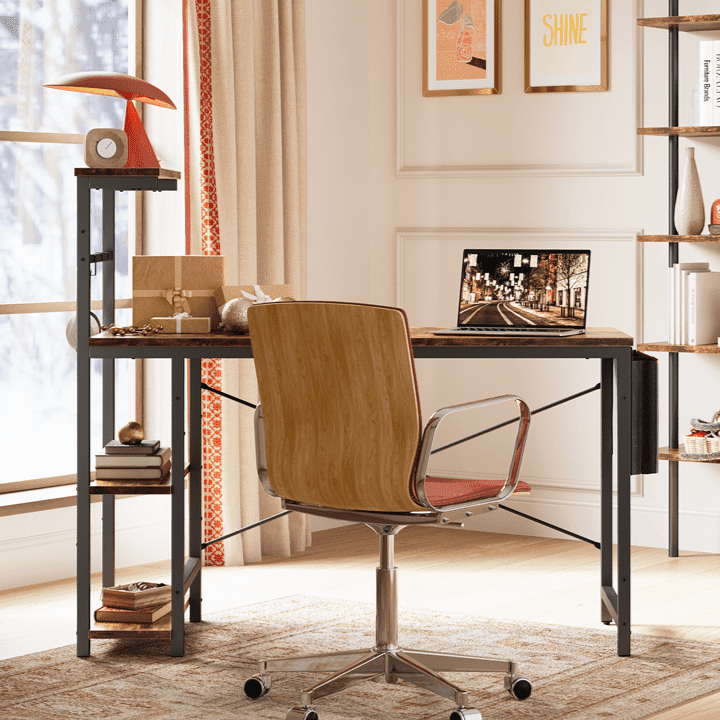
This aesthetic works particularly well for home offices because it minimizes visual clutter. The utilitarian nature of industrial furniture encourages an organized environment where every item has a purpose. To achieve this, start with a foundational piece like a metal and wood desk that sets the tone for the rest of the room. Complement the furniture with neutral wall colors like charcoal, slate, or warm taupe to allow the wood grains to stand out.

Logic Summary: The modern industrial aesthetic relies on the "Rule of Three" materials: metal, wood, and a soft element (like leather or felt). This prevents the room from feeling too cold or sterile, which is a common pitfall in industrial design.
Selecting the Perfect Metal and Wood Desk for Your Workflow
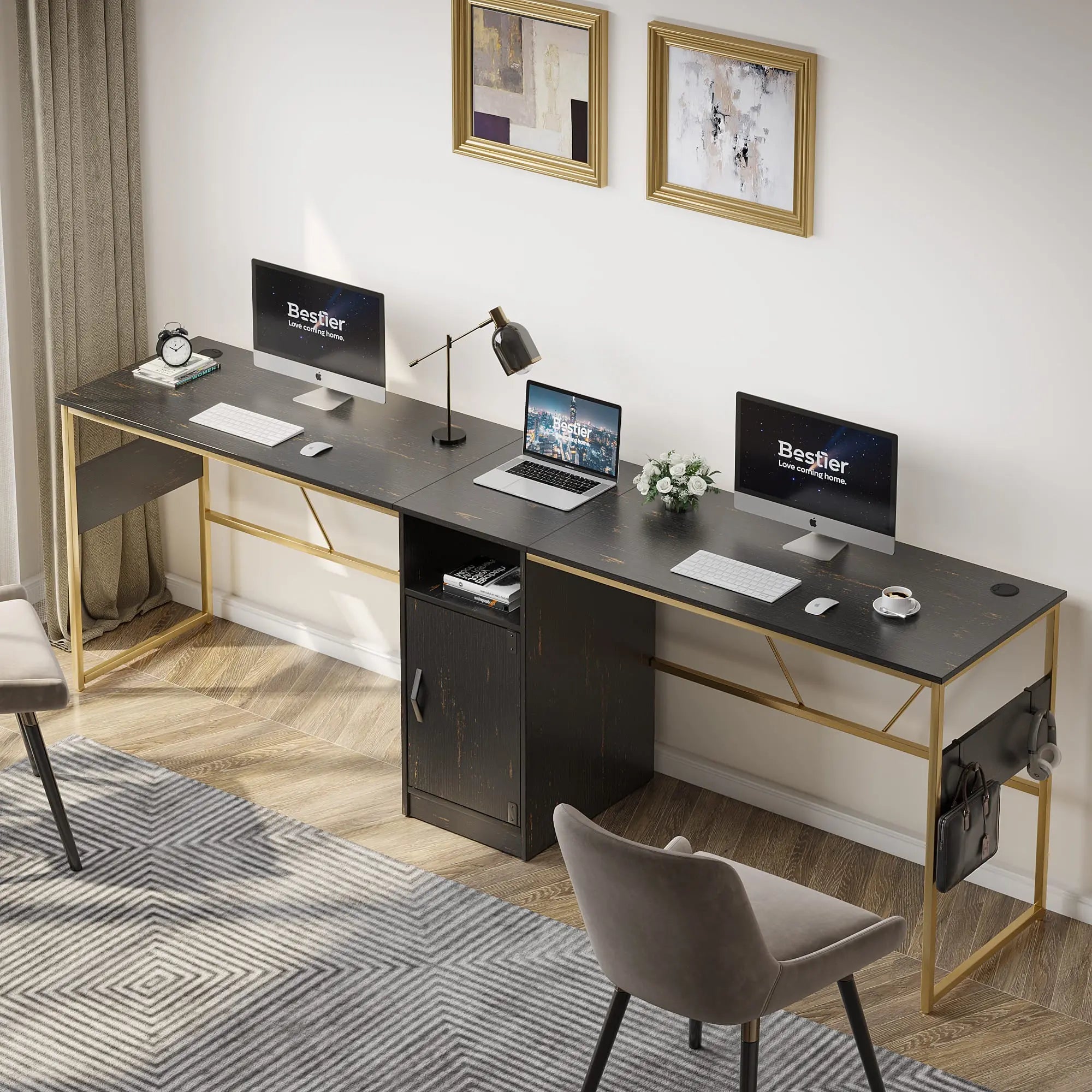
Your desk is the "engine room" of your home office. In an industrial setup, the desk should feel substantial and grounded. A Bestier industrial style furniture guide often emphasizes the importance of a sturdy steel frame to prevent wobbling, especially if you use multiple monitors or heavy equipment.
When choosing between different types of desks, consider your daily tasks:
- The Executive Setup: If you handle significant paperwork or require a large surface for creative projects, a wide rectangular desk with integrated drawers provides the necessary real-time storage.
- The Minimalist Setup: For those who work primarily on a laptop, a slim-profile desk with a simple metal frame keeps the room feeling airy and open.
- The Tech-Heavy Setup: Look for desks with built-in power outlets and cable management trays. Industrial designs often struggle with "cable creep" because of their open frames, so integrated solutions are a major advantage.
For a versatile option that fits many professional needs, the Bestier 48 Inch Office Computer Desk with Drawers offers a balanced combination of storage and surface area within a compact footprint.
Space-Saving Industrial L-Shaped Desk Ideas
For many homeowners, the office is a shared space or a small corner of a bedroom. This is where industrial l shaped desk ideas become invaluable. An L-shaped configuration maximizes corner real estate, providing two distinct zones: one for your computer and another for "analog" tasks like writing, reading, or coffee breaks.
In an industrial desk setup for small spaces, verticality is your best friend. Choose an L-shaped desk that includes built-in shelving or a hutch. This allows you to store books and equipment upward rather than outward, preserving precious floor space. To keep the area from feeling cramped, ensure there is at least 30 inches of clearance behind the desk for your chair to move freely.
| Feature | Benefit for Small Spaces |
|---|---|
| Reversible Layout | Allows the desk to fit into any corner regardless of room orientation. |
| Open Shelving | Maintains "visual transparency," making the room feel larger than it is. |
| Built-in Power | Reduces the need for bulky power strips on the floor. |
| Raised Monitor Stand | Frees up desk surface area for keyboards and notebooks. |
Balancing Rugged Design with Ergonomic Comfort
One of the most significant "SERP gaps" in industrial design advice is the lack of focus on ergonomics. Because industrial furniture is often characterized by hard surfaces and 90-degree angles, it can be unforgiving during an eight-hour workday. To maintain health and productivity, you must bridge the gap between "rugged look" and "ergonomic feel."
First, consider your seating. An industrial-style chair might look great, but it rarely provides the lumbar support needed for professional work. We recommend pairing your industrial desk with a high-quality ergonomic task chair. If the visual contrast is too sharp, look for chairs with matte black frames or leather upholstery that mimics the industrial palette.
Second, address the height of your equipment. Use a monitor arm—preferably one with a matte black finish to match your desk's steel frame—to ensure your screen is at eye level. This prevents the "tech neck" often associated with looking down at laptops. For more detailed setup tips, refer to our comprehensive home office guide.

Material Safety: Understanding CARB and TSCA Standards
When purchasing furniture that utilizes engineered wood (like MDF or particle board with wood-grain veneers), safety is a critical consideration. Many industrial-style pieces on the market use these materials to achieve the desired look at an accessible price point. However, not all engineered wood is created equal.
In 2026, savvy consumers look for certifications that guarantee low formaldehyde emissions. The two primary standards are CARB Phase 2 (California Air Resources Board) and EPA TSCA Title VI. These regulations ensure that the adhesives used in the wood do not off-gas harmful chemicals into your home.
According to the authoritative guide on Engineered Wood Safety, understanding these regulations is essential for maintaining indoor air quality. The guide explains that CARB Phase 2 compliant materials emit significantly lower levels of formaldehyde (typically between 0.05 and 0.09 ppm) compared to non-certified alternatives. When setting up an industrial home office, always verify that your furniture meets these rigorous third-party standards.
Logic Summary: While solid wood is often seen as the "gold standard," high-quality CARB-compliant engineered wood is often more stable in varying humidity levels, preventing the warping that can occur with raw industrial timber.
Maintenance Tips for Metal and Wood Furniture
To keep your modern industrial office decor looking professional, you must care for two very different materials. Metal and wood have different "enemies" and require specific cleaning protocols.
For the Metal Frame:
- Dusting: Use a microfiber cloth to remove dust. Matte black powder-coated finishes can show fingerprints easily; a slightly damp cloth with a drop of mild dish soap will remove these without damaging the finish.
- Rust Prevention: While most modern office furniture is powder-coated to prevent oxidation, avoid using abrasive scrubbers that could scratch the coating and expose the raw steel to moisture.
For the Wood Surface:
- Spill Response: Wood-grain veneers are water-resistant but not waterproof. Wipe up spills immediately to prevent the moisture from seeping into the seams.
- Heat Protection: Always use coasters for hot drinks. Excessive heat can cause the adhesive in veneers to soften or the finish to cloud.
- Cleaning: Use a wood-specific cleaner or a simple mixture of water and vinegar. Avoid "all-purpose" sprays that contain bleach or ammonia, as these can strip the protective topcoat over time.
FAQ
What are the best colors for an industrial home office? The most effective industrial color palettes rely on a foundation of "neutral-cool" tones. Think charcoal gray, matte black, and slate for the structural elements, paired with "warm-organic" tones like oak, walnut, or cherry for the wood surfaces. To prevent the room from feeling too dark, use off-white or light gray on the walls to reflect natural light.
Can I mix different wood tones in an industrial office? Yes, mixing wood tones can actually enhance the authentic "reclaimed" feel of an industrial space. The key is to keep the metal finishes consistent (e.g., all matte black or all brushed steel) to provide a unifying thread. Try to limit yourself to two dominant wood tones—one for the desk and another for shelving or flooring—to maintain a cohesive look.
How do I manage cables on an open-frame industrial desk? Open-frame desks are beautiful but offer nowhere to hide wires. Use adhesive cable clips along the back of the metal legs to route cords downward. Under-desk cable management trays that match the metal frame are also highly effective. For a truly clean look, use braided cable sleeves in black or gray to bundle multiple cords into a single, intentional-looking line.
Is industrial furniture suitable for small apartments? Absolutely. The "visual weight" of industrial furniture is often lower than traditional bulky office furniture because of the thin metal legs and open shelving. This "see-through" quality helps a small room feel less cluttered. Choosing an L-shaped desk that fits into a corner is one of the most efficient ways to use limited square footage.
How can I improve the acoustics in a room with metal furniture? Metal and wood are hard surfaces that reflect sound, which can lead to echoes during video calls. To fix this without ruining the aesthetic, incorporate soft textures. A thick area rug, canvas wall art, or even felt desk pads can absorb sound waves. Some modern industrial designs now include "acoustic wood slats" which provide both a beautiful wood texture and sound-dampening properties.
How do I know if my industrial desk is high quality? Look at the specifications of the materials. High-quality industrial furniture will use heavy-duty steel (often 1.2mm thick or more) and CARB Phase 2 compliant wood. Check the weight capacity; a desk rated for 150+ lbs indicates a much more stable frame than a "budget" alternative. Finally, look for powder-coated finishes rather than simple spray paint, as powder-coating is much more resistant to chips and scratches.
References
Government / Standards / Regulators
- EPA: Formaldehyde Emission Standards for Composite Wood Products
- California Air Resources Board (CARB): Composite Wood Products Program
Platform official docs & policies
Industry associations / research institutes / market reports
- Business and Institutional Furniture Manufacturers Association (BIFMA): Ergonomics and Safety Standards
- National Wood Flooring Association (NWFA): Wood Species and Maintenance Guides
Academic / whitepapers / labs
- ResearchGate: Impact of Indoor Environmental Quality on Home Office Productivity (Intent only; search for 2026 workplace studies)
Community
- Reddit: r/HomeOffice - Industrial Setup Megathread (Intent only; not authoritative)
