



Kitchen island carts with power outlets deliver a practical way to add both extra storage and convenient appliance access in tight kitchens. For apartment dwellers and anyone short on counter space, these rolling units can serve as a dedicated station for your coffee maker, microwave, or mixer without requiring permanent installation or extensive remodeling.
The combination of mobility, shelving, and built-in electrical outlets makes them especially appealing in small or open-plan kitchens where every square foot counts. However, success depends on matching the cart's size, load capacity, and power features to your actual layout and appliance needs.
What Makes a Powered Kitchen Island Cart Different
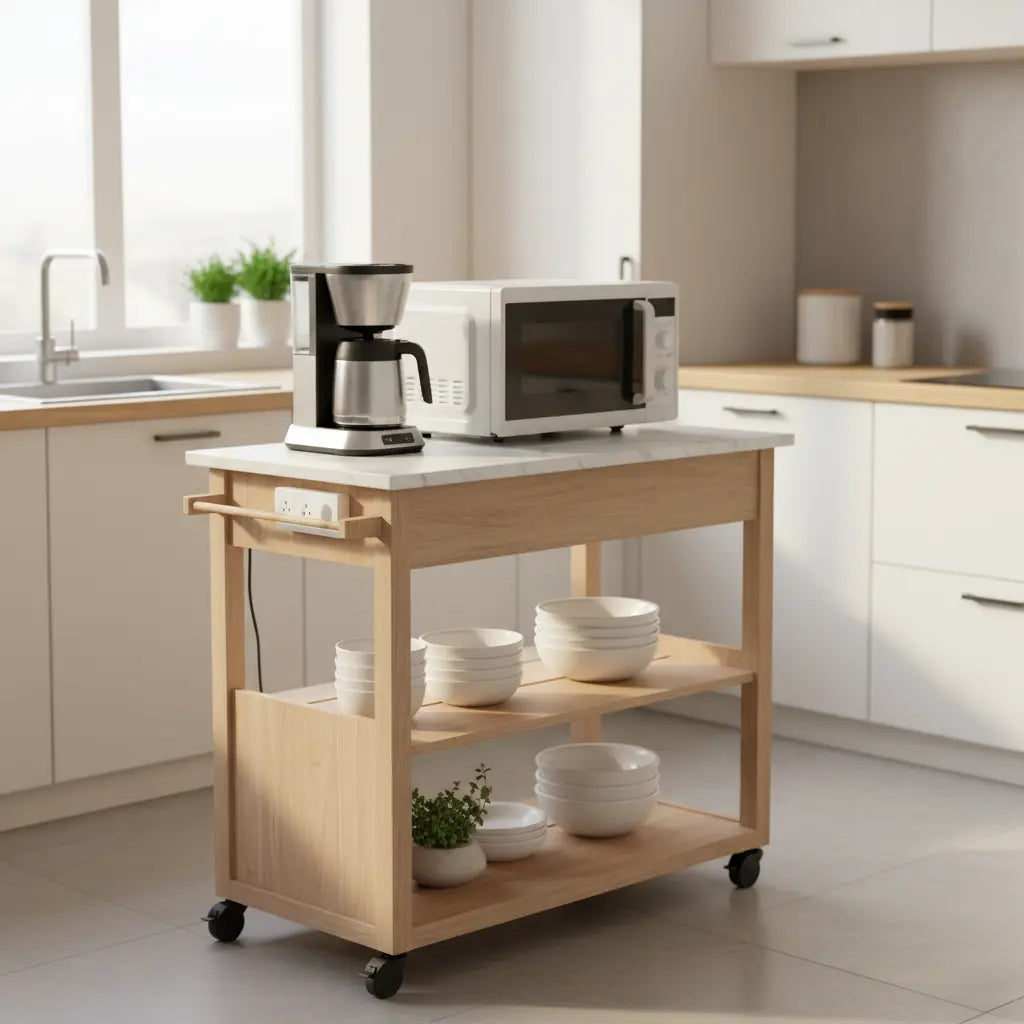
Unlike traditional kitchen carts, models with integrated power outlets turn the piece into a functional appliance hub. You can keep devices plugged in and ready without hunting for wall outlets or running extension cords across traffic areas. Many designs also include USB ports for charging phones or tablets while you prep.
Market listings commonly highlight storage drawers, spice racks, drop leaves for extra workspace, and sturdy wheels that let you move the unit between meal prep, serving, and cleanup zones. This flexibility addresses the common pain points of limited countertop space and inaccessible power in compact kitchens.
According to electrical code discussions, receptacle placement around kitchen islands and peninsulas is addressed in current NEC guidance, though movable carts are treated differently from fixed installations. This NFPA article on kitchen island receptacle outlets explains why buyers should verify local requirements and treat these carts as mobile appliance stations rather than permanent wiring solutions.

Key Considerations Before Buying
Not every powered cart will work equally well in every kitchen. Start by measuring your available floor space and typical traffic paths. A cart that leaves less than about 30 inches of clear aisle often feels cramped in daily use, while 36 inches provides more comfortable circulation.
Load capacity is equally important. Look for carts that list a top-surface rating of at least 50 pounds for lighter devices and closer to 75–100 pounds or more for heavier appliances. Total cart capacity should ideally exceed your expected load by about 1.5 times to provide a safety margin. Heavier items belong on lower shelves to keep the center of gravity low.
Caster quality affects real-world usability. Two-inch wheels are the minimum for smooth rolling on typical floors, but three-inch casters handle grout lines and small obstacles better. At least two locking casters (preferably four) help stabilize the unit when using it as a work surface.
Electrical features require caution. Built-in outlets add convenience, but many are best suited for light to moderate loads. Avoid relying on them for appliances that regularly draw 1,200–1,500 watts or more unless the manufacturer's rating clearly supports that usage. Always confirm outlet capacity, grounding, and cord management before plugging in high-wattage devices.
This article only discusses comfort and setup considerations for kitchen storage solutions. It does not constitute advice about electrical code compliance, safety certification, or appliance suitability. If you have questions about your local electrical requirements or existing eye or health conditions that could relate to kitchen setup, consult qualified professionals.
Scenarios: When Different Cart Features Matter Most
The best cart depends heavily on how you plan to use it. Here is a practical breakdown of common situations.
In a small apartment where the cart needs to move frequently, prioritize models with good casters and a drop-leaf top. The fold-out surface gives temporary prep space while the compact footprint preserves circulation when stored against a wall.
For setups that stay near one wall or outlet, a more stable cart with stronger storage and reliable power becomes preferable. This configuration works well as a semi-permanent coffee or microwave station.
In open-plan kitchens where the cart functions like a true island, heavier construction with a larger work surface and robust power features usually delivers better results. Stability matters more than frequent mobility in these layouts.
When you use heavier appliances daily, focus on load ratings and electrical headroom first. Light coffee-maker or charging use lets you emphasize storage volume and easier rolling instead.
If extra prep surface is your main goal, choose a drop-leaf design. When organization and pantry storage come first, look for models with more enclosed cabinets and shelves rather than open expandable tops.
The following chart illustrates how feature priorities shift across typical scenarios. Scores represent relative emphasis (higher means more important for that use case) and are based on practical thresholds rather than laboratory measurements.
Powered Kitchen Island Cart: Feature Priority by Scenario
Use this chart to compare which features matter most in each kitchen scenario; it is an illustrative prioritization, not a performance benchmark.
View chart data
| Category | Aisle fit | Load capacity | Caster mobility | Electrical headroom | Stability |
|---|---|---|---|---|---|
| Small apartment / mobile use | 5.0 | 3.0 | 2.0 | 3.0 | 2.0 |
| Family kitchen / semi-permanent | 3.0 | 4.0 | 3.0 | 2.0 | 4.0 |
| Heavy appliance setup | 3.0 | 3.0 | 2.0 | 2.0 | 5.0 |
| Budget basic use | 2.0 | 3.0 | 5.0 | 2.0 | 1.0 |
Heuristic, bounded prioritization derived from buying-guide thresholds and scenario matrix: aisle fit around 30-36 inches, top shelf load around 50-100+ lb, total load about 1.5x expected use, caster size about 2-3 inches, and electrical caution above roughly 1200-1500W without a rating. Scores are relative priorities (1-5), not measurements.

Buying Checklist for Rolling Kitchen Carts with Power
Use these practical checkpoints to evaluate options:
- Measure your space first. Confirm the cart plus required clearance fits without blocking doorways or walkways.
- Check weight ratings. Verify both top-surface and total capacity against your heaviest planned appliance.
- Inspect the power module. Look for clearly stated ratings and avoid high-wattage appliances on underspecified outlets.
- Evaluate mobility needs. Choose larger, locking casters if you plan frequent movement; opt for stability features if the cart will stay mostly in one spot.
- Consider drop-leaf versus fixed top. A folding extension helps in very tight kitchens, while a solid top may offer better everyday stability.
- Review storage layout. Match drawer, cabinet, and shelf configuration to whether you need appliance support, pantry organization, or both.
Because island receptacle rules vary by jurisdiction and installation type, buyers should confirm local electrical requirements before relying on a powered cart. This remains especially important when the unit will support continuous appliance use.
Common Features in Today's Market
Most powered kitchen carts include multiple AC outlets plus USB ports, open shelving for easy access, and wheels for repositioning. Drop leaves appear frequently as a space-saving solution that expands your work surface only when needed. Some models add towel racks, spice organizers, or trash-bin compartments for even more functionality.
These designs address the core needs of limited countertop space for appliances and lack of nearby power outlets. They can create a dedicated station that keeps your coffee maker, blender, or microwave organized and plugged in.
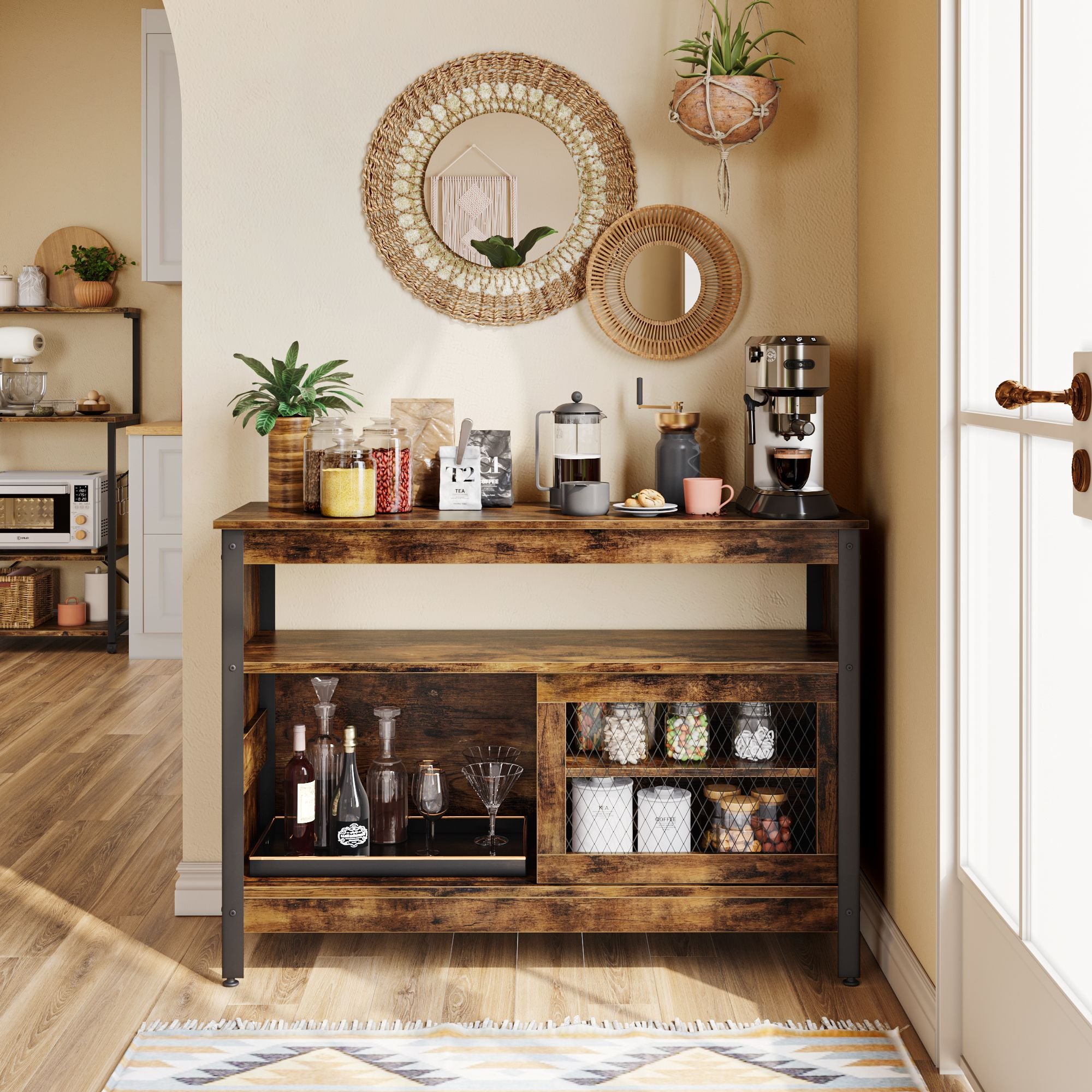
For small kitchens, a bakers rack with power outlet or similar rolling island can clear cluttered counters while providing both storage and charging capability. Many users also appreciate models that double as a kitchen island with drawer for extra organization.
Who Should Consider Skipping This Category
Powered rolling carts may not be the right choice in every situation. Skip them if your kitchen is so tight that even a compact model would permanently reduce passage space. They also make less sense when your heaviest appliances exceed typical cart ratings or when you need to move a fully loaded unit across uneven floors daily.
If local code questions around receptacle placement remain unresolved for your intended setup, or if you prefer a fully built-in island, a traditional fixed solution might serve you better. Always prioritize safety and realistic daily use over attractive features.
Styling and Setup Tips for Maximum Efficiency
Position your cart near an existing wall outlet to minimize cord length. Use cable management clips or wraps to keep cords tidy and away from traffic. Place heavier appliances on the most stable surface and keep frequently used items at waist height for easy access.
Incorporate the cart into your overall kitchen flow. A unit placed between the sink and stove can serve as an efficient prep station, while one near the dining area works well for serving or as a casual breakfast bar.
Many shoppers pair these carts with complementary pieces. Explore the Bestier Kitchen & Dining Room Furniture collection for matching storage options, or check Bestier Baker's Racks for additional organization ideas.
For more inspiration on creating efficient small kitchens, see our guide to small kitchen coffee bar ideas using a bakers rack.
Final Thoughts
A well-chosen kitchen island cart with power can meaningfully improve both storage and workflow in compact kitchens. Focus first on fit, load capacity, and realistic electrical needs rather than maximizing features. When the cart matches your actual space and usage patterns, it becomes a versatile, mobile solution that adapts to cooking, serving, and daily organization tasks.
Remember that these units offer setup-dependent convenience rather than guaranteed performance for every appliance or layout. Take accurate measurements, review product specifications carefully, and confirm that any electrical aspects align with your local requirements. With the right selection, a powered rolling cart can help transform a cramped kitchen into a more functional and organized space.
