


Narrow kitchens in apartments and older homes often force tough choices between counter space for your coffee maker and cabinet room for dry goods and snacks. A well-chosen bakers rack can solve both problems by creating a compact mini pantry and dedicated coffee bar without requiring renovation or eating into your main walkway. When the unit is shallow enough to fit a galley layout and placed against a stable wall, it turns wasted vertical space into organized, reachable storage that keeps daily essentials visible and contained.

This approach works particularly well for renters and coffee enthusiasts who want one piece of furniture to handle overflow pantry items, mugs, filters, beans, and small appliances. The key is selecting the right dimensions and features so the rack enhances rather than crowds your kitchen flow. Below we walk through how to evaluate fit, organize the setup, choose the best style, and avoid common pitfalls that turn a promising storage solution into an obstruction.
Why a Bakers Rack Solves Narrow Kitchen Storage Challenges
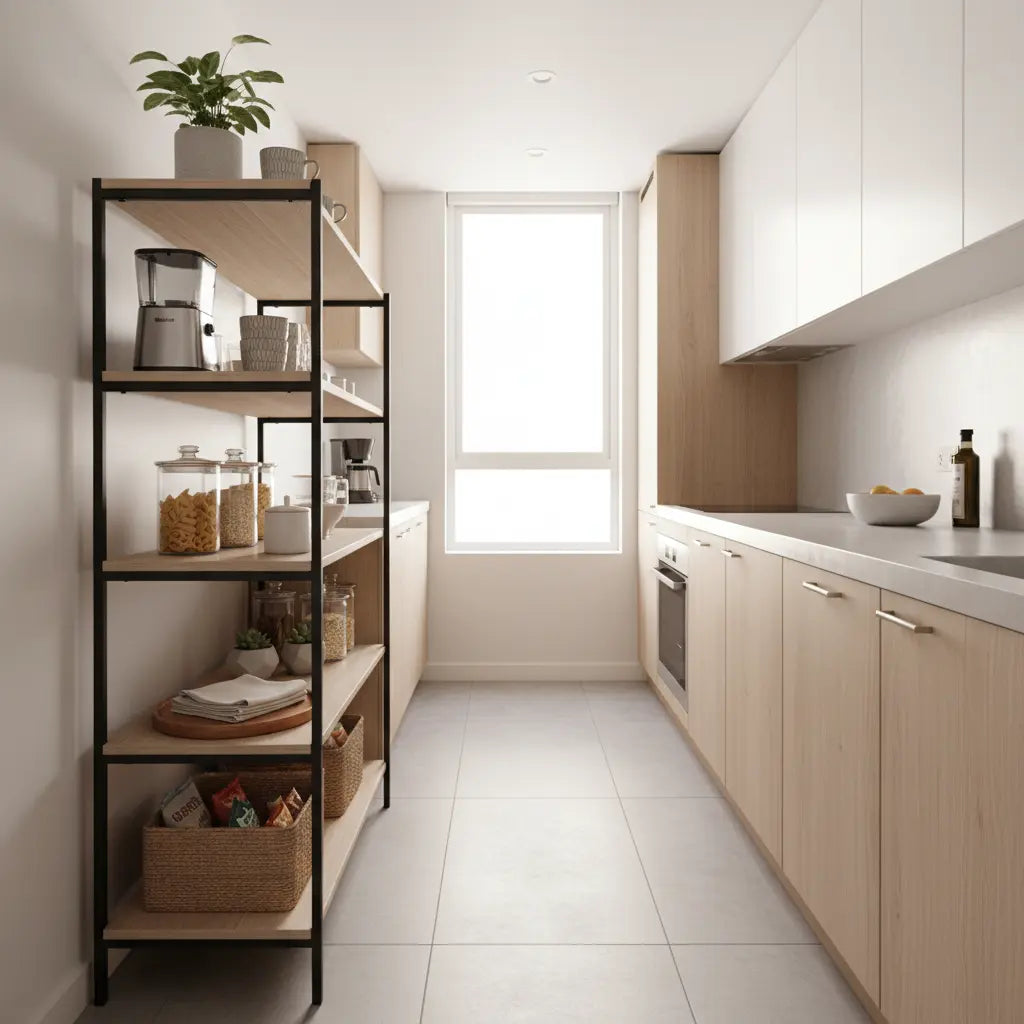
Most apartment kitchens lack a dedicated pantry, leaving cabinets overstuffed with snacks, baking supplies, and coffee accessories. Standard base cabinets are often too deep for easy access in tight spaces, while adding a full kitchen island or large cabinet usually violates clearance needs in a galley layout. A bakers rack addresses this by offering open, adjustable shelving that maximizes height rather than footprint.
Official housing planning documents highlight that compact living spaces benefit from optimized pantry and cabinet access. Shallow or vertical storage solutions help maintain usable reach without consuming precious floor area. In practice, this means a tall but narrow rack placed in a corner or along an underused wall can hold pantry overflow on upper levels while keeping coffee tools at counter height for daily convenience.
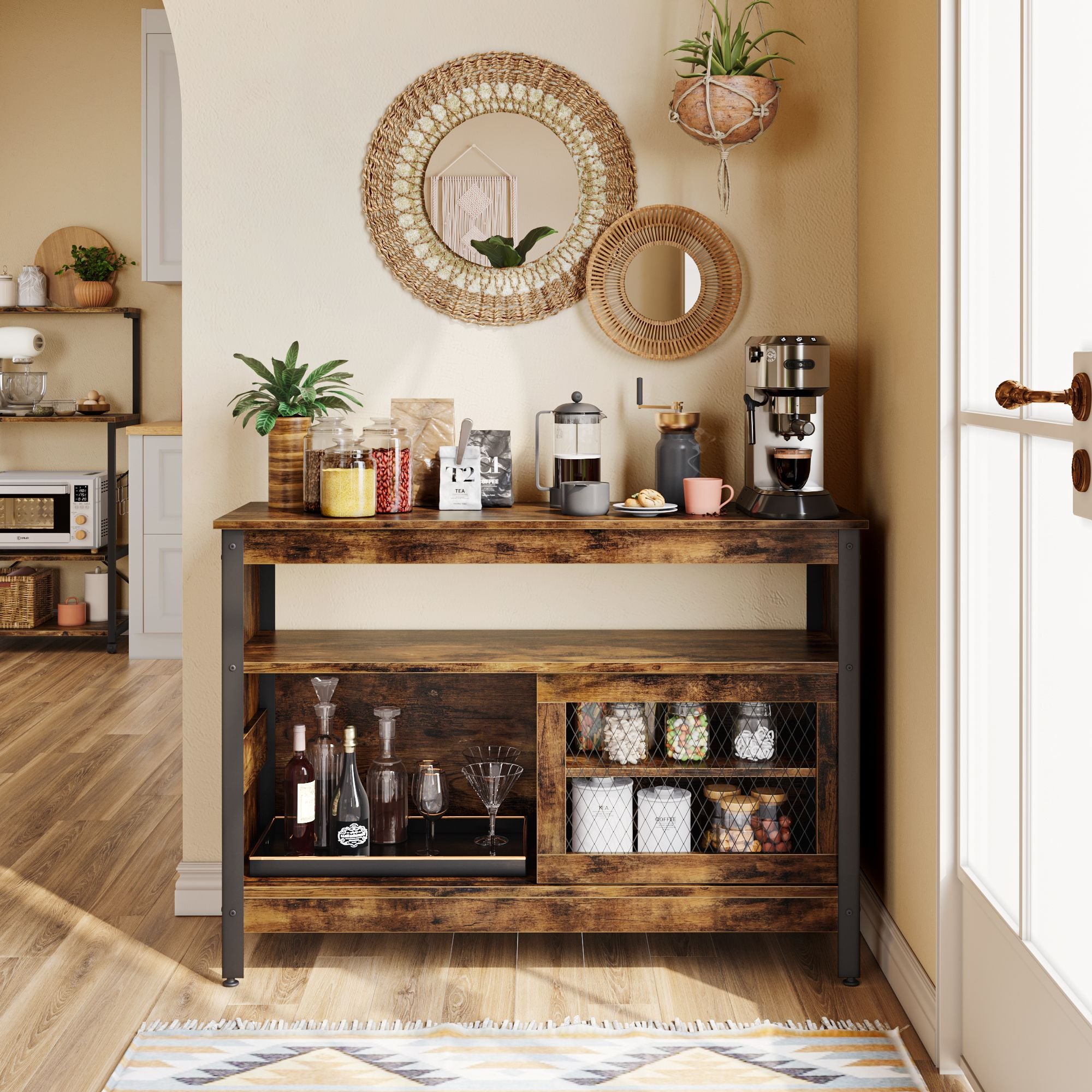
The dual-purpose design also creates a visual “coffee zone” that groups related items together. According to organization guidance, a dedicated station for mugs, beans, filters, and tools reduces counter clutter and makes morning routines smoother. When styled thoughtfully, the rack looks like intentional furniture rather than temporary overflow storage.
When a Bakers Rack Works Best (and When It Doesn’t)
Not every narrow kitchen is a good candidate for adding a freestanding rack. The decision hinges on whether the unit can add storage without narrowing the main circulation path or creating new safety concerns.
A bakers rack tends to deliver the highest value in a narrow galley or apartment kitchen that has an underused corner or flat wall section at least 15–18 inches deep. It shines when you need both visible pantry storage for dry goods and an accessible coffee station, especially in rentals where permanent built-ins are not allowed. The open shelves keep everything within easy reach, aligning with accessible design principles that favor usable storage over deep, hard-to-access compartments.
The choice flips in very tight layouts where any projection into the walkway creates a pinch point during cooking or when multiple people share the space. High-traffic kitchens may be better served by wall-mounted shelves that consume zero floor area. Similarly, if you primarily need concealed bulk storage rather than everyday items, a cabinet-style unit usually performs better than open shelving.
Here is a quick scenario matrix to help you judge fit:
- Ideal Galley Corner: Clear wall space, moderate traffic, strong need for visible pantry and coffee organization — rack usually wins.
- Tight High-Traffic Walkway: Rack would block appliance doors or force sideways passing — prefer shallow wall shelves instead.
- Wide Enough Kitchen: Plenty of clearance and desire for both storage and a small prep surface — a compact kitchen island or rolling cart may be preferable.
- Rental with No Anchoring Option: Tall unit in a busy area without ability to secure it — reconsider or choose a lower, inherently stable model.
To visualize these trade-offs across common kitchen situations, the chart below compares relative fit on key factors such as width compatibility, traffic tolerance, storage suitability, anchoring needs, and circulation safety. These scores are illustrative heuristics based on layout principles rather than measured performance data.
Bakers Rack Fit Guide by Scenario
Heuristic scenario fit guide for narrow kitchens. Scores are relative 1–10, not measured data.
View chart data
| Series | Kitchen Width | Traffic Tolerance | Storage Need Fit | Anchoring Fit | Circulation Safety |
|---|---|---|---|---|---|
| Ideal Galley Corner | 8.0 | 8.0 | 9.0 | 8.0 | 8.0 |
| Tight High-Traffic | 3.0 | 2.0 | 7.0 | 4.0 | 2.0 |
| Wide Kitchen | 7.0 | 7.0 | 7.0 | 8.0 | 7.0 |
| Rental No-Anchor | 5.0 | 4.0 | 8.0 | 1.0 | 4.0 |
Illustrative heuristic based on layout principles and article guidance: best when a bakers rack adds vertical storage without blocking circulation; narrow galley corners work better, very narrow or high-traffic paths work worse; anchoring improves safety for tall furniture; ADA-style easy-reach and apartment storage guidance support keeping key items accessible and paths clear.
Don’t Buy a Bakers Rack If… Practical Screening Rules
Before shopping, apply these exclusion criteria to avoid purchases that create more problems than they solve. Tall furniture used as kitchen overflow storage should be secured so it does not tip in everyday use. When you add a tall storage piece in a narrow kitchen, anchor it or choose a stable unit so it is less likely to tip.
Skip the rack if:
- It would stand unanchored in a high-traffic narrow passage where people or cabinet doors could bump it.
- The depth exceeds what your galley layout can spare once you account for door swings and walking clearance.
- You cannot keep frequently used coffee or pantry items within comfortable reach, forcing awkward stretching.
- The unit relies on top-heavy loading or unstable particleboard that may not hold up to kitchen humidity and spills.
- Your primary need is fully concealed storage rather than open, visible organization.
In these cases, shallower wall-mounted shelves or a low-profile rolling cart usually create fewer circulation and safety issues. Always measure your exact available width, depth, and height before ordering, and confirm the rack’s weight capacity matches your planned load of appliances and pantry jars.

How to Set Up Your Bakers Rack as a Mini Pantry and Coffee Bar
Successful setups start with zoning. Place the coffee maker and daily-use items on a middle shelf at comfortable counter height so you avoid constant bending or reaching. Use the top shelves for lighter pantry goods like beans, snacks, and extra mugs. Lower shelves or attached baskets work well for heavier items such as a small blender or stacks of paper towels.
Incorporate small organizers to maintain a polished look. Clear glass jars or labeled bins keep dry goods visible and tidy. A slim tray can corral coffee accessories, preventing them from scattering across shelves. Hooks on the side of the rack are perfect for hanging measuring spoons, towels, or reusable filters.
For coffee drinkers, dedicate one or two shelves exclusively to the beverage station. This grouping follows proven organization methods that keep related items together for faster routines and less visual clutter. If your chosen rack includes power outlets, position it near an existing outlet so you can run the coffee maker and any LED lighting without extension cords across the floor.
Pay attention to stability and safety. Even in a rental, many racks can be anchored discreetly to a stud using removable hardware. Check that the unit sits level and does not wobble when loaded. In humid kitchens, prefer powder-coated metal or sealed wood finishes that resist moisture better than raw particleboard.
Styling Tips for a Modern, Non-Cluttered Look
The difference between a functional storage rack and an eyesore often comes down to editing. Choose a rack whose width and height complement your existing cabinetry rather than competing with it. Neutral finishes such as matte black, brushed nickel, or light wood blend into most apartment kitchens while still providing contrast.
Limit decorative items to two or three small plants or a single piece of art on the top shelf. Keep counters directly in front of the rack clear so the overall kitchen still feels open. This restraint prevents the rack from becoming another crowded surface and maintains the clean aesthetic many small-space dwellers seek.
Several internal resources explore these styling approaches in greater depth. For more inspiration on creating beverage stations, see our guide to bakers rack home bar ideas that includes power integration and lighting. You can also explore small kitchen coffee bar ideas using a bakers rack for 2026 trends and safety considerations.
Choosing the Right Bakers Rack for Your Narrow Kitchen
Focus first on dimensions. Look for models between 15 and 20 inches deep so they do not dominate a standard galley walkway. Height should reach useful storage without exceeding your ceiling clearance or becoming top-heavy. Width depends on available wall space; a 24- to 36-inch unit often strikes the right balance between capacity and footprint.
Features worth considering include built-in power outlets for appliances, adjustable shelves for changing needs, and integrated hooks or baskets. Models with a small cabinet or drawer offer a place to hide less attractive items while keeping the open shelves looking intentional.
Material choice affects both durability and indoor air quality. Many quality racks use engineered wood or metal that meets current CARB Phase 2 and EPA TSCA Title VI formaldehyde emission standards. When shopping, verify third-party certification labels if you are sensitive to off-gassing in small living spaces.
Compare options within the Bestier Baker's Racks collection to see models designed specifically for tight kitchens. The Bestier Bakers Rack with Power Outlet is a popular choice for coffee bar setups because it combines storage with convenient power access. For those needing a bit more concealment, consider the Bestier Microwave Stand with Storage Cabinet Bakers Racks that adds an enclosed lower section.
If you want to browse a broader range of kitchen solutions, the Bestier Kitchen & Dining Room Furniture collection includes complementary pieces that can complete your storage strategy.
Safety and Maintenance Reminders for Small-Space Furniture
Any tall storage unit in a kitchen should be evaluated for stability, especially when children or pets are present. The AARP HomeFit Guide recommends anchoring tall furniture to prevent tipping accidents in everyday use. In narrow kitchens where movement is limited, this precaution becomes even more important.
Clean shelves regularly to avoid grease or coffee residue buildup. Choose racks with smooth, wipeable surfaces. Periodically check that screws and joints remain tight, particularly in units that get frequent use as a coffee station.
This article discusses comfort and setup advice for small kitchens only. It does not constitute medical advice, diagnosis, or treatment. If you experience persistent discomfort, eye strain, or have existing health conditions, consult qualified professionals.
Final Thoughts on Maximizing Your Narrow Kitchen
A thoughtfully selected bakers rack can transform cramped cabinet space into an efficient mini pantry and stylish coffee bar. The solution succeeds when the rack fits your exact dimensions, stays out of the main traffic path, and is secured properly. By focusing on vertical storage and dedicated zones rather than adding more horizontal surfaces, you gain organization without sacrificing movement or style.
Measure your space, apply the scenario filters above, and choose a model that matches both your storage needs and your kitchen’s traffic patterns. With the right placement and editing, the rack becomes a seamless part of your daily routine instead of another item to work around. For renters and homeowners alike, this multi-functional approach proves that smart furniture choices often deliver more practical storage than expensive renovations.
If your kitchen layout still feels challenging after considering a rack, revisit the scenario matrix and explore complementary solutions such as wall-mounted shelves or slim rolling carts. The goal remains the same: create usable, reachable storage that respects the narrow footprint most apartment kitchens provide.
