


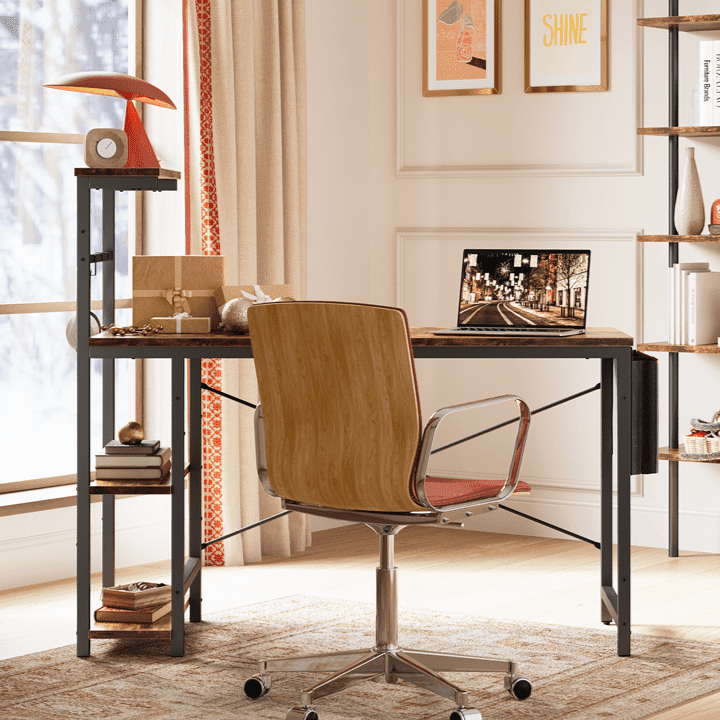
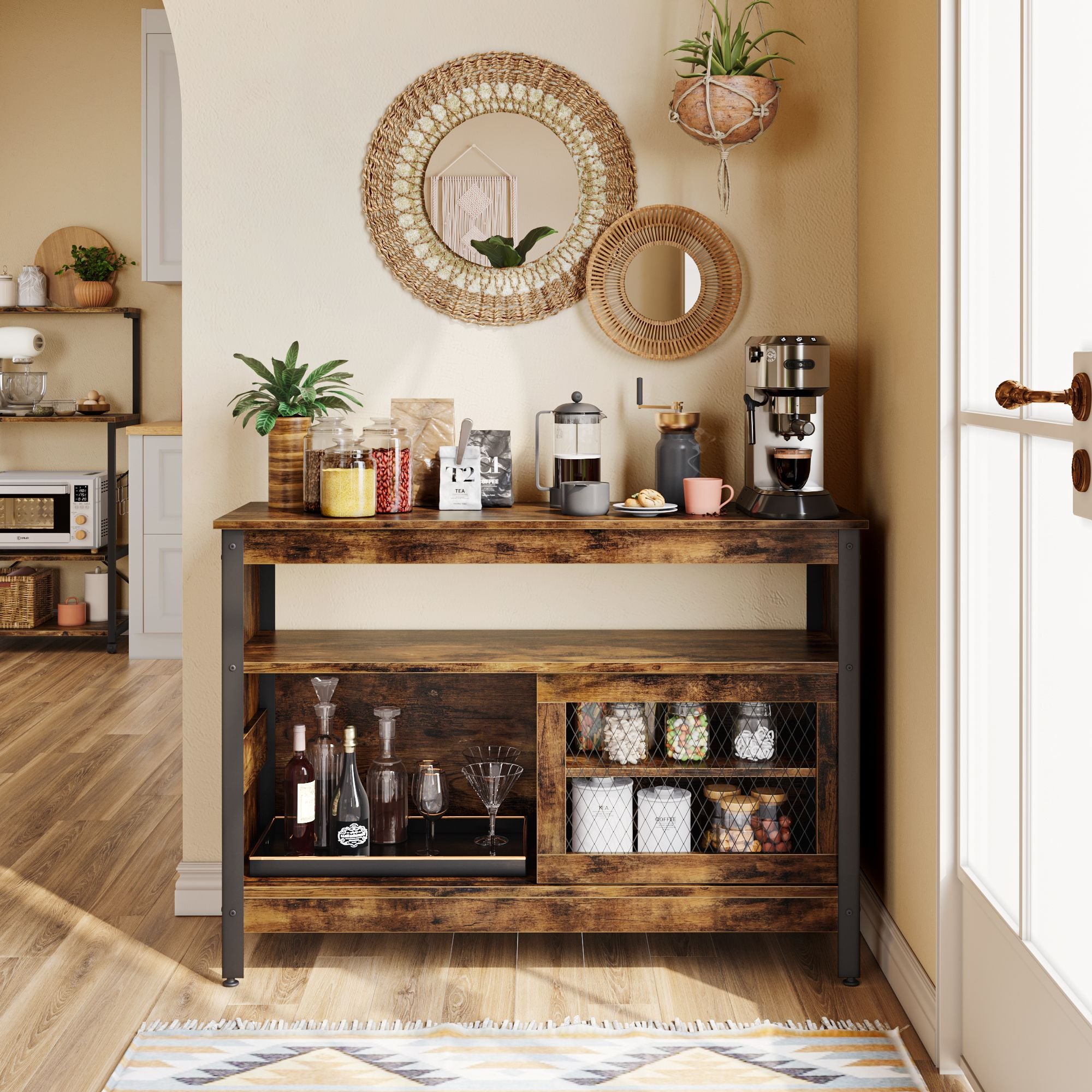

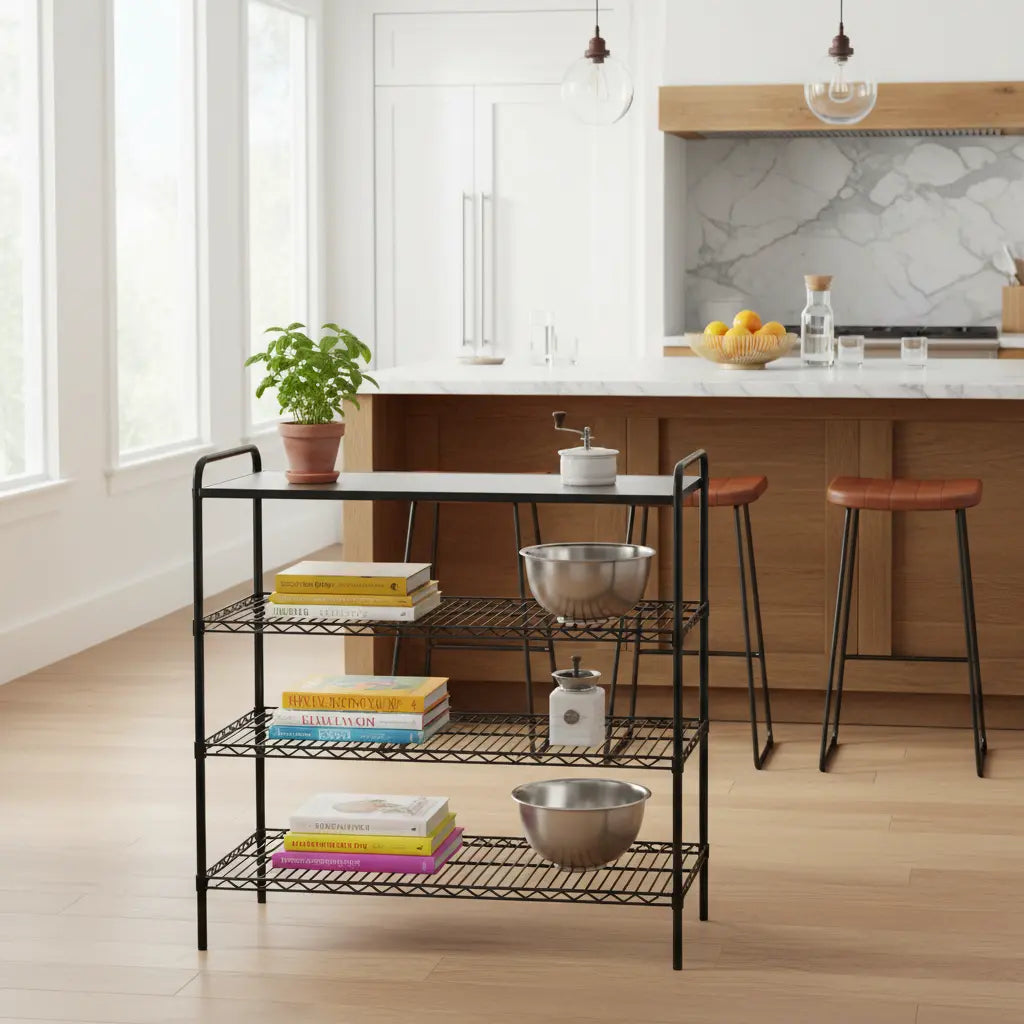
Summary
Choosing between a bakers rack and a kitchen island depends on whether you prioritize vertical storage and mobility or horizontal workspace and permanent storage. For small urban kitchens (typically defined as under 100 square feet), a bakers rack is often the superior choice due to its smaller footprint and multi-functional vertical tiers. Conversely, a kitchen island excels in providing extra prep surface and a central social hub, provided the floor plan allows for proper safety clearances.
Key Takeaways
- Space Efficiency: Bakers racks utilize vertical height, making them ideal for narrow kitchens. Kitchen islands require a minimum of 36–42 inches of clearance on all sides to maintain a safe, functional workflow.
- Functionality: Kitchen islands offer expanded countertop space for food prep. Modern bakers racks often include integrated power outlets and specialized shelves designed for heavy appliances.
- Material Safety: In high-humidity kitchen environments, prioritize products compliant with CARB Phase 2 and TSCA Title VI standards to ensure low formaldehyde emissions.
- Mobility: Portable bakers racks provide flexibility for renters. Fixed islands may require professional installation and, in some jurisdictions, electrical permits if they include outlets.
Navigating the Small Kitchen Storage Showdown
In the heart of a compact apartment, every square inch of floor space is a premium commodity. The struggle to balance countertop utility with storage capacity often leads to the ultimate furniture debate: the bakers rack versus the kitchen island. While both serve to declutter, they cater to fundamentally different kitchen behaviors and spatial constraints.
A kitchen island is traditionally viewed as a stationary centerpiece, offering a wide surface for chopping and dining. However, in kitchens where floor space is limited, a permanent island can become a bottleneck. This is where the bakers rack (Example: Bestier Collection) enters the conversation. Originally designed for cooling baked goods, modern iterations have evolved into "command centers" that stack storage vertically, effectively doubling the utility of a single square foot of floor space.

Measuring for Success: NKBA Clearance Standards
Before committing to new furniture, it is critical to understand the spatial requirements of a functional kitchen. The National Kitchen & Bath Association (NKBA) provides specific guidelines for "traffic flow" that are essential for safety.
For a kitchen to remain accessible, a minimum walkway width of 36 inches is recommended for a single cook. If your kitchen frequently hosts multiple people, this should increase to 42 or 48 inches. A fixed kitchen island often fails this test in narrow galley kitchens, where it might block the "work triangle"—the path between the sink, stove, and refrigerator. In contrast, a bakers rack typically has a shallower depth (often 15–18 inches), allowing it to sit against a wall without impeding traffic.
Kitchen Clearance Checklist
Use this template to determine if your space can accommodate an island or a rack:
| Measurement Point | Requirement (NKBA Standard) | Your Measurement | Pass/Fail |
|---|---|---|---|
| Entry Door Swing | Must not hit the furniture | _____ inches | [ ] |
| Appliance Clearance | 36" min. to open oven/fridge fully | _____ inches | [ ] |
| Work Path Width | 36" (1 person) / 42" (2 people) | _____ inches | [ ] |
| Vertical Height | Check for wall-mounted cabinets | _____ inches | [ ] |
Note: If you have less than 36 inches of clearance, a vertical bakers rack is the safer, more ergonomic choice.
Appliance Management and Weight Capacity
A common mistake is failing to account for the actual weight of kitchen equipment. A standard shelf might look sturdy, but it can sag if loaded with heavy modern appliances without proper reinforcement.
When planning your setup, consider these typical weight ranges (based on industry-standard models):
- Stand Mixers (5-6 Qt): 20–30 lbs
- Microwaves (Mid-size): 25–50 lbs
- Air Fryers/Toaster Ovens: 10–18 lbs
- Coffee Stations: 5–15 lbs (including water and accessories)
For those managing a heavy appliance load, a 5-tier bakers rack with power outlets (Internal Product Example) is a strategic choice. The integration of power strips allows you to create a dedicated station without trailing cords. Safety Tip: Always place the heaviest items (like stand mixers) on the lowest reinforced shelf to lower the unit's center of gravity.
Material Safety: CARB Phase 2 and TSCA Title VI
Kitchens are unique environments with fluctuating temperatures and humidity. These factors can accelerate the off-gassing of formaldehyde from engineered wood products. This is a critical consideration for small, poorly ventilated apartments.
To ensure a healthy indoor environment, look for furniture that meets the California Air Resources Board (CARB) Phase 2 and the EPA's TSCA Title VI standards. For a deeper dive into how these standards protect your home, you can read our comprehensive guide to CARB & TSCA standards.
Choosing a microwave stand with a storage cabinet (Internal Product Example) that utilizes compliant materials ensures that your storage solution doesn't compromise air quality while providing the durability needed for heavy kitchen use.
The Flexibility Factor: Mobility for Renters
For urban dwellers, the "permanence" of a kitchen island can be a drawback. A fixed island is a significant investment that stays with the property. A portable bakers rack, however, can be moved as your needs change.
Many modern storage solutions are designed for the "transient" nature of apartment living. If you frequently rearrange your layout, look for small space furniture solutions (Internal Resource) that prioritize a light footprint. A bakers rack on casters can serve as a bar cart during a party and then be tucked back into a corner for daily storage.

Comparison Matrix: Bakers Rack vs. Kitchen Island
| Feature | Bakers Rack | Kitchen Island |
|---|---|---|
| Primary Benefit | Vertical storage & organization | Horizontal workspace & prep area |
| Footprint | Small (Typical 15-20" deep) | Large (Typical 24-36" deep) |
| Mobility | High (often portable/casters) | Low (usually fixed or heavy) |
| Installation | Easy (DIY assembly) | Moderate to High |
| Typical Load | 50-100 lbs per reinforced shelf | 150+ lbs (distributed) |
| Safety | Wall-anchoring recommended | Clearance standards critical |
Maximizing Your Choice: Organization Tips
Regardless of your choice, organization is key. For those leaning toward the vertical route, mastering kitchen bakers rack organization (Internal Resource) can transform a cluttered shelf into a workstation. Use the lower, deeper shelves for heavy items like Dutch ovens, and keep frequently used spices at eye level.
If you have the space for a horizontal addition, a kitchen island with drawer storage (Internal Product Example) provides the best of both worlds: a solid surface for prep and hidden storage for linens.
FAQ
Is a bakers rack better than a kitchen island for a small apartment? In most apartments under 700 sq ft, a bakers rack is generally more efficient because it utilizes vertical space. It provides specialized storage without blocking the 36-inch walkways required by NKBA standards. However, if your primary need is more prep surface, a small, mobile kitchen island may be preferable.
How much weight can a standard bakers rack hold? Weight capacity varies by construction. A heavy-duty rack with a metal frame and engineered wood shelves (like those from Bestier) can typically support 50–100 lbs per shelf. Lightweight wire racks may be limited to 20–30 lbs. Always refer to the specific manufacturer's technical specifications before loading.
Do I need to anchor my bakers rack to the wall? Yes. It is highly recommended to anchor any tall, vertical storage unit to the wall, especially if storing heavy appliances on upper shelves. Most modern units include anti-tip kits. This is a crucial safety step to prevent toppling in high-traffic areas.
Can a kitchen island be used in a rental property? Freestanding islands are suitable for rentals as they don't require permanent attachment. However, ensure the island does not violate safety clearances. If an island obstructs an exit path, it could be considered a safety hazard during an emergency.
What is the best material for a kitchen storage unit? For durability, look for powder-coated steel frames and CARB Phase 2 compliant engineered wood. Steel provides structural integrity, while the powder coating protects against rust in humid environments.
References
Government / Standards / Regulators
- EPA: Technical Support Document: Formaldehyde Emissions from Composite Wood Products
- CARB: California Air Resources Board - Composite Wood Products ATCM
Industry Associations
- NKBA: Kitchen Planning Guidelines (Clearance and workflow standards)
- ADA: 2010 ADA Standards for Accessible Design
Internal Safety Resources
- Bestier Safety: Engineered Wood Safety: A Comprehensive Guide to CARB & TSCA Standards (Manufacturer Data)
