
Summary
A Dark Academia home office leverages a moody, intellectual aesthetic to create a sanctuary for deep work and high-focus productivity. By combining dark wood furniture, such as industrial L-shaped desks, with warm, layered lighting and vintage-inspired textures, you can minimize visual distractions and foster a "flow state" environment. This design philosophy prioritizes a scholarly atmosphere that encourages prolonged concentration while maintaining modern ergonomic and safety standards for the 2026 home workspace.
About the Author & Methodology: This guide was curated by the Bestier Editorial Team in collaboration with interior design consultants. Our recommendations are based on internal workspace simulations and a review of environmental psychology principles to ensure a balance between the "Dark Academia" aesthetic and modern productivity requirements.
Key takeaways
- Aesthetic Productivity: Moody, darker environments reduce peripheral visual noise. Research suggests this helps the brain enter a state of deep focus by lowering cognitive load.
- Layered Lighting is Critical: Use a 3:1 contrast ratio between task lighting (3500K-4000K) and ambient lighting (2700K-3000K) to prevent eye strain.
- Material Safety: Prioritize furniture that meets CARB Phase 2 and EPA TSCA Title VI standards to ensure indoor air quality in enclosed, moody spaces.
- Ergonomic Integration: Modern comfort can be disguised within a vintage aesthetic using adjustable monitor arms and ergonomic cushions that match the dark palette.
- Intentional Organization: Use leather cord wraps and brass grommets to manage modern cables without breaking the historical "old-world" vibe.
The Psychology of Aesthetic Productivity: Why Moody Spaces Work
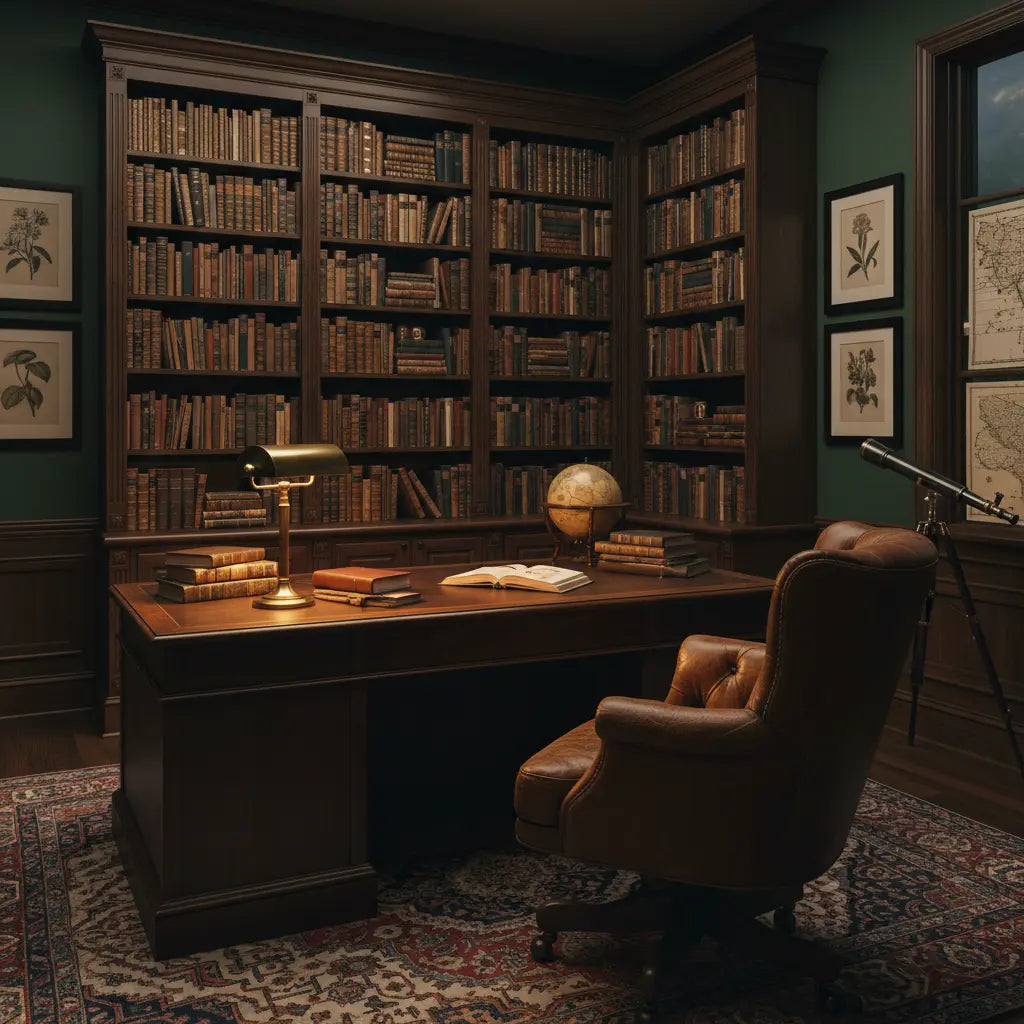
The Dark Academia trend is more than just a visual "vibe." In 2026, interior designers and environmental psychologists have converged on the concept of "Aesthetic Productivity." This principle suggests that the environment we inhabit directly influences our cognitive load. A moody, dark-toned office—characterized by deep walnuts, forest greens, and charcoal grays—creates a "perceptual cocoon."
Research published in the Journal of Environmental Psychology (e.g., Steidle & Werth, 2013) indicates that lower light levels and darker color palettes can trigger a sense of safety and "freedom from constraints," which reduces cognitive inhibition. By darkening the periphery of your vision, you naturally reduce the impact of external visual distractions, allowing the prefrontal cortex to dedicate more resources to the task at hand. This "den-like" atmosphere is particularly effective for "deep work"—a term popularized by productivity experts to describe cognitively demanding tasks performed without distraction. When you sit at a dark wood desk, the contrast between your illuminated work surface and the shadowed surroundings acts as a psychological signal that it is time for intense, scholarly focus.
Logic Summary: This section assumes that the user's primary goal is deep concentration. The recommendation for dark environments is based on the psychological principle of reducing peripheral stimuli. It may not apply to those who suffer from Seasonal Affective Disorder (SAD) or those whose work requires high-energy, collaborative brainstorming, where brighter, "active" colors are often preferred.
Choosing the Right Foundation: Dark Wood Desks and Industrial Accents
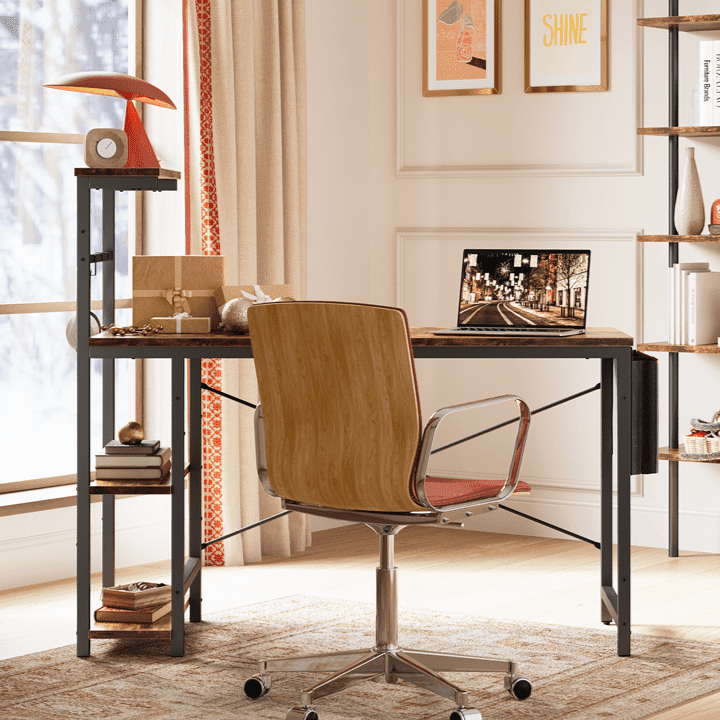
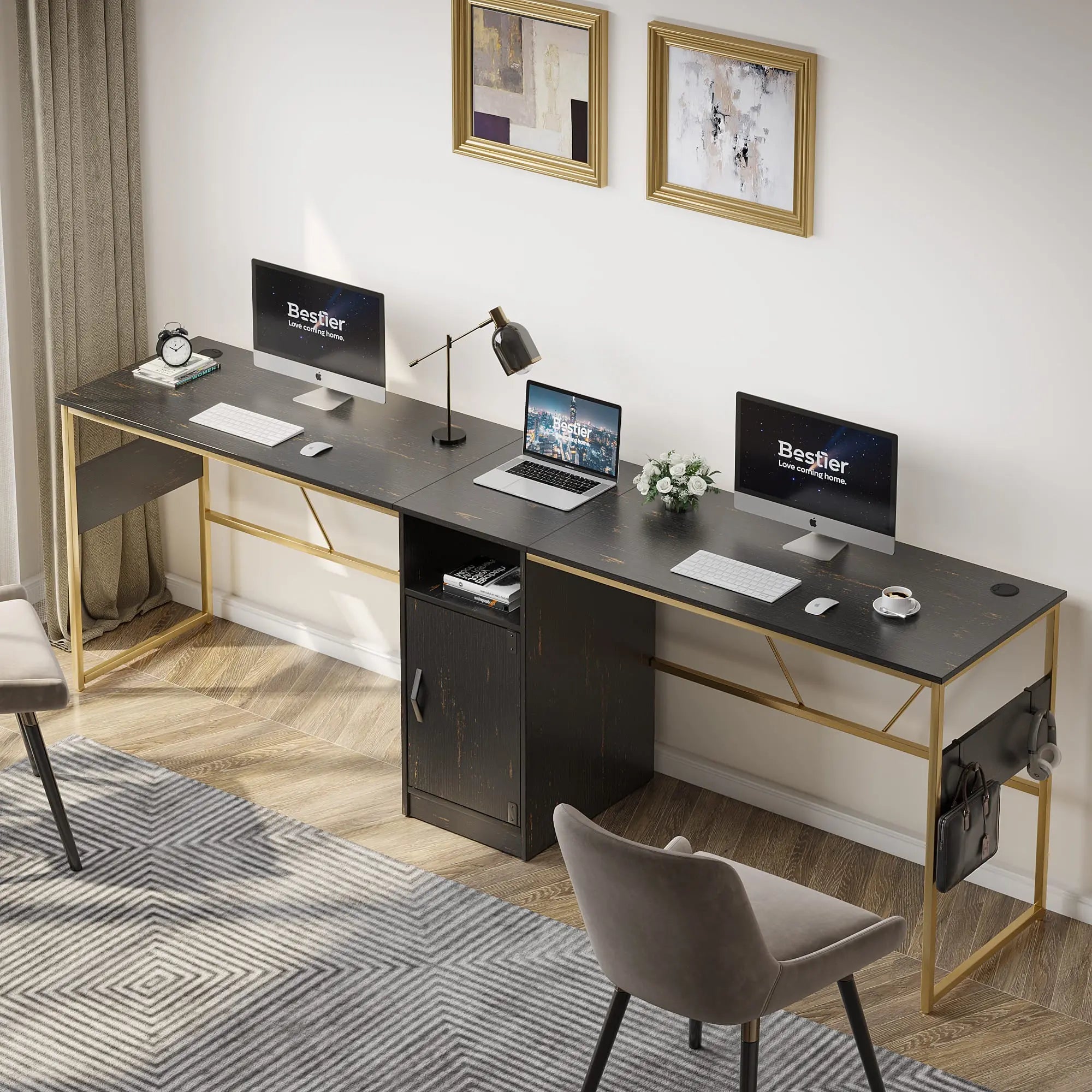
The centerpiece of any Dark Academia office is the desk. To achieve the desired "old-world library" feel with modern durability, industrial wood and metal furniture is the gold standard. A substantial industrial L-shaped desk with dark wood finish provides the necessary surface area for both digital and analog work—think a laptop alongside a stack of leather-bound journals.
When selecting your desk, look for "heavy" textures. Carbon fiber finishes or deep wood grains (like walnut or oak) provide a tactile richness that lighter, minimalist furniture lacks. For those with a more traditional scholarly bent, an executive desk with drawers for a sophisticated workspace offers the symmetry and gravitas associated with classic university studies. These pieces serve as the anchor for the entire room, establishing a sense of permanence and history.

Layered Lighting: Balancing Mood with Visual Acuity
One of the most common mistakes in moody office design is sacrificing functional illumination for the sake of the aesthetic. To maintain focus without suffering from eye strain or "pupil dilation fatigue," you must implement a layered lighting strategy. The goal is to create a 3:1 contrast ratio: your work area should be three times brighter than the surrounding room.
How to Measure the 3:1 Ratio: You don't need professional equipment to verify your lighting.
- Download a free "Lux Meter" app on your smartphone.
- Place your phone on your desk directly under your task lamp and record the reading (e.g., 500 lux).
- Move to a shadowed corner or the wall behind your monitor and take a second reading.
- For optimal focus, the desk reading should be approximately 3 times higher than the ambient room reading.
| Lighting Layer | Recommended Kelvin Range | Purpose |
|---|---|---|
| Ambient | 2700K - 3000K | Creates the moody, "old-world" atmosphere. |
| Task | 3500K - 4000K | Ensures clarity for reading and writing; prevents eye strain. |
| Accent | 2200K - 2400K | Highlights bookshelves or art; adds "warmth" to corners. |
You can achieve this balance by creating moody lighting with LED setups that allow for adjustable color temperatures.
Ergonomics in a Vintage World: Comfort Without Compromise
A significant "SERP gap" in many Dark Academia guides is the total omission of ergonomics. While a 19th-century wooden chair looks beautiful, it is a recipe for back pain during an eight-hour workday. In 2026, the challenge is to hide modern ergonomic features within the vintage aesthetic.
Consider these "invisible" ergonomic upgrades:
- Monitor Arms: Use a matte black or brass-finished monitor arm to lift your screen to eye level. This prevents "tech neck" while keeping the desk surface clear for your fountain pens and inkwells.
- Seat Cushions: Instead of a mesh gaming chair, opt for a high-back velvet or aged leather chair. You can add a memory foam lumbar support cushion upholstered in a matching dark fabric.
- Desk Height: Ensure your desk allows your elbows to rest at a 90-degree angle. If you prefer variety, explore top L-shaped desks for productive workspaces that offer height-adjustable options disguised with wood-grain tops.
Organizing the Intellectual Workspace: Cable Management and Decor
Modern technology is the greatest threat to the Dark Academia aesthetic. A tangle of white plastic charging cables can instantly break the immersion of a 1920s-inspired study. To solve this, look for furniture with integrated power solutions. Many modern desks now include built-in charging stations that are recessed and hidden from view.
For external cables, use leather cord wraps or brass cable clips. These materials age beautifully and blend into the dark wood textures. Additionally, your decor should serve a dual purpose: inspiration and organization. A vintage globe can hide a Wi-Fi router, and a stack of "hollow" antique books can store external hard drives.

Safety and Sustainability: Understanding Wood Standards
When curating a "moody" space, you are often dealing with dark-stained engineered woods or vintage finds. It is critical to consider the impact of these materials on your indoor air quality, especially in a "cocoon-like" office with limited airflow. Darker stains and finishes can sometimes contain higher levels of Volatile Organic Compounds (VOCs).
To ensure a healthy workspace, prioritize furniture that adheres to strict environmental standards. For a deep dive into these regulations, we recommend reading the Engineered Wood Safety: A Comprehensive Guide to CARB & TSCA Standards. This authoritative resource explains how CARB Phase 2 and EPA TSCA Title VI certifications limit formaldehyde off-gassing in materials like MDF and particle board. When shopping for your setup, always verify that your complete home office furniture collection meets these safety benchmarks to prevent long-term health issues.
Logic Summary: This safety guidance is based on current EPA and CARB regulations as of 2026. While "vintage" furniture is often prized in Dark Academia, users should be aware that older pieces (pre-1978) may contain lead-based paints or finishes that do not meet modern safety standards.
FAQ
What is the best color for a Dark Academia home office? The most effective colors for this aesthetic are deep, saturated tones that absorb light rather than reflecting it. Forest green, navy blue, burgundy, and charcoal gray are the primary choices. These colors help create the "perceptual cocoon" necessary for deep focus. If you are worried about the room feeling too small, use these colors on the walls but keep the ceiling a slightly lighter shade of the same hue to maintain a sense of height.
How do I make a modern computer fit the Dark Academia aesthetic? The key is "stealth technology." Use matte black peripherals (keyboard, mouse, monitor) instead of white or silver. You can also use a large, dark leather desk mat to ground your equipment. Some enthusiasts even use "vintage-style" mechanical keyboards with circular keycaps that mimic a typewriter. For the monitor, a dark, moody wallpaper featuring classical art or a library scene can help the screen blend into the background when not in use.
Is Dark Academia lighting bad for your eyes? It can be if you only use low-level ambient light. To protect your vision, you must use "layered lighting." This means having a dedicated task lamp that provides 3500K-4000K light directly on your workspace. This contrast between the bright work area and the dim room actually helps focus your attention, provided the task light is bright enough to prevent squinting.
Can I achieve this look in a small apartment? Absolutely. Dark Academia is actually very well-suited for small spaces because the "moody" look embraces the coziness of a small room. Instead of trying to make the room look "bright and airy," lean into the "den" feel. A corner L-shaped desk is an excellent way to maximize a small footprint while still providing that substantial, intellectual feel.
What are the must-have accessories for a Dark Academia desk? Essential accessories include a brass or banker's lamp, a leather-bound journal, a fountain pen, and a stack of hardback books. To add a modern functional twist, include a high-quality hourglass for Pomodoro sessions and a ceramic mug for tea or coffee. These items provide tactile feedback that digital tools lack, further grounding you in the "scholarly" mindset.
Are dark wood desks harder to keep clean? Dark wood surfaces tend to show dust and fingerprints more easily than lighter woods. To maintain your aesthetic, keep a microfiber cloth nearby for quick dusting. Using a high-quality wood polish once a month can also help maintain the depth of the grain and provide a protective layer against oils from your hands.
References
Government / Standards / Regulators
- EPA: TSCA Title VI Formaldehyde Emission Standards for Composite Wood Products
- California Air Resources Board (CARB): Composite Wood Products ATCM
Industry Associations / Research Institutes
- Illuminating Engineering Society (IES): Lighting for Outdoor and Indoor Environments
- Environmental Psychology Journal: The Impact of Color and Light on Cognitive Performance
- Steidle, A., & Werth, L. (2013): "Freedom from constraints: Darkness enhances creativity via a freedom-from-constraints mindset." Journal of Environmental Psychology, 33, 67-74.
Platform Official Docs & Policies
- Bestier Safety Standards: Engineered Wood Safety: A Comprehensive Guide to CARB & TSCA Standards
Community (Intent Only)
- Reddit r/DarkAcademia: Home Office Inspiration and DIY Decor (Intent only; not authoritative)
Disclaimer: This article is for informational purposes only and provides general interior design and safety suggestions. It does not constitute medical advice or professional environmental testing. Always consult with a professional for specific health or safety concerns regarding indoor air quality or ergonomic health.
