
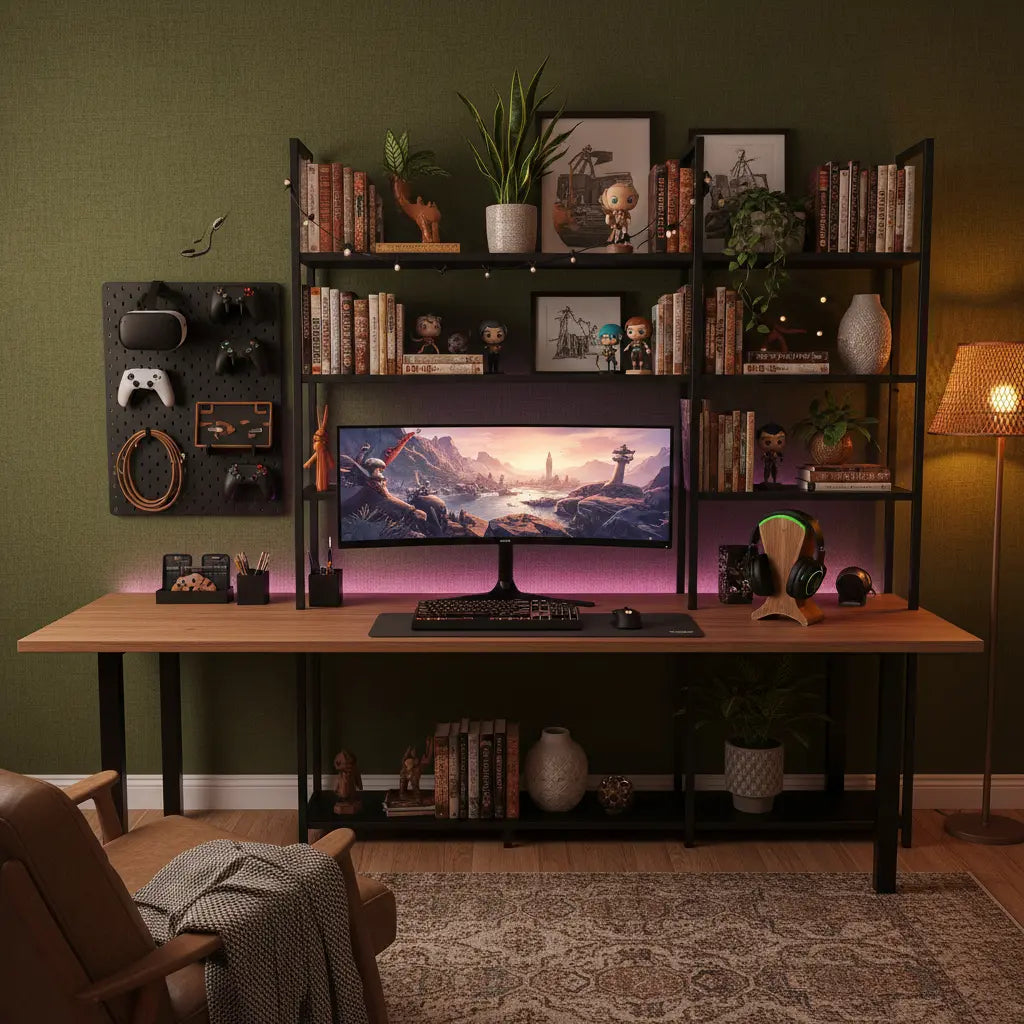
Cluttercore offers a welcoming alternative for gamers, collectors, and creators who want their workspace to reflect personality and abundance while remaining functional. By focusing on intentional grouping, vertical storage, and smart display choices, you can create a cozy maximalist setup that supports both productivity and self-expression without descending into chaos.
Understanding Cluttercore: Curated Abundance, Not Chaos
Cluttercore celebrates a rich, layered aesthetic that feels personal and lived-in. As designers note, this trend emphasizes intentional, personalized abundance rather than random accumulation. The key distinction lies in curation: every object contributes to an overall visual story instead of competing for attention.
This approach resonates strongly with gamers who own multiple consoles, controllers, and peripherals, as well as creators who display cameras, lights, and memorabilia. Unlike strict minimalism, cluttercore allows you to showcase your collection while maintaining usable workspace. The goal remains organized maximalism—where density feels cozy and intentional rather than overwhelming.
Many people assume more items automatically create visual noise. In reality, maximalist spaces stay functional when items are grouped thoughtfully, visual balance is preserved, and everyday ergonomics are respected. This principle separates expressive setups from those that simply feel cluttered.
Why Maximalist Setups Appeal to Gamers and Creators
Gamers and streamers often accumulate gear that tells their personal story. A cluttercore gaming desk setup lets you display favorite collectibles, headsets, and figurines without sacrificing play space. Creators benefit similarly, turning their workspace into an engaging on-camera background that showcases personality.

The trend aligns well with small or shared living spaces where every surface counts. Using vertical storage solutions helps maximize limited floor area while keeping items accessible. For instance, bakers racks repurposed creatively can serve as stylish storage and display hubs in a bedroom gaming corner.
However, aesthetics should never override comfort. Even in decorative, gear-heavy setups, ergonomic workstation design matters. Keep your monitor, keyboard, and mouse positioned to reduce reaching and awkward posture, as outlined in official computer ergonomics guidance.
How to Choose the Right Storage for Your Cluttercore Setup
Successful cluttercore relies on storage that doubles as display. Open shelving allows you to arrange collections into pleasing vignettes, while pegboards offer flexible organization for frequently used gear. Bakers racks prove particularly versatile, providing multiple tiers for both storage and styling.
Consider your room size and primary use when selecting pieces. In tighter spaces, prioritize tall, narrow units that reclaim vertical real estate. Larger areas can accommodate wider display systems where items have room to breathe. Look for furniture with built-in power outlets to keep devices charged without adding visible cord clutter.
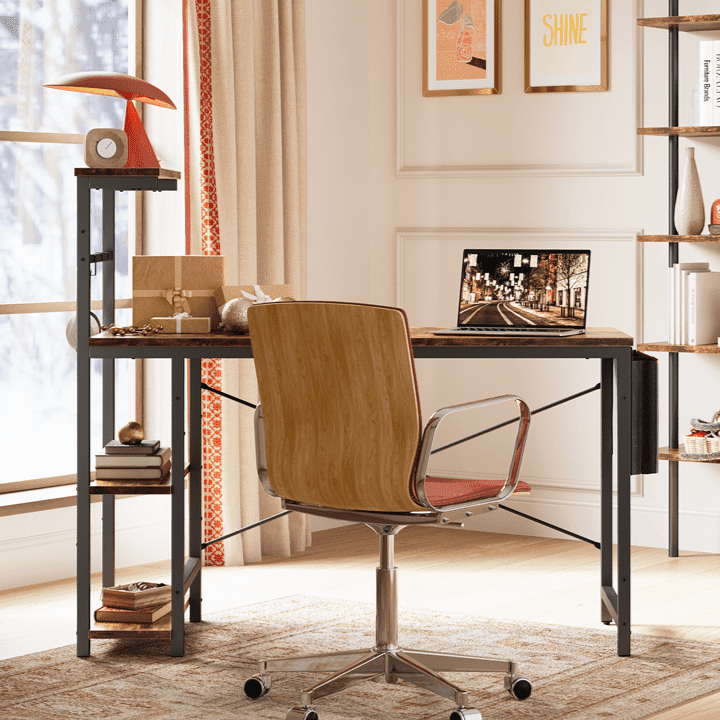
Our 61 Inch Gaming Desk with Reversible Shelves combines work surface with adjustable storage, making it ideal for shifting between gaming and creative modes. For those wanting even more display options, L-shaped gaming desks with monitor stands create natural zones for both active use and curated collections.
Myth vs Reality in Cluttercore Design
-
Myth: More objects automatically mean chaos.
-
Reality: Intentional abundance feels organized when items are grouped, balanced, and easy to use.
-
Myth: Maximalist spaces cannot be functional.
-
Reality: They become dysfunctional mainly when ergonomics break down, such as crowded surfaces or poor cable routing.
-
Myth: Decoration does not affect usability.
-
Reality: Cable management and strategic placement are essential to maintaining both the look and daily function.
These boundaries help ensure your setup enhances rather than hinders productivity.
Practical Organization Strategies for Gaming Desks
Start by auditing your current gear and deciding what deserves display versus hidden storage. Group similar items together—controllers on one shelf, books on another—to create visual rhythm. Use risers or small stands to vary heights and prevent flat, monotonous arrangements.
Pegboards mounted above or beside your desk provide customizable spots for headsets, cables, and tools. Combine them with baskets or bins for smaller accessories. For cable management, which supports both safety and appearance, route cords behind furniture or use clips and sleeves. Tidy cable routing helps keep a busy setup safer and easier to use, per OSHA wiring standards.
Lighting plays a crucial role in defining zones within a maximalist space. Warm ambient lamps paired with subtle RGB accents highlight collections without creating harsh glare. Our LED Gaming Desks offer built-in lighting that enhances the cozy atmosphere while maintaining focus on the work surface.
When floor space is limited, vertical storage and wall-mounted display areas become essential. This approach keeps pathways clear and maintains accessibility. Explore bakers racks with power outlets for versatile, multi-purpose organization that fits cluttercore apartments perfectly.
Scenario-Based Decision Guide: Matching Storage to Your Needs
Different users face unique challenges. Gamers with daily-used peripherals benefit from hybrid systems that prioritize quick access and cable control. Collectors focused on display may favor open shelving where items can be styled as art.
Small rooms demand efficient vertical solutions to avoid crowding the floor. Medium spaces allow more experimentation with layered displays. Maintenance tolerance also matters—some prefer enclosed options to reduce dusting, while others enjoy curating open shelves regularly.
The following chart illustrates priority levels for key organization tactics across common scenarios. These illustrative scores, modeled from practical guidance on room constraints and usage patterns, help visualize trade-offs.
Cluttercore Storage Priorities by Scenario
Priority scores for cluttercore organization choices across common room-and-user scenarios.
View chart data
| Series | Vertical storage | Open display | Cable management | Grouping |
|---|---|---|---|---|
| Small room gamer | 5.0 | 3.0 | 5.0 | 4.0 |
| Medium room gamer | 4.0 | 4.0 | 4.0 | 4.0 |
| Small room collector | 4.0 | 5.0 | 2.0 | 5.0 |
| Medium room collector | 3.0 | 5.0 | 2.0 | 4.0 |
Modeled comparison built from scenario guidance in the provided matrix/myth modules plus bounded design logic: small rooms favor vertical storage and cable control; collectors and display-oriented setups favor open display and grouping; gamers need stronger cable management and balanced storage. Scores are illustrative priority levels on a 1-5 scale, used for decision support rather than measurement.
Use this visualization to identify which tactics deserve emphasis in your specific situation before purchasing new furniture.

Step-by-Step Setup Checklist for an Organized Maximalist Desk
-
Assess Your Space and Needs: Measure your room and list must-display items versus those better stored away. Identify ergonomic requirements for your primary activities.
-
Establish Core Work Zones: Position your desk to support neutral posture. Reserve the main surface for active tasks, keeping it relatively clear.
-
Implement Vertical Storage: Install tall shelving or a bakers rack to free floor space. Arrange items in grouped vignettes with varying heights for visual interest.
-
Add Flexible Display Options: Mount a pegboard for gear organization. Use hooks, baskets, and small shelves to keep frequently used items accessible yet tidy.
-
Manage Cables Proactively: Route cords behind furniture or through dedicated channels. Incorporate power outlets built into desks or racks to minimize loose plugs.
-
Layer Lighting and Decor: Combine task lighting with ambient and accent lights. Warm tones create coziness while highlighting collections without glare.
-
Review and Adjust Regularly: Periodically evaluate whether the setup still supports your workflow. Rearrange as your collection grows or needs change.
This checklist translates abstract principles into actionable steps tailored to real living spaces.
Safety and Comfort Considerations in Dense Setups
Even when embracing abundance, prioritize safety and ergonomics. Overloaded shelves can pose stability risks, while poor cable management may create hazards. Choose sturdy furniture certified for low emissions to maintain good indoor air quality, especially in smaller rooms where items are densely packed.
This article discusses comfort and setup advice only. It does not constitute medical advice, diagnosis, or treatment. If you experience persistent discomfort or have existing conditions, consult qualified professionals.
Resources like university ergonomics pages remind us that workstation design should always support healthy posture regardless of aesthetic choices.
Inspiring Ideas from Real Cluttercore Setups
Look to mastering cluttercore for gamers and creators for practical vertical storage tips and lighting ideas. Those interested in RGB trends can explore maximalist gaming setups with dopamine decor.
For apartment dwellers, styling bakers racks for cluttercore demonstrates how to create curated displays. Creators may benefit from using bakers racks in vertical studios.
Warm, cozy gaming setups often incorporate wood tones and ergonomic designs, as covered in our cozy gaming setup ideas. These examples show how thoughtful choices turn potential chaos into personality-rich, productive environments.
Common Pitfalls to Avoid
Avoid spreading items randomly across every surface, which quickly undermines the curated look. Overlooking ergonomics in favor of aesthetics leads to discomfort during long sessions. Ignoring cable management creates both visual clutter and potential safety issues.
Don't purchase storage without measuring first or considering maintenance requirements. Open displays require occasional dusting and rearranging to stay appealing. If upkeep feels burdensome, opt for semi-enclosed solutions that still allow visibility.
Finally, remember that cluttercore works best when the space remains usable. If daily tasks become frustrating due to overcrowding, it's time to edit your collection or reorganize.
Creating Your Personalized Cluttercore Workspace
Building an organized maximalist setup combines self-expression with practical planning. By selecting versatile storage like gaming desks with ample shelves and styling them intentionally, you create a space that feels uniquely yours.
Whether you prefer a dedicated gaming corner, a streaming-friendly creator studio, or a multi-purpose home office, the principles remain consistent: group thoughtfully, store vertically when needed, manage cables diligently, and light strategically.
Start small by organizing one area at a time. Experiment with arrangements until the space feels both abundant and inviting. Over time, your cluttercore setup will evolve into a functional sanctuary that celebrates your interests and supports your work.
The beauty of this aesthetic lies in its flexibility. What begins as a simple desk transformation can grow into a fully realized, personality-filled environment that inspires creativity and provides daily comfort. Focus on balance, and your maximalist workspace will reward you with both style and utility for years to come.
References
