



Summary
Choosing a heavy-duty bakers rack in 2026 requires balancing structural weight capacity with heat-safe clearance and material durability to ensure your kitchen appliances operate safely and efficiently. A high-quality rack should provide a static load capacity of at least 100 pounds per main shelf while offering sufficient ventilation for high-wattage devices like air fryers and convection ovens.
Key takeaways
- Prioritize Static Load Ratings: Look for racks with reinforced steel frames or thick engineered wood that can support at least 100-150 lbs on the primary appliance shelf.
- Heat Management is Critical: Maintain at least 4-6 inches of clearance around high-heat appliances to prevent thermal damage to the rack's finish or surrounding walls.
- Material Matters for Durability: Choose powder-coated metal for moisture resistance or CARB/TSCA-certified wood for a balance of aesthetics and indoor air safety.
- Stability and Safety: Always utilize anti-tip kits for taller units and ensure weight is distributed with the heaviest items on the lowest shelves.
Understanding Weight Capacity: Static vs. Dynamic Loads
When searching for the best bakers rack for heavy kitchen appliances, the most critical specification is weight capacity. However, "heavy duty" is often used as a marketing term rather than a regulated technical standard. In 2026, savvy homeowners must distinguish between static and dynamic loads. A static load refers to the weight a shelf can hold while the object is stationary, whereas a dynamic load accounts for the force applied when placing or moving an appliance.
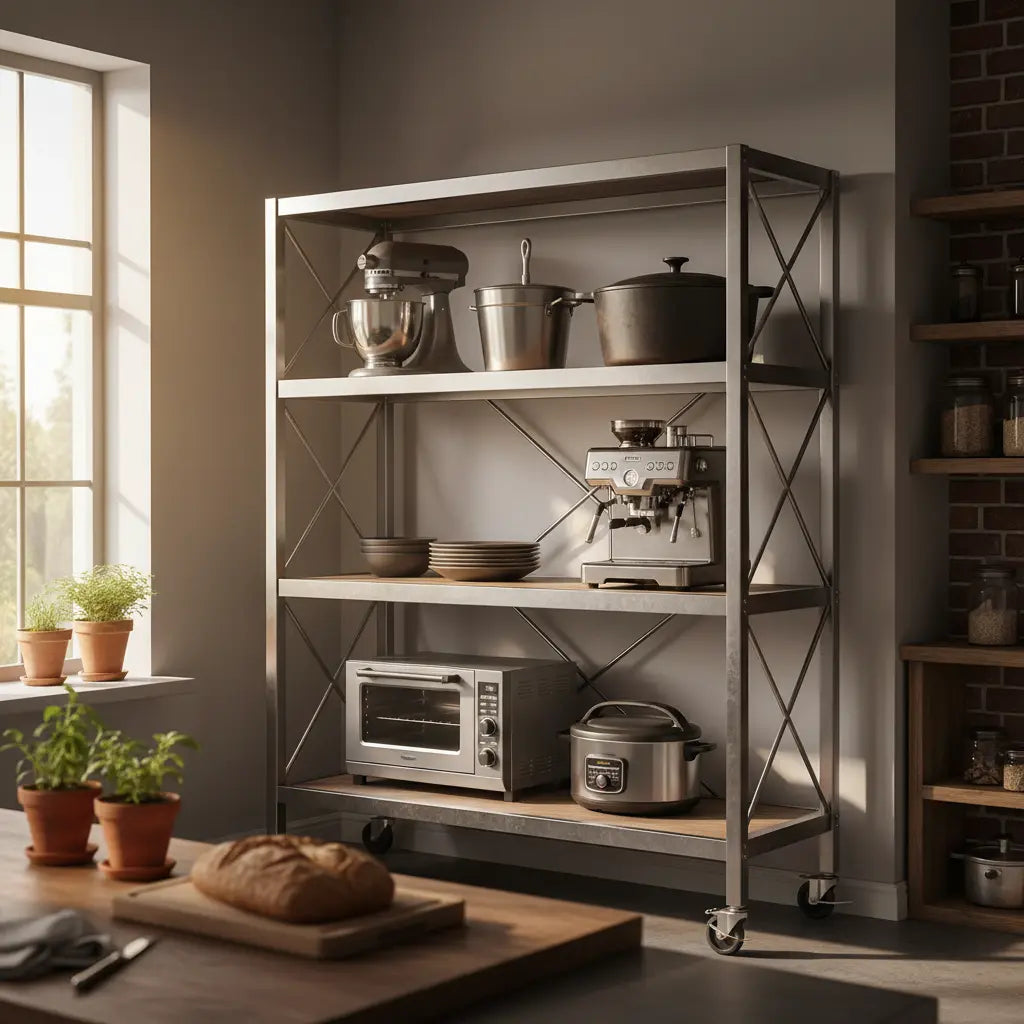
For a standard microwave or a large stand mixer, a shelf should ideally support a static load of 100 to 150 pounds. If you plan to use the rack as a prep station where you might apply downward pressure—such as kneading dough—you need a reinforced top surface. Overloading a shelf can lead to "creep," a slow deformation of the material over time, especially in lower-grade metals or non-certified wood products. To maintain structural integrity, always place your heaviest appliances, like a 40-pound microwave or a 30-pound bread machine, on the middle or lower tiers to keep the center of gravity low.
Logic Summary: Weight capacity recommendations are based on standard residential appliance weights (e.g., 20-50 lbs for microwaves) with a 2x safety factor to account for dynamic impact and long-term material fatigue. These guidelines assume the rack is placed on a level, hard surface.
Material Science: Choosing Between Metal, Wood, and Hybrids
The longevity of your storage solution depends heavily on its construction materials. Heavy-duty metal bakers racks, often made of powder-coated steel, offer superior resistance to the steam and humidity common in active kitchens. In 2026, advanced powder coating techniques provide a non-porous barrier that prevents rust, making them ideal for placement near sinks or dishwashers.
Many modern designs incorporate engineered wood for a warmer, more residential aesthetic. When selecting these hybrids, it is vital to verify the environmental safety of the materials used. For instance, understanding engineered wood safety standards for furniture is essential for maintaining indoor air quality. High-quality bakers racks should comply with CARB Phase 2 and EPA TSCA Title VI standards, which strictly limit formaldehyde emissions. This is particularly important in kitchens where temperature and humidity fluctuations can otherwise accelerate the off-gassing process of inferior materials.

Heat Clearance and Ventilation for High-Wattage Appliances
A common mistake when setting up a kitchen station is neglecting the heat output of modern appliances. Air fryers, toaster ovens, and espresso machines can reach external temperatures that exceed 150°F. Placing these too close to a shelf above or a back panel can lead to scorched finishes or even fire hazards.
For high-wattage appliances (1500W and above), a rule of thumb is to provide at least 5 inches of clearance on all sides. Metal wire shelving is naturally superior for ventilation as it allows air to circulate freely around the heating elements. If you prefer a solid-shelf microwave stand bakers rack with storage cabinet, ensure the unit is deep enough to allow the appliance to sit forward, leaving a gap at the rear for heat dissipation.
Logic Summary: Heat clearance guidelines are derived from appliance manufacturer safety manuals which typically require 4-6 inches of "breathing room" to prevent overheating. This is especially critical for appliances with rear-facing exhaust vents.
Safety First: Stability and Tip-Over Prevention
Stability is the foundation of any heavy-duty storage unit. A top-heavy rack loaded with a microwave and several small appliances is a significant tip-over risk, especially in households with children or pets. While the ASTM F2057 standard primarily targets clothing storage units, the principles of stability apply equally to kitchen furniture.
To maximize safety, look for racks that include adjustable leveling feet. Kitchen floors are rarely perfectly flat, and even a slight wobble can become dangerous when supporting vibrating appliances like blenders or stand mixers. If you are performing a bakers rack vs kitchen island comparison, remember that while islands offer a wider base, a tall bakers rack provides more vertical storage but requires more attention to anchoring. Always use the provided wall-anchoring kits to secure the unit to a wall stud.
Integrated Power and Cable Management
The best modern bakers racks are more than just shelves; they are functional power hubs. A heavy-duty bakers rack with built-in power outlets eliminates the "cord jungle" often found behind kitchen counters. When choosing a rack with integrated electrics, ensure the power strip is UL-listed and rated for the total wattage of the appliances you intend to plug in simultaneously.
Proper cable management isn't just about aesthetics—it's a safety requirement. Tangled cords near heat sources or water can lead to electrical shorts. Use built-in cable management holes or Velcro ties to keep cords taut and away from the floor, where they could be a tripping hazard.

Appliance Weight and Clearance Reference Table
The following table provides a general guide for common kitchen appliances. Always check your specific appliance manual for exact weights and recommended clearances.
| Appliance Type | Average Weight (lbs) | Recommended Shelf Capacity | Min. Heat Clearance (in) |
|---|---|---|---|
| Large Microwave | 35 - 50 | 100 lbs | 3" Top / 1" Sides |
| Air Fryer / Toaster Oven | 15 - 25 | 50 lbs | 6" All Sides |
| Stand Mixer | 25 - 30 | 75 lbs (Dynamic) | N/A |
| Espresso Machine | 20 - 40 | 60 lbs | 2" Top (Steam) |
| Bread Machine | 15 - 20 | 40 lbs | 4" Top |
Logic Summary: Weights are based on 2025-2026 market averages for mid-to-large sized residential appliances. Clearance recommendations prioritize fire safety and appliance longevity.
Step-by-Step Buying Checklist
Before finalizing your purchase, walk through this checklist to ensure the rack meets your specific needs:
- Measure Your Largest Appliance: Ensure the depth of the main shelf is at least 2 inches deeper than your microwave or oven.
- Verify Total Load: Add up the weight of all planned appliances and ensure the rack's total capacity exceeds this by at least 25%.
- Check Floor Leveling: Does the unit have adjustable feet to compensate for uneven tile or hardwood?
- Confirm Safety Certifications: For wood components, look for CARB Phase 2 or TSCA Title VI labels.
- Assess Assembly Requirements: Review assembly tips for heavy-duty furniture to ensure you have the tools and space needed for a sturdy build.
FAQ
How much weight can a heavy-duty bakers rack actually hold? Most residential heavy-duty bakers racks are designed to hold between 50 and 150 pounds per shelf, with a total unit capacity often ranging from 300 to 500 pounds. It is vital to check the manufacturer's specifications for each individual shelf, as the middle "workstation" shelf is usually reinforced to handle more weight than the smaller top shelves. Always distribute weight evenly across the shelf surface to prevent bowing or structural failure.
Can I safely use an air fryer on a bakers rack? Yes, you can use an air fryer on a bakers rack, provided there is adequate heat clearance. Air fryers vent hot air, often from the back or top, so you must ensure at least 6 inches of space between the vent and any walls or upper shelves. Metal wire racks are preferable for air fryers because they allow for maximum airflow, preventing heat from becoming trapped and damaging the rack's finish or the appliance itself.
Are wooden bakers racks strong enough for heavy appliances like stand mixers? High-quality wooden bakers racks made from thick engineered wood or solid wood are certainly strong enough for stand mixers, but you must check the specific weight rating. A stand mixer creates dynamic force when in use, so the shelf needs to be rigid enough to handle the vibration without wobbling. Look for units with reinforced metal frames and wooden shelves that are at least 15mm thick for the best stability.
How do I prevent my bakers rack from wobbling on an uneven kitchen floor? Most heavy-duty racks come equipped with adjustable leveling feet (glides). By screwing these feet in or out, you can compensate for uneven flooring surfaces, which is common in older homes or tiled kitchens. Ensuring the rack is perfectly level is crucial for the safe operation of appliances containing liquids, such as coffee makers or slow cookers, and it significantly reduces the risk of the unit tipping.
Do I need to anchor my bakers rack to the wall? While not always mandatory for shorter units, anchoring a tall bakers rack to the wall is highly recommended for safety, especially if it is top-heavy with appliances. Most manufacturers include an anti-tip kit consisting of a strap or bracket. Securing the rack to a wall stud provides peace of mind and protects against accidental tips caused by children climbing or heavy vibrations from appliances like blenders.
What is the difference between powder-coated steel and stainless steel for kitchen racks? Powder-coated steel is carbon steel treated with a dry powder that is baked on to create a hard, protective finish; it is available in many colors and is highly resistant to chipping and rusting. Stainless steel is an alloy that is naturally resistant to corrosion throughout the metal, making it the standard for commercial kitchens. For most home users, powder-coated steel offers a more decorative look and sufficient durability for standard kitchen humidity at a more accessible price point.
References
Government / Standards / Regulators
- U.S. Environmental Protection Agency (EPA): Formaldehyde Emission Standards for Composite Wood Products (TSCA Title VI)
- California Air Resources Board (CARB): Airborne Toxic Control Measure (ATCM) to Reduce Formaldehyde Emissions
- Consumer Product Safety Commission (CPSC): Furniture Tip-Over Protection and Safety Education
Industry Associations / Research Institutes
- ASTM International: Standard Safety Specification for Clothing Storage Units (F2057-23) - Reference for general furniture stability principles.
- NSF International: NSF/ANSI 2: Food Equipment Standards - Reference for commercial-grade material safety.
Platform Official Docs & Policies
- Bestier Safety & Compliance: Engineered Wood Safety: A Comprehensive Guide to CARB & TSCA Standards
Community (Intent only; not authoritative)
- Reddit r/KitchenOrganization: User discussions on appliance weight distribution and shelf bowing.
- StackExchange - Home Improvement: Community advice on anchoring heavy furniture to various wall types.
