
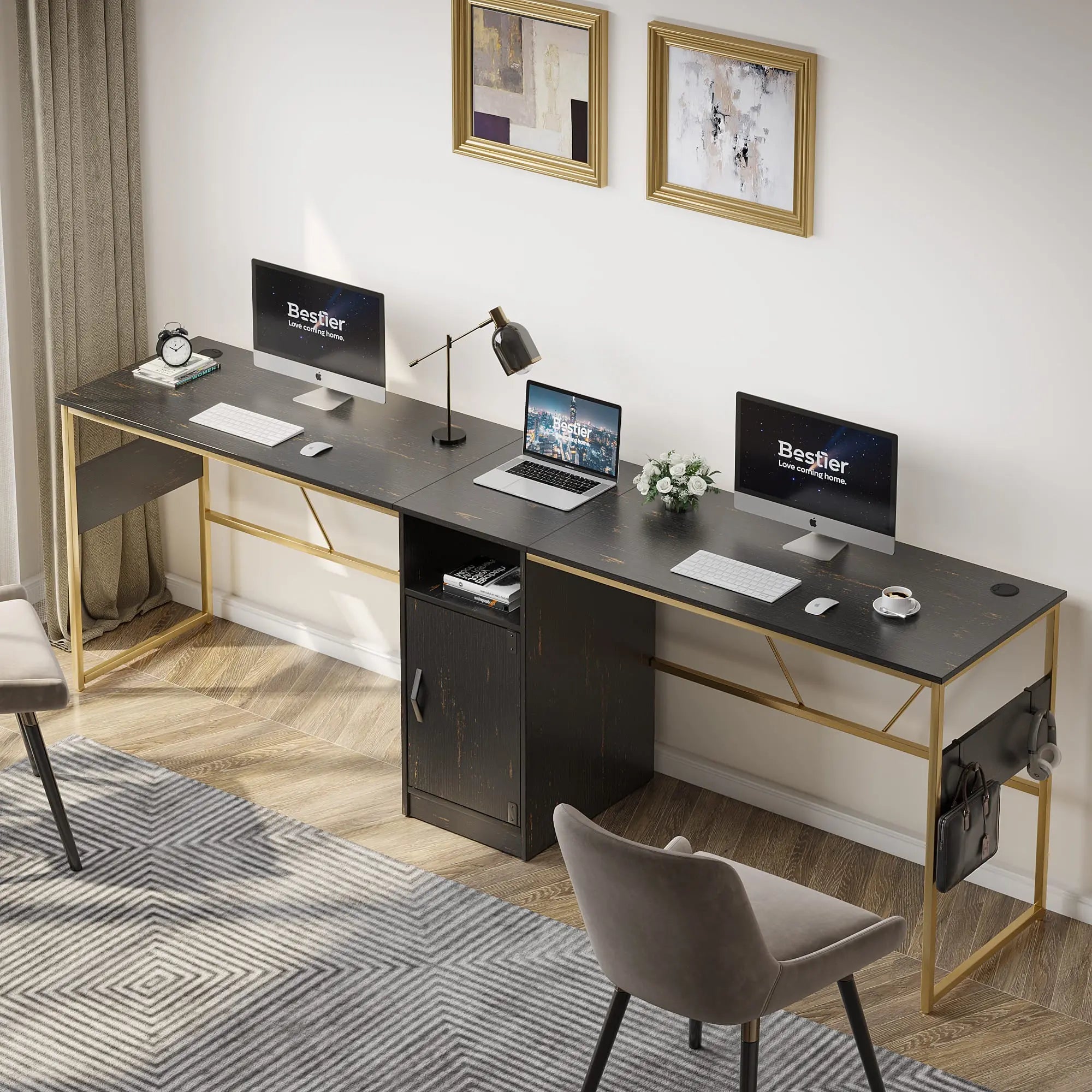

Summary
In 2026, the professional home office has moved beyond simple aesthetics to prioritize "invisible infrastructure." A desk with a built-in power strip and hidden cable management compartments is no longer a luxury but a functional necessity for maintaining a high-focus environment. By centralizing power distribution within the desk's frame, users can eliminate the "cable octopus" effect, reducing visual clutter and improving safety. Modern setups now focus on thermal ventilation for enclosed electronics and optimized outlet spacing to accommodate the diverse range of high-wattage adapters used in contemporary creative and gaming workstations.
Key takeaways
- Centralized Power: Integrated power strips reduce the need for external extension cords, minimizing trip hazards and simplifying the "one-plug" setup.
- Thermal Safety: Effective hidden compartments must include ventilation or heat-dissipating materials to prevent the buildup of heat from power bricks and adapters.
- Adapter Compatibility: Look for desks that offer wide-spaced outlets to accommodate bulky "wall wart" transformers without blocking adjacent ports.
- Material Integrity: High-quality setups utilize materials compliant with CARB and TSCA Title VI standards to ensure indoor air quality remains high even as electronics generate heat.
- Future-Proofing: Modular compartments allow for the replacement or upgrade of power strips as charging standards (like USB-C PD) evolve.
The Evolution of the Integrated Power Strip Desk in 2026
The transition to remote and hybrid work models has fundamentally changed how we view furniture. In the past, a desk was merely a surface; today, it is a sophisticated hub for productivity. The rise of the "Aesthetic Productivity" movement has driven the demand for a hidden cable management desk that conceals the chaotic reality of modern tech. As we integrate more devices—from dual 4K monitors to high-fidelity audio interfaces—the volume of cabling has increased exponentially.
Modern furniture design has responded by embedding power strips directly into the chassis. This integration allows for a "clean floor" policy, where only a single main power cable exits the desk to reach the wall outlet. This not only looks professional but also makes cleaning significantly easier. For those managing complex gaming rigs, utilizing 5 cable management hacks for LED gaming desks alongside integrated power can create a truly immersive, distraction-free environment.
How to Choose the Right Desk for Cable Management
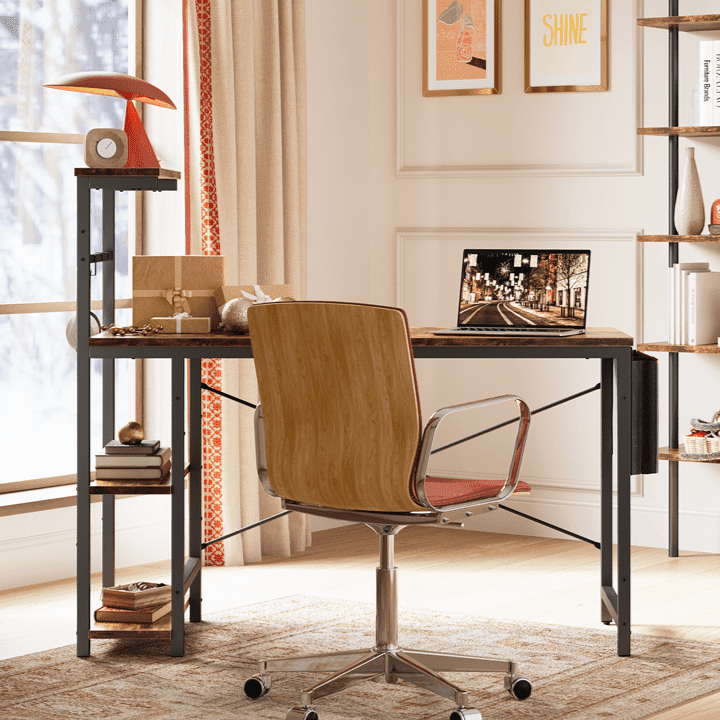
Selecting the best desk for cable management requires looking beyond the surface area. You must evaluate the depth and accessibility of the "hidden" zones. A desk that looks clean from the front but has a tangled mess hanging off the back fails the long-term organization test.
When evaluating a new workstation, consider the following three pillars of cable management:
- Capacity: Does the hidden tray have enough volume to hold not just the power strip, but also the excess slack from monitor and peripheral cables?
- Accessibility: Can you easily reach the power strip to swap out a charger without dismantling the entire desk?
- Routing: Are there well-placed grommet holes or "pass-through" slots that allow cables to travel from the desktop to the hidden compartment without sharp bends?
For larger setups, an L-shaped desk with file drawers often provides the most robust cable management potential, as the corner "dead space" can be utilized for significant power hubs and large external hard drives.
Logic Summary: This recommendation assumes a standard multi-device setup (PC/Laptop, 2 monitors, speakers). For ultra-minimalist users (tablet only), a smaller Bestier 44 Inch Gaming Desk with Power Oulets may be more efficient than a full-sized executive desk.
Thermal Management: Preventing Overheating in Hidden Compartments
One of the most overlooked aspects of hidden power strip desks is heat dissipation. Power adapters, particularly those for high-performance laptops and gaming consoles, generate significant heat during operation. When these "power bricks" are tucked away in a tight, enclosed wooden or metal compartment, the ambient temperature can rise quickly.
According to the Underwriters Laboratories (UL) 962 standard for household and commercial furnishings, electrical components must be installed in a way that prevents excessive heat buildup. If your desk features a fully enclosed tray, ensure it has perforated metal or ventilation slots.
Best Practices for Thermal Safety:
- Avoid Overcrowding: Do not pack the cable tray so tightly that airflow is completely blocked.
- Orientation Matters: Place the hottest adapters near the ventilation openings.
- Monitor Temperature: Periodically check the compartment during heavy use. If it feels hot to the touch, consider adding a small, silent USB-powered fan or increasing the ventilation area.

Optimizing Outlet Spacing for Bulky Adapters
The "wall wart" problem remains a significant challenge in 2026. Many high-end peripherals still ship with large, rectangular power adapters that can block two or three standard outlets on a traditional power strip. When choosing an integrated power outlet furniture piece, the physical layout of the strip is just as important as the number of ports.
Look for "wide-spaced" or "transformer-spaced" outlets. These are typically positioned at the ends of the strip or spaced further apart to allow for large plugs without sacrificing the adjacent outlets. Additionally, the inclusion of built-in USB-C Power Delivery (PD) ports can eliminate the need for several bulky adapters entirely, as modern laptops and phones can draw power directly from the desk's integrated hub.
Safety Standards and Material Integrity
When electronics generate heat, the materials surrounding them must be stable. This is where the intersection of electrical safety and material science becomes critical. High-quality desks use engineered wood that meets strict emission standards to ensure that the heat from your power strip doesn't trigger "off-gassing" of harmful chemicals.
As detailed in the Engineered Wood Safety: A Comprehensive Guide to CARB & TSCA Standards, products compliant with CARB Phase 2 and EPA TSCA Title VI are tested for formaldehyde emissions. This is particularly important for desks with hidden compartments where heat might be trapped. Choosing a desk with these certifications ensures that your workspace remains healthy and safe for long-term use.
Logic Summary: We prioritize CARB/TSCA compliance because heat accelerates the release of volatile organic compounds (VOCs). While standard furniture may be safe at room temperature, the "micro-climate" of a hidden power tray requires higher material standards.

Maintenance and Future-Proofing: Replacement Strategies
A common concern with integrated furniture is the "lifespan mismatch." A high-quality desk can last for 15-20 years, but a power strip or surge protector may need replacement after 3-5 years due to wear or changes in technology (e.g., the shift from USB-A to USB-C).
When selecting a desk, verify if the power strip is "user-replaceable." Some designs use proprietary clips or permanent adhesives that make it impossible to swap out a failed unit. The best setups use standard mounting brackets or screws, allowing you to upgrade the power hub as your needs evolve. This modularity is a key feature of the "Circular Economy" trends of 2026, reducing waste and extending the life of your furniture.
Comparative Table: Desk Types and Power Integration
| Desk Type | Best For | Power Integration Method | Cable Management Capacity |
|---|---|---|---|
| Standard Rectangular | General WFH | Surface-mounted flip-up hub | Moderate (Under-desk tray) |
| L-Shaped Corner | Dual Monitors | Recessed corner power strip | High (Large corner cavity) |
| Standing Desk | Ergonomics | Integrated frame-rail power | Low to Moderate (Requires flexible spine) |
| Gaming Desk | High-Performance | Rear-mounted "hidden" power box | Very High (Dedicated cable zones) |
FAQ
How do I hide power strips under a desk if it doesn't have a built-in compartment? If your current desk lacks a dedicated zone, you can use aftermarket "j-channel" cable raceways or under-desk mesh hammocks. These can be screwed or adhered to the underside of the desktop to hold a standard surge protector. However, for the cleanest look, a desk with a factory-integrated compartment is preferred as it often includes pre-drilled routing holes and a more seamless aesthetic.
Are desks with built-in power strips safe to leave plugged in 24/7? Yes, provided the integrated power strip is UL or ETL certified and features built-in surge protection. It is important to ensure that the total wattage of all devices plugged into the desk does not exceed the strip's rated capacity (typically 1875W for a standard 15A circuit). For maximum safety, look for models with an integrated circuit breaker that will trip if the system is overloaded.
Can I replace the power strip in my Bestier desk if it stops working? Most Bestier desks are designed with modularity in mind. While specific designs vary, the power strips are generally secured with standard fasteners rather than permanent glue. This allows users to replace the unit with a compatible strip if necessary. Always ensure the replacement unit matches the physical dimensions and electrical specifications of the original to maintain the desk's safety rating.
What is the difference between a power strip and a surge protector in a desk? A basic power strip simply provides extra outlets, while a surge protector includes internal components (like MOVs) designed to absorb voltage spikes and protect your sensitive electronics. In 2026, most high-quality desks with integrated power include surge protection as a standard feature. You can verify this by looking for a "Joules" rating on the product specifications; a higher number indicates better protection.
Do hidden cable compartments cause Wi-Fi interference? Generally, no. Most desk compartments are made of wood or thin metal, which does not significantly block Wi-Fi signals. However, if you place a wireless router inside a fully enclosed metal cable tray, you may notice a slight drop in signal strength. For the best performance, keep your router on the desktop or in an open shelf, and use the hidden compartment strictly for power and data cables.
How do I prevent my cat or dog from chewing on the cables in the hidden tray? The primary advantage of a hidden power strip desk is that it keeps the majority of cables out of reach. By using the desk's internal routing, you can ensure that only the main power cord is exposed. For that single cord, you can use a braided cable sleeve or a hard plastic cord protector to deter pets from chewing.
References
Government / Standards / Regulators
- UL 962: Standard for Household and Commercial Furnishings
- EPA TSCA Title VI: Formaldehyde Emission Standards for Composite Wood Products
- CPSC: Home Office Safety Tips
Industry Associations / Research Institutes
- IEEE Standard 1100-2005: Recommended Practice for Powering and Grounding Electronic Equipment
- BIFMA: Business and Institutional Furniture Manufacturers Association Standards
Academic / Whitepapers / Labs
- Thermal Management in Enclosed Electronic Systems (ResearchGate)
- Indoor Air Quality and VOC Emissions from Furniture (LBNL)
