


Summary
A dedicated home office coffee station built on a versatile bakers rack transforms a standard workspace into a high-performance environment by separating "deep work" zones from "recharge" zones. By integrating a compact, multi-tiered storage solution with built-in power, professionals can maintain peak cognitive function through intentional caffeine breaks without the productivity-draining distractions of leaving the office.
Key takeaways
- Zoning for Focus: Creating a physical separation between your primary desk and a coffee station helps signal "break time" to the brain, improving long-term focus.
- Space Optimization: Bakers racks provide vertical storage that maximizes small home office footprints while supporting heavy espresso equipment.
- Electrical Safety: High-wattage coffee machines require careful power management; always verify the load capacity of integrated furniture power strips.
- Material Integrity: Using furniture that meets engineered wood safety standards ensures a healthy indoor environment, particularly in small, enclosed office spaces.
- Customized Workflow: Modular organization on a bakers rack allows for a tailored setup that accommodates various brewing methods, from pour-over to high-end espresso.
The Psychology of the Home Office Caffeine Break
In the 2026 landscape of hybrid and remote work, the "coffee break" has evolved from a simple habit into a strategic productivity tool. Research into cognitive endurance suggests that brief, intentional breaks away from the primary screen can significantly reduce decision fatigue and prevent burnout. By installing a dedicated coffee station within the office—but physically removed from the desk—you create a "micro-commute" that allows the mind to reset. This spatial differentiation is a core tenet of "Aesthetic Productivity," where the environment is designed to support both high-intensity focus and restorative recovery.
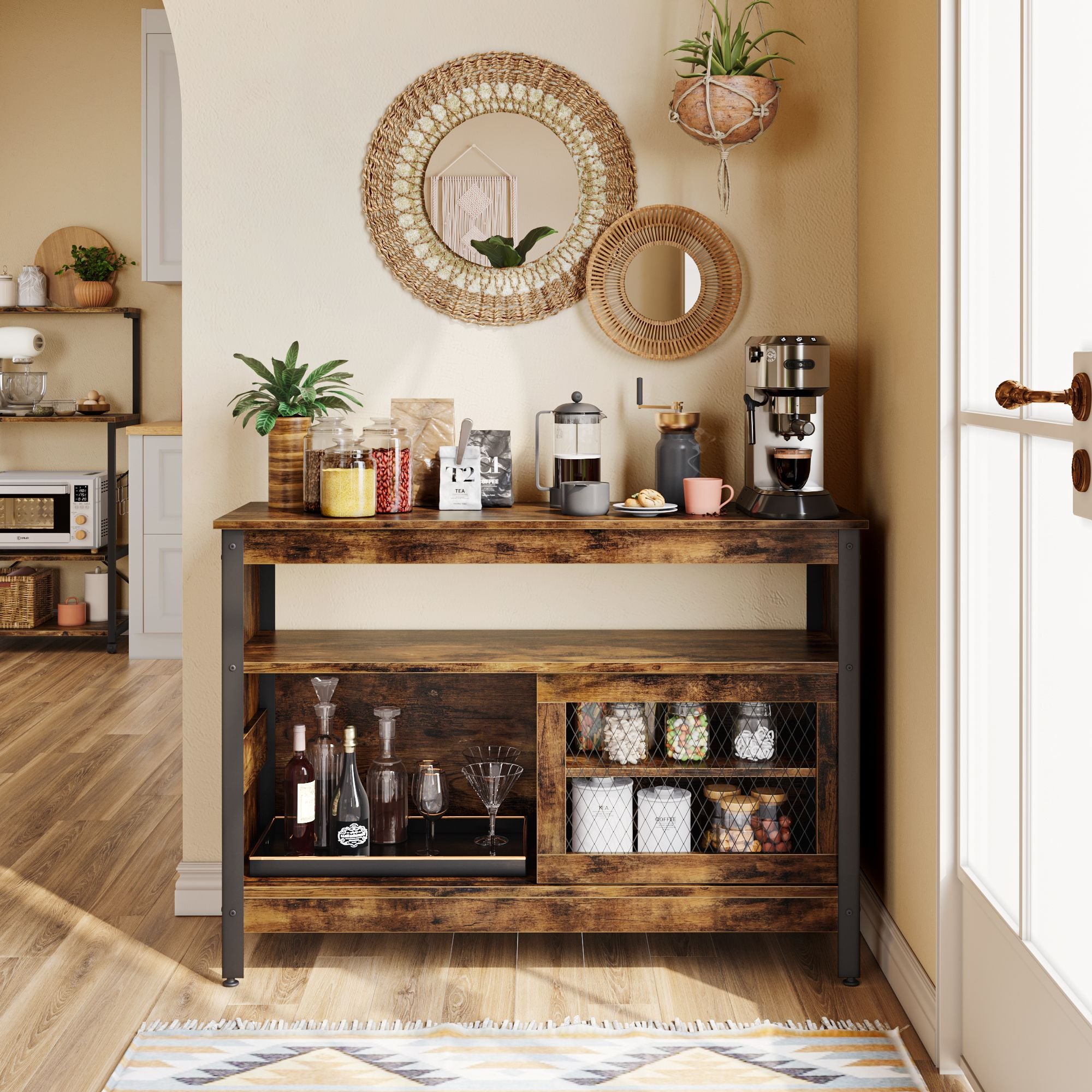
A bakers rack serves as the ideal foundation for this setup because its open-shelving design prevents the space from feeling cramped. Unlike bulky cabinets, the airy structure of a bakers rack allows for better airflow around heat-generating appliances like espresso machines and milk frothers. This setup encourages a ritualistic approach to coffee preparation, which can serve as a grounding sensory experience during a high-stress workday.
Selecting the Right Bakers Rack for Your Office
When transitioning a bakers rack from the kitchen to the home office, several technical factors must be considered to ensure long-term durability and safety. Most standard espresso machines weigh between 15 and 30 pounds, but high-end prosumer models can exceed 50 pounds. It is essential to choose a rack with a reinforced main shelf that can handle this concentrated load without bowing.

Beyond weight, the material of the rack plays a critical role in your office's air quality. Since home offices are often smaller and less ventilated than kitchens, the formaldehyde emission levels of the furniture are paramount. Bestier products are designed with these concerns in mind, adhering to strict CARB Phase 2 and EPA TSCA Title VI regulations. For a deeper dive into why these certifications matter for your health, refer to our guide on engineered wood safety standards, which details how these standards limit off-gassing in materials like MDF and particle board.
Managing Electrical Loads and Safety
One of the most overlooked aspects of setting up a coffee bar in a home office is the electrical demand. A typical espresso machine can pull between 1,200 and 1,800 watts during the heating cycle. If you are also running a high-performance computer, multiple monitors, and studio lighting on the same circuit, you risk tripping a breaker.
Logic Summary: This guidance assumes a standard 15-amp residential circuit. If your home office is on a shared circuit with other high-draw appliances (like a space heater or laser printer), we recommend consulting an electrician to ensure your total load does not exceed 80% of the circuit's capacity (1,440 watts for a 15A circuit).
Using a 5-tier kitchen bakers rack with built-in power outlets can simplify cable management, but you must ensure the furniture's power strip is UL-certified and rated for the combined wattage of your coffee gear. Never "daisy-chain" power strips, as this creates a significant fire hazard.
| Feature | Requirement for Coffee Station | Why It Matters |
|---|---|---|
| Main Shelf Depth | Minimum 15-18 inches | Accommodates the footprint of most espresso machines and grinders. |
| Weight Capacity | 50+ lbs for the main shelf | Prevents structural failure under the weight of heavy water tanks and boilers. |
| Power Integration | Built-in UL-certified outlets | Reduces cable clutter and provides easier access for daily operation. |
| Surface Finish | Water-resistant / Heat-resistant | Protects the engineered wood from steam, spills, and heat cycles. |
| Vertical Clearance | 18-24 inches above main shelf | Allows for easy refilling of top-loading water reservoirs. |
Designing for Aesthetic Productivity
The beauty of using a bakers rack for a coffee station lies in its versatility. You can explore creative ways to use bakers racks beyond the kitchen to find a style that matches your office decor, whether it's industrial, minimalist, or dark academia. For those with limited space, looking into small kitchen coffee bar ideas using bakers racks can provide inspiration for compact layouts that fit into a corner or a "cloffice" (closet office).

To maintain a professional look during video calls, organize your station with intention. Use glass canisters for beans, a dedicated knock box for espresso pucks, and a small tray for stirrers and sweeteners. If your office serves multiple purposes, you might even consider creating a home bar with bakers racks in small apartments to transition the space from a daytime coffee hub to an evening relaxation zone.
Maintenance and Long-Term Care
Coffee preparation involves heat and moisture, both of which can be detrimental to furniture if not managed. Always use a silicone mat or a dedicated "coffee station mat" under your machine to catch drips and insulate the surface from heat. If a spill occurs, wipe it up immediately with a soft, damp cloth to prevent the moisture from penetrating the seams of the engineered wood.
For those looking for a comprehensive solution, browsing a complete collection of bakers racks will reveal options with various finishes and storage configurations, such as wire baskets for pods or cabinets for hiding bulk supplies.
FAQ
Can I use a standard bakers rack for a heavy espresso machine? Yes, but you must check the specific weight rating for the middle shelf. Many bakers racks are designed for microwaves, which weigh 30-50 lbs, making them suitable for most home espresso setups. However, if you have a dual-boiler machine with a large copper boiler, ensure the rack features reinforced metal supports to prevent sagging over time.
Is it safe to plug a coffee maker into a power strip on a bakers rack? It is safe only if the power strip is rated for the wattage of the coffee maker. Most household coffee makers use 900-1,500 watts. Check the label on your machine and the rating on the furniture's power strip (usually found on the back of the strip). If the machine's wattage exceeds the strip's rating, plug the machine directly into a wall outlet instead.
How do I protect my bakers rack from steam damage? Steam from espresso machines or kettles can cause engineered wood to swell if it's trapped under a shelf. Position your machine so the steam wand or kettle spout points away from the upper shelves or the wall. Using a rack with open wire shelves above the machine can also help dissipate steam more effectively than solid wood shelves.
What are the benefits of a coffee station in a home office versus the kitchen? The primary benefit is the preservation of "flow state." Walking to the kitchen often leads to distractions—checking the fridge, starting a load of laundry, or engaging with family members—which can break your concentration for up to 20 minutes. A dedicated office station allows you to recharge while staying in "work mode," making it easier to jump back into tasks.
How do I clean coffee stains off an engineered wood bakers rack? For fresh spills, use a microfiber cloth dampened with warm water and a drop of mild dish soap. For dried stains, a paste of baking soda and water can be gently applied, but avoid abrasive scrubbing which can damage the protective laminate or veneer. Always dry the surface thoroughly after cleaning to prevent moisture damage.
Does the furniture I use affect my office's air quality? Yes, furniture made from engineered wood can release formaldehyde, a VOC, if it does not meet safety standards. Choosing furniture that is CARB Phase 2 and EPA TSCA Title VI compliant ensures that emission levels are within safe limits for indoor environments. This is especially important in home offices where you may spend 8-10 hours a day in a relatively small space.
References
Government / Standards / Regulators
- EPA: Formaldehyde Emission Standards for Composite Wood Products (TSCA Title VI)
- California Air Resources Board (CARB): Airborne Toxic Control Measure (ATCM)
- OSHA: Electrical Safety Standards for the Workplace
Industry Associations / Research Institutes
- Underwriters Laboratories (UL): Standards for Furniture Power Distribution Units
- National Coffee Association (NCA): 2026 Trends in Home Brewing
Academic / Whitepapers / Labs
- Journal of Environmental Psychology: The Impact of Office Design on Cognitive Performance
- Bestier Whitepaper: Engineered Wood Safety and Indoor Air Quality
