




Small Business Shipping Station: Using Bakers Racks for Inventory
Disclosure: This guide contains links to Bestier products. As a manufacturer of home office and storage solutions, we provide these recommendations based on our product specifications and industry safety standards to help you build a functional workspace.
Summary
Transforming a bakers rack into a small business shipping station is a highly effective way to maximize vertical space and streamline fulfillment for Etsy and eBay sellers. By utilizing a multi-tiered rack, you can centralize thermal printers, scales, and inventory in a compact footprint that supports an ergonomic, zone-based workflow. This guide provides actionable steps for setup, focusing on safety, efficiency, and material compliance.
Key Takeaways
- Maximize Verticality: Use the upper tiers of a bakers rack for lightweight inventory and the middle tiers for high-frequency packing tasks to save floor space.
- Integrated Power is Essential: Choose a rack with built-in power outlets to manage thermal printers, digital scales, and label dispensers without cable clutter.
- Ergonomic Alignment: Position your primary packing surface at elbow height (typically 34–44 inches for most adults) to prevent back strain during high-volume shipping days.
- Safety First: Always anchor tall racks to a wall stud and ensure the furniture meets engineered wood safety and CARB standards for a healthy home office environment.
- Zone-Based Organization: Divide your station into specific zones for receiving, quality control, and outbound shipping to minimize errors and movement.
Designing an Efficient Home Shipping Station with Vertical Storage
For many small business owners, the transition from a "side hustle" to a full-time operation happens in the living room or a spare bedroom. The primary challenge is often space; traditional desks lack the depth and verticality needed to house boxes, mailers, printers, and inventory simultaneously. This is where the creative uses for bakers racks come into play. Originally designed for kitchens, these units offer a unique combination of heavy-duty shelving, a counter-height workspace, and a slim profile that fits perfectly into corner offices or "cloffices."
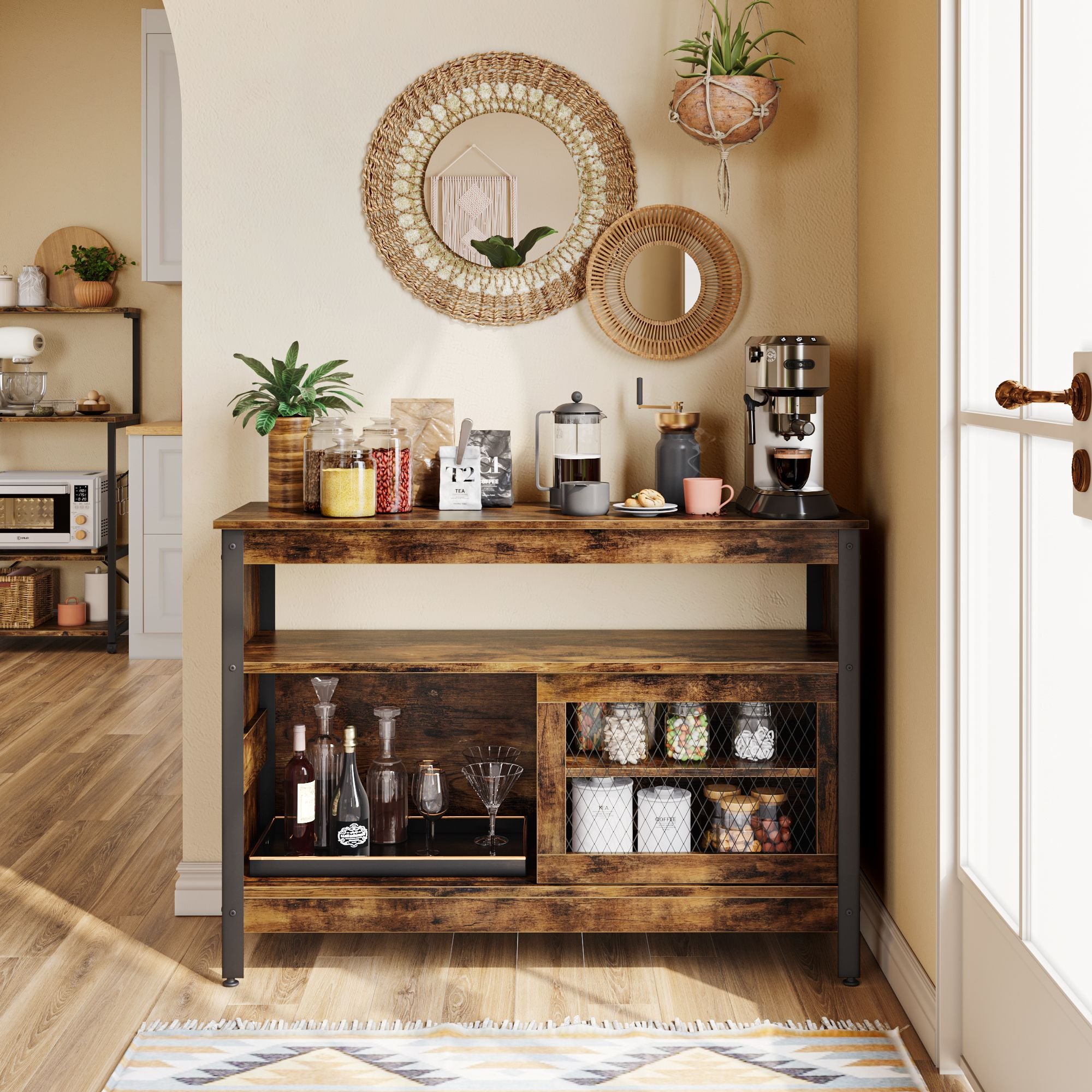
When selecting a unit, look for versatile bakers racks that feature a mix of open shelving and solid work surfaces. A wire-shelf design is excellent for visibility and airflow, while a solid wood or engineered wood countertop provides the stability required for precision weighing on a digital scale.
Operational Context: A bakers rack is recommended over a standard desk because it forces organization upward. This setup is optimized for "micro-fulfillment" scenarios, typically defined as a daily volume of 5–50 packages. For industrial-scale operations exceeding 100 shipments per day, dedicated warehouse racking may be necessary to accommodate palletized goods.
How to Choose the Right Bakers Rack for Inventory and Packing
Not all racks are created equal when it comes to the rigors of daily shipping. You must consider weight capacity, power accessibility, and material safety. A 5-tier bakers rack with integrated power outlets is often the gold standard for this application because it eliminates the need for daisy-chaining extension cords across your floor—a major trip hazard and fire risk in small spaces.
Weight Capacity and Structural Integrity
Inventory can be surprisingly heavy. A stack of 100 corrugated boxes or a collection of ceramic mugs adds up quickly. Before loading your rack, verify the per-shelf weight limit provided by the manufacturer.
- Standard Capacity: Most residential-grade bakers racks support between 30 and 100 pounds per shelf (static load).
- Weight Distribution: To maintain a low center of gravity and prevent instability, always place the heaviest items (like bulk bubble wrap rolls or heavy inventory bins) on the bottom tier.
Material Safety and Indoor Air Quality
Since your shipping station will likely be in a living area, the chemical composition of the furniture matters. High-quality engineered wood products should comply with EPA TSCA Title VI and CARB Phase 2 standards. As detailed in our guide on engineered wood safety and CARB standards, these regulations limit formaldehyde off-gassing. This is particularly important in smaller, less-ventilated rooms where air quality can degrade quickly during long hours of operation.

Implementing a Zone-Based Workflow for Small Business Fulfillment
Efficiency in shipping isn't just about how fast you can tape a box; it's about how few steps you take to complete the process. By applying zone-based room optimization to your bakers rack, you can create a "micro-fulfillment center" that rivals professional warehouses.
The Three-Zone System
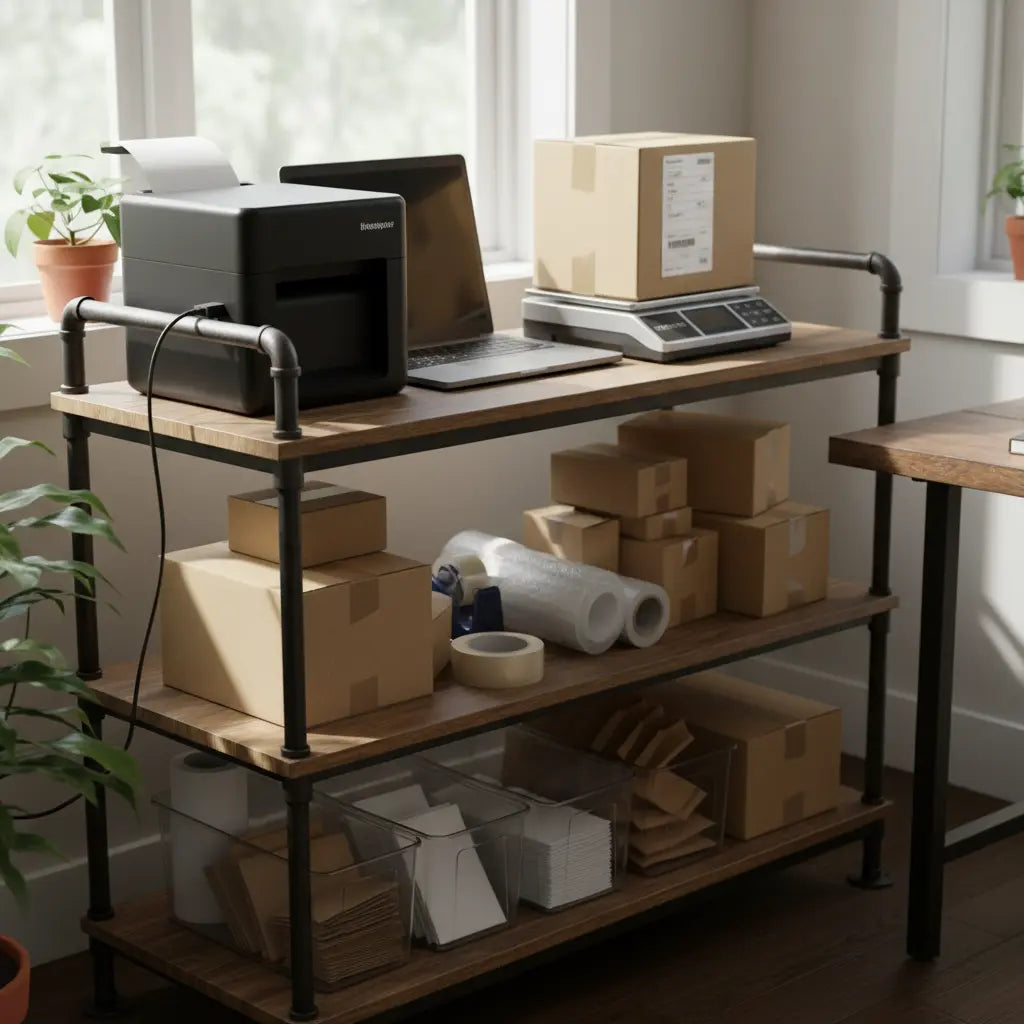
- The Inventory Zone (Upper & Lower Tiers): Use the highest and lowest shelves for items you don't touch every minute. The top shelf is perfect for lightweight poly mailers and extra tape rolls. The bottom shelf should house your heaviest inventory or bulkier box sizes.
- The Action Zone (Counter Height): This is your primary workspace. It should house your digital scale and your thermal printer. Keeping these at elbow height (roughly 34 to 44 inches from the floor, based on standard anthropometric data for standing work) follows OSHA's ergonomic recommendations for standing workstations, reducing the risk of musculoskeletal disorders.
- The Supply Zone (Eye Level): Use the shelf immediately above the countertop for high-frequency supplies like "Thank You" stickers, tissue paper, and branding materials.
Power Management for Shipping Electronics
A modern shipping station is an electronic hub. You'll likely have a thermal label printer (like a Rollo or Dymo), a laptop or tablet, and a digital scale.
- Surge Protection: If your rack doesn't have built-in power, use a surge protector with a minimum rating of 1000 Joules. This threshold is recommended to protect the sensitive PCB and thermal heads of professional printers from voltage spikes.
- Cable Routing: Use zip ties or Velcro straps to secure cables to the rack frame, preventing them from snagging on boxes or equipment.
Organizing Inventory and Supplies Vertically
The secret to a clean shipping station is containment. Instead of stacking items directly on the shelves, use clear bins or wire baskets. This allows you to see your stock levels at a glance without rummaging.
| Supply Type | Recommended Storage Location | Why? |
|---|---|---|
| Poly Mailers | Vertical File Organizer (Upper Shelf) | Prevents sliding and keeps sizes separated. |
| Corrugated Boxes | Bottom Shelf (Standing Vertically) | Keeps weight low and makes them easy to slide out. |
| Thermal Labels | Printer-Adjacent (Action Zone) | Minimizes downtime during roll changes. |
| Fragile Items | Bakers rack with a storage cabinet | Protects delicate inventory from dust and light. |
| Branding Kits | Small Bins (Eye Level) | Quick access for the final touch on every package. |
Note: This layout assumes the use of standard USPS/UPS/FedEx shipping supplies. If you ship oversized items (e.g., furniture or large art), the "Action Zone" may need to be a separate, larger table, while the bakers rack serves strictly as an inventory and supply hub.
Safety Standards and Maintenance for Home Businesses
While a bakers rack is a sturdy piece of furniture, it is not a commercial pallet rack. To ensure long-term safety, follow these maintenance protocols:
- Wall Anchoring (Critical): Any unit over 30 inches tall should be anchored to a wall. Use a stud finder to locate a wooden wall stud and secure the rack using an anti-tip kit (L-brackets or nylon straps). Anchoring only to drywall with plastic anchors is often insufficient for units holding heavy inventory.
- Floor Protection: The weight of a fully loaded rack can dent hardwood or crack tiles. Use felt pads or a heavy-duty chair mat underneath the rack's feet to distribute the load.
- Electrical Audits: Check your power strips and integrated outlets every six months for signs of heat, discoloration, or fraying. Thermal printers draw significant current during large batch prints; if a plug feels hot to the touch, discontinue use and consult an electrician.

FAQ
What is the best height for a shipping packing station? The ideal height for a standing packing station is generally between 34 and 44 inches, which aligns with the average person's elbow height. This allows you to pack boxes and apply labels without bending your back. If you prefer to sit, a standard desk height of 28 to 30 inches is appropriate, but you will likely need a drafting chair to reach the upper shelves of a bakers rack comfortably.
How much weight can a standard bakers rack hold for inventory? Weight capacity varies by model. Most residential bakers racks are rated for 30 to 50 pounds per shelf, with the main countertop supporting up to 100 pounds. Always check the manufacturer's specifications. Overloading a rack can cause the shelves to bow or the entire unit to become unstable.
Is it safe to use a bakers rack for electronics like thermal printers? Yes, provided you manage power and heat. Ensure the rack is placed near a grounded wall outlet and avoid overloading the circuit. If the rack has a wooden surface, ensure it meets engineered wood safety and CARB standards to ensure the material is stable under the minor heat generated by electronic equipment.
How do I organize different box sizes on a bakers rack? The most efficient way to store boxes is vertically on the bottom shelf. Use a "dish rack" style organizer or simple wire dividers to keep different sizes upright. This prevents a "leaning tower" of boxes and allows you to pull one size out without the rest collapsing.
Do I need to anchor my bakers rack to the wall? Absolutely. Because bakers racks are tall and relatively narrow, they have a higher center of gravity. Anchoring the unit to a wall stud prevents accidental tipping if someone bumps into it or if a heavy shelf is pulled forward. Most modern furniture includes an anti-tip kit for this purpose.
Can I use a bakers rack on a carpeted floor? You can, but stability may be an issue. On thick carpet, the rack may wobble, which can affect the accuracy of your shipping scale. To fix this, place a solid piece of plywood or a heavy-duty plastic floor mat under the rack to provide a level, firm surface.
References
Government / Standards / Regulators
- OSHA: Ergonomics Guidelines for Manual Material Handling
- EPA: Formaldehyde Standards for Composite Wood Products (TSCA Title VI)
- CPSC: Furniture Tip-Over Prevention and Anchor Standards
Industry Associations / Research Institutes
- ANSI/BIFMA: X5.9-2019 Storage Units - Tests
- National Safety Council: Home Office Safety Checklist
Platform Official Docs & Policies
Academic / Whitepapers / Labs
- Bestier Research: Engineered Wood Safety: A Comprehensive Guide to CARB & TSCA Standards (Internal authoritative resource on material compliance and indoor air quality).
