


Summary
Finding a high-quality adjustable height gaming desk on a budget requires balancing mechanical reliability with structural stability. In 2026, the market offers a range of electric and manual sit-stand options that prioritize ergonomic health without the premium price tag of executive models. By focusing on essential features like motor duty cycles, torsional rigidity, and cable management, budget-conscious gamers can create a dynamic battlestation that supports long-term performance and physical well-being.
Key takeaways
- Prioritize Stability over Speed: In the budget category, manual crank desks often offer better structural integrity and longevity than entry-level electric motors.
- Check Motor Duty Cycles: For electric models, ensure the motor is rated for at least 2 minutes of continuous use with an 18-minute rest period to prevent premature failure.
- Floor Type Matters: Stability at standing heights is significantly affected by flooring; using a hard mat on carpeted surfaces can reduce the "pendulum effect" or wobble.
- Cable Slack is Essential: Always leave enough "service loop" in your cables to account for the full range of vertical motion, preventing port damage or cable snapping.
- Verify Material Safety: Choose desks that comply with CARB Phase 2 and EPA TSCA Title VI standards to ensure low formaldehyde emissions and better indoor air quality.
How to Choose the Right Budget Adjustable Gaming Desk
Selecting an affordable electric standing desk involves more than just looking at the price tag. In 2026, the "budget" category for height-adjustable desks typically spans from $250 to $500. While it is tempting to go for the lowest price possible, the cheapest models often sacrifice the gauge of steel in the frame or the quality of the lifting mechanism. To find the right balance, gamers should look for a frame weight of at least 50 lbs (excluding the desktop) to ensure there is enough mass to dampen vibrations during intense mouse movements.
Ergonomics should be the primary driver of your purchase. A desk that doesn't reach your ideal sitting or standing height can lead to neck strain and carpal tunnel issues. Before buying, measure your seated elbow height and your standing elbow height while wearing your typical gaming footwear. This will give you a target range for the desk's adjustment. For more detailed guidance on finding your specific measurements, refer to our ideal gaming desk height setup guide.
Logic Summary: This recommendation assumes a standard user height between 5'2" and 6'2". Users outside this range may need specialized "extended range" frames which often fall outside the typical budget category. We recommend prioritizing frame weight because it is the most reliable indicator of stability in flat-pack furniture.
Electric vs. Manual: Which Fits Your Budget Better?
The debate between electric and manual height adjustment often comes down to convenience versus durability. Electric desks use a motor (or dual motors) to lift the surface at the touch of a button, while manual desks require a hand crank. In the budget tier, a manual desk is often a "sleeper" pick for value. Because they lack complex electronics and motors that can burn out, manual desks frequently use higher-quality steel in the legs for the same price as an entry-level electric model.
However, electric desks have become significantly more reliable in recent years. When shopping for a budget manual height adjustable desk, consider how often you actually intend to switch positions. If you plan to move from sitting to standing multiple times a day, the convenience of an electric motor is worth the investment. If you only plan to change heights once or twice a week, a manual crank will save you money and potentially last longer.
| Feature | Budget Electric Desk | Budget Manual Desk |
|---|---|---|
| Price Range | $350 - $550 | $200 - $350 |
| Adjustment Speed | ~1.0 to 1.5 inches per second | Dependent on user cranking speed |
| Weight Capacity | 150 - 180 lbs | 100 - 150 lbs |
| Reliability | Moderate (Motor/Controller life) | High (Simple mechanical gears) |
| Noise Level | 45 - 55 dB (Whirring motor) | Near silent (Mechanical clicking) |
Solving the Stability Puzzle: Wobble and Floor Types
One of the most common complaints with budget standing desks is the "wobble" at higher elevations. This is often caused by a lack of torsional rigidity in the frame. When a desk is extended, the center of gravity rises, making it more susceptible to the "pendulum effect." To mitigate this, look for desks with a reinforced crossbar or "wedge" shaped leg columns that provide more surface area for the telescoping parts to grip.
Interestingly, the floor you place your desk on plays a massive role in stability. A desk that feels rock-solid on a hardwood floor may feel like a bobblehead on a thick carpet. The carpet fibers act as a cushion, allowing the base of the desk to shift slightly with every movement.
Stability Optimization Checklist
- Hard Floor Mat: If your gaming room is carpeted, place a heavy-duty polycarbonate mat under the desk legs.
- Leveling Feet Adjustment: Use a spirit level to ensure all four corners are perfectly even; even a 2mm difference can cause significant sway.
- Tighten Every Bolt: After 30 days of use, go back and re-tighten every bolt in the frame. The initial "settling" of the metal can create micro-gaps that lead to wobble.
- Weight Distribution: Place heavier items (like your PC tower) directly over the legs rather than in the center of the desk.

Managing Cables and Heat in a Moving Setup
A standing desk is a moving machine, and your cable management must reflect that. The most common mistake budget-conscious gamers make is using standard-length cables that become taut when the desk is raised. This can pull your PC off the desk or snap the internal pins of your GPU ports.
Furthermore, gaming PCs generate significant heat. In a budget setup, cables are often bundled tightly to save space, which can lead to thermal buildup. Ensure that your cable routing allows for airflow and that power bricks are not buried under layers of synthetic mesh or plastic. For a deeper dive into the health and performance benefits of a well-organized space, check out our gaming ergonomics guide.
Logic Summary: We recommend a "service loop" approach where cables are secured to the desk frame first, then dropped to the floor in a single bundle with enough slack for the maximum height. This prevents individual cables from snagging on the motor or frame during movement.
Safety and Material Standards for Budget Desks
When purchasing furniture in the budget category, it is vital to consider the materials used in the desktop. Many affordable desks use engineered wood, such as MDF or particle board. While these materials are cost-effective and durable, they can sometimes emit volatile organic compounds (VOCs) like formaldehyde if not manufactured correctly.
To ensure your gaming environment is safe, look for products that are certified to meet engineered wood safety standards. Specifically, you should look for labels indicating compliance with CARB Phase 2 and EPA TSCA Title VI. These regulations set strict limits on formaldehyde off-gassing, ensuring that your long gaming sessions aren't spent breathing in harmful chemicals. Our comprehensive guide on this topic explains how these standards protect indoor air quality and what specific thresholds manufacturers must meet.

Comparing Budget Leaders: Bestier vs. IKEA
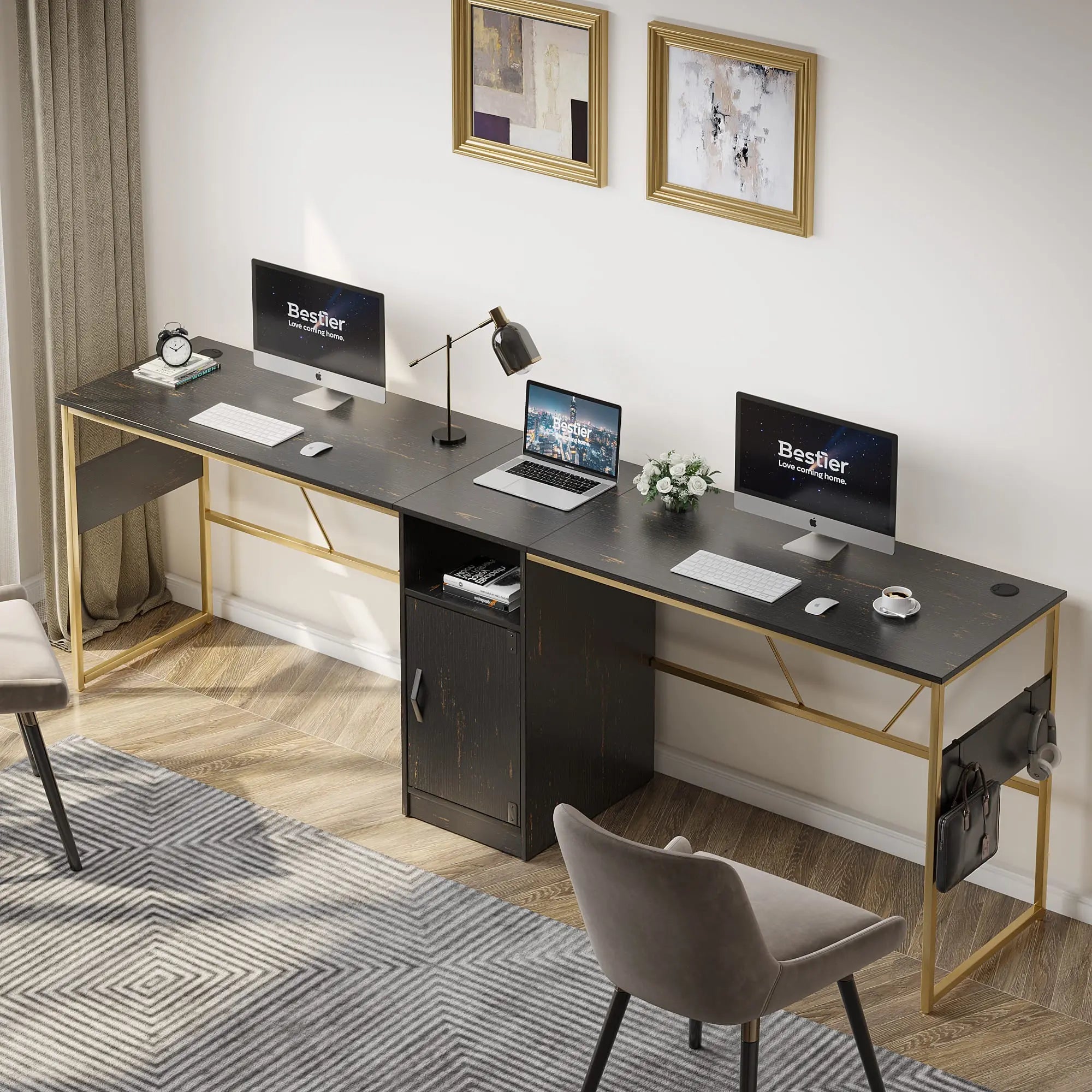
For many gamers, the choice often boils down to established big-box retailers versus specialized gaming furniture brands. While IKEA offers the popular Bekant and Idåsen series, specialized brands often provide more gaming-centric features like built-in LED strips, headphone hooks, and cup holders for a similar price.
In our Bestier vs IKEA budget gaming desk comparison, we found that while IKEA excels in minimalist aesthetics, specialized gaming desks often offer better "out-of-the-box" cable management solutions that are essential for sit-stand setups. If you are looking for a comprehensive overview of the benefits of transitioning to a standing setup, our standing desk benefits and setup tips article provides a great starting point for your research.
FAQ
Are budget standing desks stable enough for competitive gaming? Yes, budget standing desks can be stable enough for competitive gaming, provided you choose a model with a heavy steel frame and properly level the feet. Stability is most challenged at full standing height, so many competitive players prefer to lower the desk slightly during high-stakes matches to minimize any potential monitor shake. Using a monitor arm can also help isolate the screen from desk vibrations.
How long do the motors on budget electric desks typically last? The lifespan of a budget electric motor is usually measured in cycles, with most entry-level models rated for 5,000 to 10,000 cycles. For the average user who adjusts their desk twice a day, this translates to roughly 7 to 13 years of use. However, exceeding the weight limit or ignoring the motor's duty cycle (the required rest period between movements) can significantly shorten this lifespan.
Can I use a monitor arm on a budget adjustable desk? Most budget adjustable desks can support monitor arms, but you must check the desktop material and thickness. If the desktop is made of thin particle board, the concentrated pressure of a C-clamp mount can cause the wood to crack or bow over time. We recommend using a reinforcement plate or choosing a desk with a desktop thickness of at least 0.75 inches to safely distribute the weight of dual-monitor setups.
Is a manual crank desk better than an electric one for a budget setup? A manual crank desk is often "better" in terms of pure mechanical longevity and cost-effectiveness. Since there are no electronic components to fail, a manual desk can theoretically last decades. However, the physical effort required to crank the desk up and down can be a deterrent for some users, leading them to leave the desk in one position and negating the benefits of a sit-stand setup.
What is the best way to manage cables on a budget standing desk? The most effective budget-friendly cable management involves using a combination of an under-desk cable tray and adhesive cable clips. Ensure that all cables going from the desk to the floor (like power and display cables) are bundled together in a "cable spine" or sleeve with enough slack to reach the desk's maximum height. This prevents cables from being pulled out of their sockets when you transition to a standing position.
Do budget standing desks come with a warranty? Most reputable budget standing desk manufacturers offer a warranty, typically ranging from 1 to 5 years. It is important to note that the warranty often covers the frame and the motor/electronics for different periods. Always read the fine print to see if the warranty covers shipping costs for replacement parts, as heavy steel frames can be expensive to move.
References
Government / Standards / Regulators
- U.S. Environmental Protection Agency (EPA): Formaldehyde Emission Standards for Composite Wood Products (TSCA Title VI)
- California Air Resources Board (CARB): Airborne Toxic Control Measure (ATCM) to Reduce Formaldehyde Emissions
- Occupational Safety and Health Administration (OSHA): Computer Workstations eTool - Desks
Industry Associations / Research Institutes
- BIFMA (Business and Institutional Furniture Manufacturers Association): ANSI/BIFMA X5.5 Desk/Table Products Standard
- Human Factors and Ergonomics Society (HFES): Ergonomic Standards for Computer Workstations
Platform Official Docs & Policies
- Bestier Safety & Compliance: Engineered Wood Safety Guide
Community (Intent Only)
- Reddit r/StandingDesk: Budget Desk Megathread (Intent Discovery Only)
- StackExchange - Ergonomics: User Discussions on Sit-Stand Transitions (Intent Discovery Only)
