
Summary
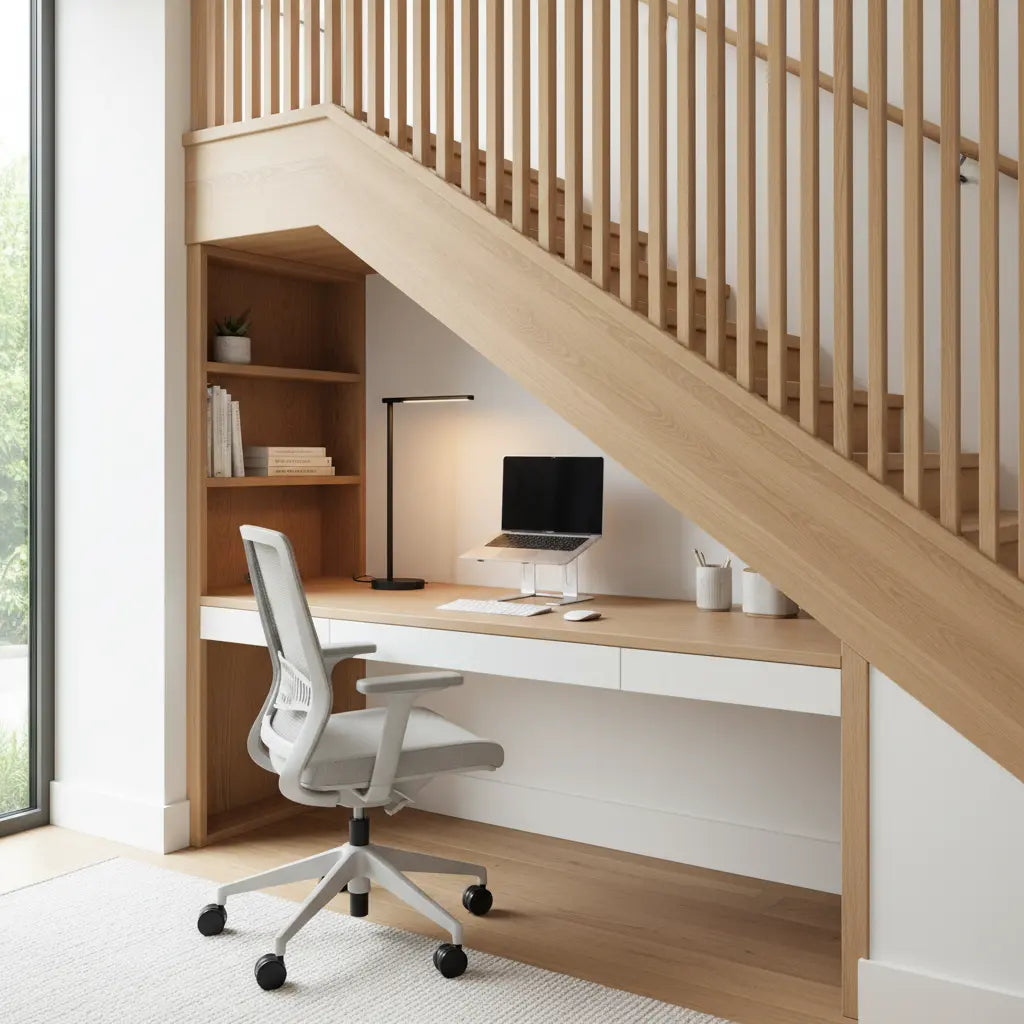
Transforming the unused area beneath a staircase into a productive home office requires a strategic blend of precise spatial measurement, ergonomic adaptation, and furniture selection that prioritizes vertical efficiency. By utilizing compact L-shaped desks and modular storage solutions, homeowners can create a high-functioning workspace that maximizes square footage without compromising comfort or professional utility in 2026's increasingly remote-centric work environment.

Key takeaways
- Precision Measurement is Critical: Accurate mapping of the "headroom arc" is essential to avoid ergonomic strain and ensure the desk fits the specific slope of your staircase.
- Prioritize Air Quality: In confined under-stair nooks, choosing furniture that meets CARB Phase 2 and EPA TSCA Title VI standards is vital for maintaining healthy indoor air quality.
- Optimize Vertical Real Estate: Use wall-mounted organizers and desks with integrated shelving to compensate for limited floor space.
- Strategic Lighting is Mandatory: Since under-stair areas often lack natural light, a layered lighting approach—combining task and ambient sources—is necessary to reduce eye strain.
How to Assess Your Under-Stair Space for a Home Office
Before selecting a desk, you must understand the unique geometry of your staircase. Unlike standard rooms, under-stair spaces feature a "sloped ceiling" that dictates where you can sit and where you can store equipment. A common mistake is measuring only the floor footprint; however, the most critical metric is the "usable height zone"—the area where you can sit upright without your head or monitor hitting the underside of the stairs.
To calculate this, map the slope by measuring the height from the floor to the staircase at 12-inch intervals. This creates a profile of your available vertical space. For a comfortable ergonomic setup, the Human Factors and Ergonomics Society (HFES) suggests maintaining at least 48 to 52 inches of vertical clearance from the seat of your chair to the ceiling to allow for natural movement. If your space is particularly tight, you might consider small room layout optimization techniques to ensure every inch serves a purpose.
Logic Summary: These measurement guidelines assume a standard adult height and a typical office chair. If you are using a standing desk or have a non-standard staircase (e.g., spiral or winder stairs), these thresholds may need to be adjusted significantly.
Choosing the Best Desk for Under-Stair Offices
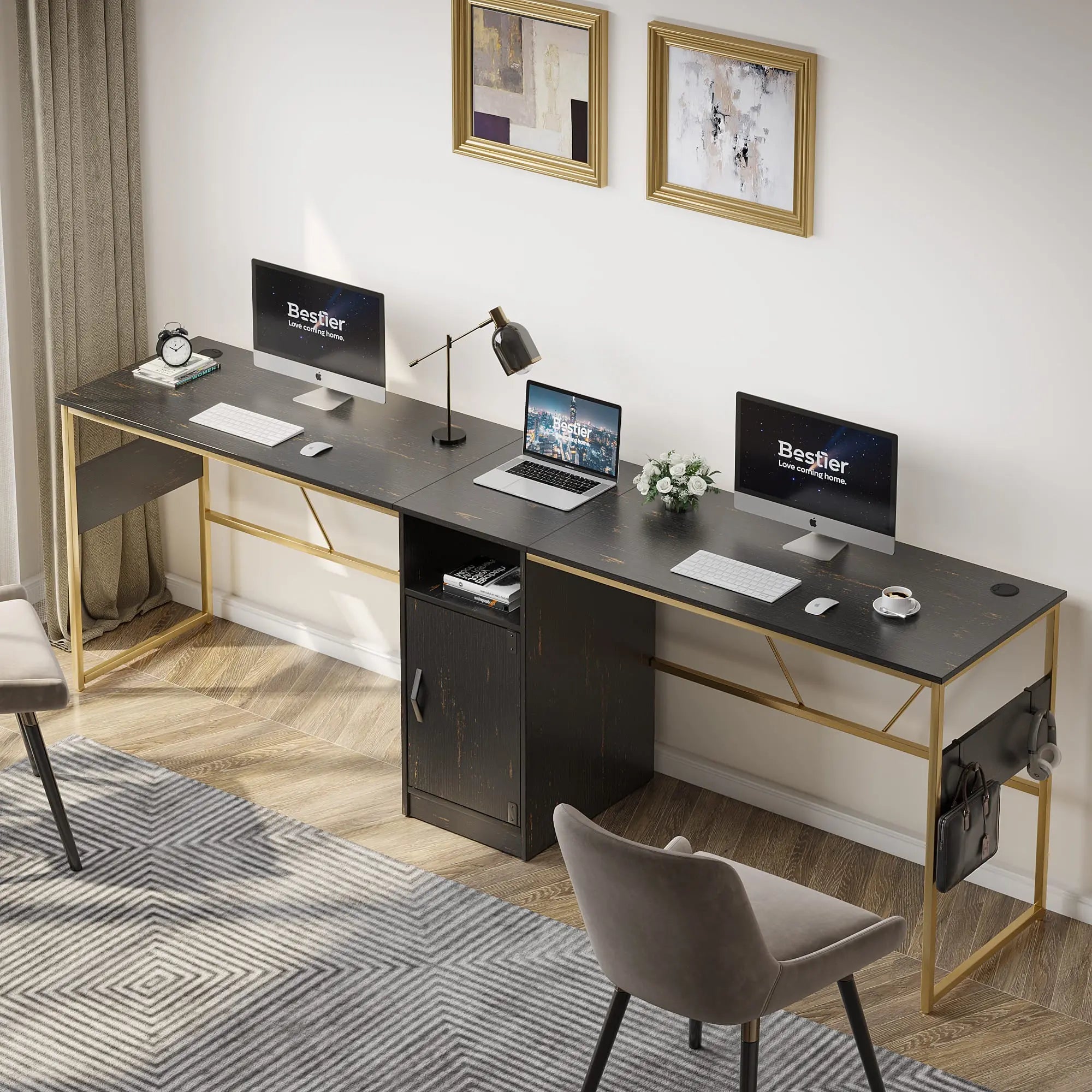
The "best" desk for an under-stair office is rarely a standard rectangular model. Because these spaces are often tucked into corners, an L-shaped desk is frequently the most efficient choice. These desks wrap into the corner, providing a larger primary work surface while utilizing the deepest part of the under-stair cavity for storage or CPU towers.
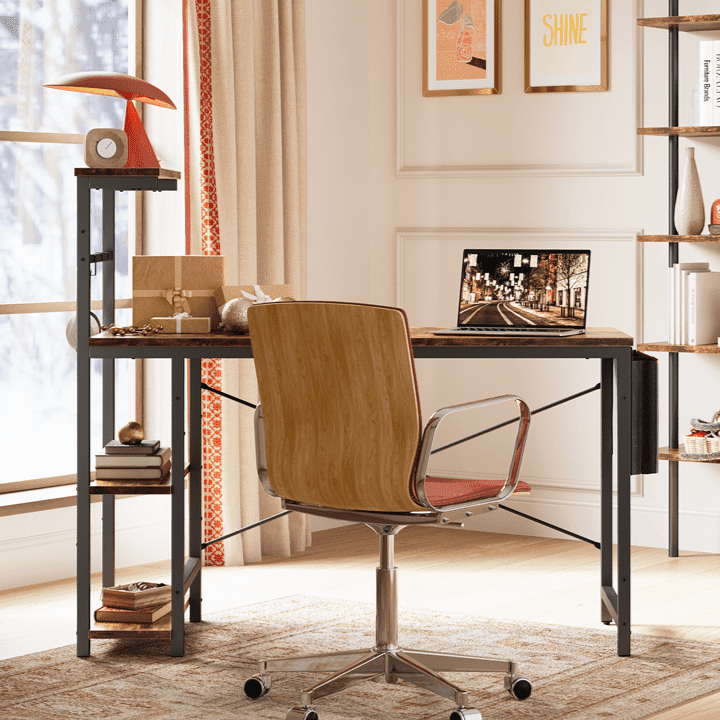
For extremely narrow spaces, a small corner desk with shelves can provide the necessary surface area for a laptop and peripherals while offering vertical storage that doesn't expand the footprint. When selecting a desk, consider the material safety. As noted in our guide to CARB & TSCA standards, engineered wood products used in small, enclosed spaces should meet strict formaldehyde emission limits to ensure long-term health and safety. This is especially important in under-stair nooks where ventilation may be less than optimal compared to open-plan rooms.

Comparison of Under-Stair Desk Types
| Desk Type | Best For | Pros | Cons |
|---|---|---|---|
| Compact L-Shaped | Corner nooks | Maximizes corner space; dual-zone work areas | May require more floor depth |
| Ladder/Leaning Desk | Shallow alcoves | Minimal footprint; built-in vertical shelving | Limited depth for large monitors |
| Floating Desk | Minimalist setups | Zero floor footprint; easy to clean under | Requires sturdy wall mounting |
| Mobile Laptop Cart | Multi-use spaces | Can be moved when not in use | Least amount of storage and stability |
Ergonomics and Comfort in Confined Workspaces
Ergonomics in an under-stair office presents a unique challenge: the ceiling is often your biggest obstacle. To maintain a healthy posture, your monitor should be at eye level, which might be difficult if the slope of the stairs forces the desk into a lower-height zone. Using a 42-inch L-shaped desk with storage can help by providing a dedicated spot for your monitor where the ceiling is highest, while the side wing can hold lower-profile items like printers or notebooks.
Lighting is another critical factor. Under-stair spaces are notoriously dark. Relying solely on a single overhead light can create harsh shadows on your workspace. Instead, use a combination of LED desk lamps for task lighting and bias lighting (LED strips) behind your monitor to reduce eye fatigue. This approach is similar to creating a closet office setup, where light management is the difference between a productive "cloffice" and a cramped storage closet.
Addressing Air Quality and Ventilation
Confined spaces like under-stair offices can suffer from poor air circulation. According to ASHRAE (American Society of Heating, Refrigerating and Air-Conditioning Engineers), proper ventilation is essential for maintaining CO2 levels and removing volatile organic compounds (VOCs). If your under-stair office is enclosed by a door or deep within a hallway, consider adding a small, quiet desk fan or a portable air purifier.
Furthermore, the materials you bring into this small space matter. High-quality furniture, such as a 48-inch LED L-shaped gaming desk, should be checked for compliance with environmental standards. Ensuring your desk is CARB Phase 2 compliant means it meets the California Air Resources Board's rigorous limits on formaldehyde emissions, which is a crucial consideration for any small-space inhabitant.
Logic Summary: Ventilation recommendations are based on general indoor air quality standards. If your home has a modern HVAC system with active return vents near the stairs, your needs may be lower than in older homes with passive airflow.
FAQ
How much space do I actually need for an under-stair office? A functional under-stair office typically requires a minimum floor area of about 3 feet by 5 feet. However, the most important factor is the vertical clearance; you need enough height to sit comfortably without hitting the stairs, which usually means at least 50 inches of clearance above your seat.
Can I use a standing desk under the stairs? It is possible but depends entirely on the height of your staircase. Most standard staircases do not provide enough height for a standing desk unless the desk is placed at the very highest point of the slope. Always measure your standing height plus the height of the desk at its full extension before purchasing.
Is it better to have a custom-built desk or a pre-made one? While custom-built desks can fit the exact slope of your stairs, they are significantly more expensive and permanent. High-quality pre-made desks, especially L-shaped or modular models, offer a much more flexible and cost-effective solution that can be moved or repurposed if your needs change.
How do I handle cable management in such a tight space? Cable management is vital in small spaces to prevent tripping hazards and keep the area looking organized. Use cable trays, Velcro ties, and desks with built-in grommets to route wires along the underside of the desk or the wall, keeping the floor clear for your feet and chair.
What is the best way to light a dark under-stair nook? The best approach is layered lighting. Start with a bright, adjustable LED desk lamp for your primary work area, and add LED light strips along the underside of the stairs or the back of the desk to provide soft, ambient light that eliminates dark corners.
Are under-stair offices good for productivity? Yes, under-stair offices can be highly productive because they are often tucked away from the main traffic areas of the home, providing a quiet, dedicated zone for focus. The "cozy" nature of the space can also help minimize distractions, provided you have adequate lighting and ergonomics.
References
Government / Standards / Regulators
- EPA: Formaldehyde Emission Standards for Composite Wood Products (TSCA Title VI)
- California Air Resources Board (CARB): Airborne Toxic Control Measure (ATCM)
Platform official docs & policies
Industry associations / research institutes / market reports
- Human Factors and Ergonomics Society (HFES): Workplace Design Standards
- ASHRAE: Standards for Ventilation and Indoor Air Quality
