
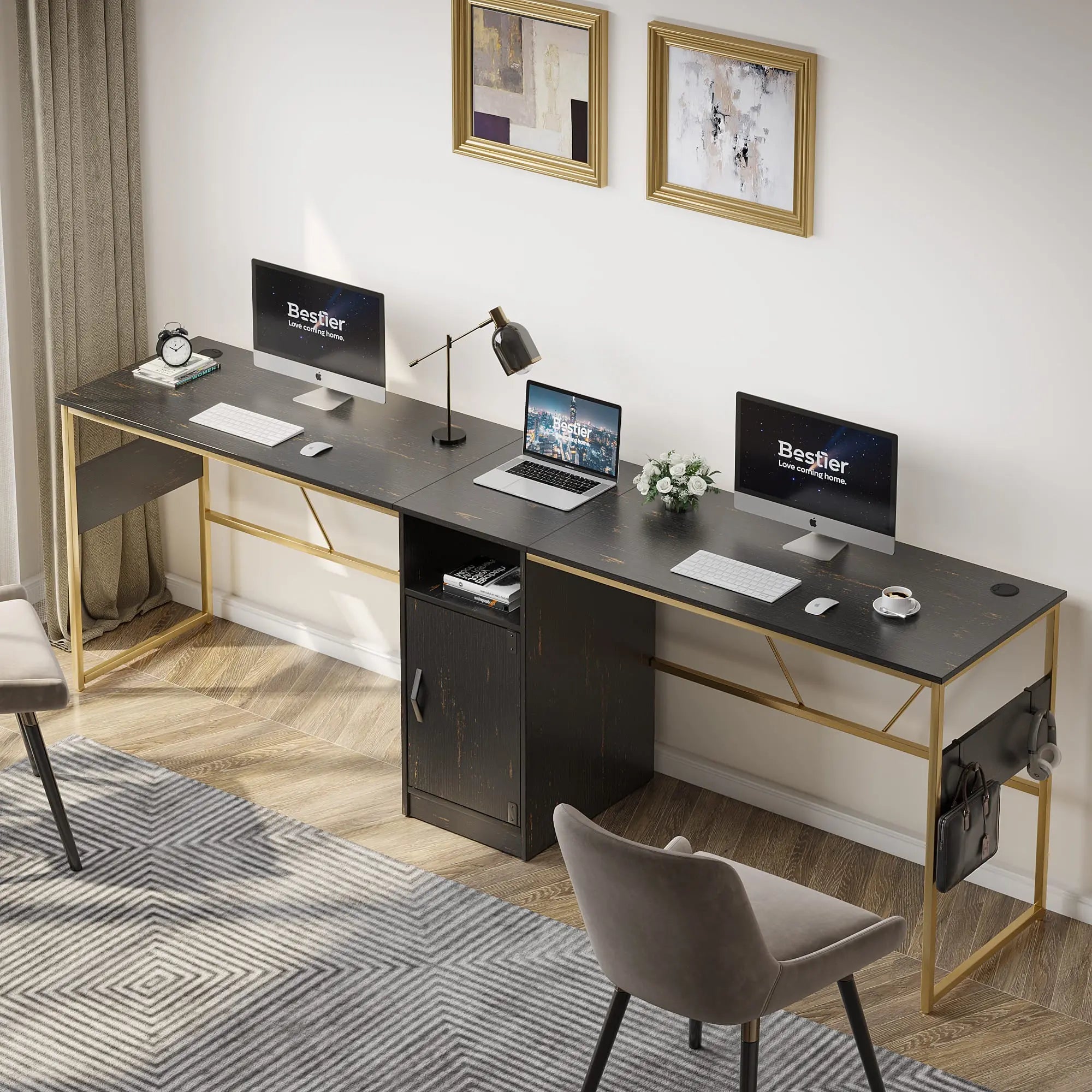

Summary
In 2026, a budget of under $200 is more than sufficient to secure a high-performance gaming desk equipped with modern features like integrated RGB LED lighting, built-in power strips with USB charging ports, and carbon fiber textured surfaces. By focusing on structural stability and verified safety standards such as CARB Phase 2 and EPA TSCA Title VI, gamers can build a professional-grade "dopamine setup" that balances aesthetic appeal with long-term durability and health-conscious material choices.
Editorial Disclosure: This guide is produced by the Bestier editorial team. As a manufacturer of gaming furniture, we leverage our internal laboratory testing and quality control experience to provide these insights. This article contains links to our product collections where we maintain direct oversight of material safety and structural integrity.
How to Identify High-Value Tech Features in Affordable Desks
The landscape of budget gaming furniture has shifted dramatically. In 2026, the "budget" label no longer implies a compromise on functionality. Based on our observations of manufacturing trends, features once reserved for premium $500+ workstations have trickled down into the sub-$200 category. When evaluating an affordable desk, we recommend looking for integrated power solutions first. A built-in power strip with at least two AC outlets and two USB-A or USB-C ports significantly reduces cable clutter.
Beyond power, aesthetic integration is now a primary driver for the "value-tech" segment. Many affordable options now feature built-in RGB LED strips. These lighting systems are often recessed into the desk frame or under the monitor shelf to provide ambient glow without direct glare. For those looking to take their setup to the next level, learning sync RGB desk lighting with your gaming PC can transform a budget desk into a fully reactive environment.
Expert Insight: High-tech features in budget desks are typically achieved through modular integration. We suggest prioritizing power strips and lighting because they are difficult to add cleanly later, whereas accessories like cup holders or headphone hooks can be easily retrofitted for a few dollars.
Choosing Between L-Shaped and Rectangular Budget Desks
Space optimization is the cornerstone of a successful gaming setup. Rectangular desks are the traditional choice, offering a straightforward footprint. They are often more portable and easier to assemble, making them a favorite for students. However, for gamers who utilize dual monitors, a rectangular shape can feel cramped once a PC tower is added.
In contrast, L-shaped desks have become the gold standard for maximizing utility in small rooms. By utilizing corner space, an L-shaped configuration provides two distinct zones. For instance, an L-shaped gaming desk with LED strip and charging port provides the necessary depth for monitor arms while keeping power accessible. If you are planning a more complex arrangement, exploring budget gaming room setup ideas can help you visualize how these shapes interact with your room flow.

Verifying Safety Standards: CARB Phase 2 and TSCA Title VI Compliance
One of the most overlooked aspects of budget furniture is the quality of the engineered wood. Most affordable desks utilize Medium-Density Fiberboard (MDF) or particle board, which use adhesives that can release formaldehyde. In a confined gaming "battle station," indoor air quality is paramount. This is where understanding safety standards for engineered wood furniture becomes critical.
The California Air Resources Board (CARB) Phase 2 and the EPA’s TSCA Title VI are the two most stringent standards for formaldehyde emissions. According to the guide on Engineered Wood Safety: A Comprehensive Guide to CARB & TSCA Standards, these regulations require rigorous third-party testing.
How to Verify Certification
To ensure your desk is safe, perform these three checks upon arrival:
- Check the Box: Look for a stamp or label that explicitly states "TSCA Title VI Compliant" or "CARB P2."
- Identify the TPC Number: Reputable manufacturers will list a Third-Party Certifier (TPC) number (e.g., TPC-2) on the product label or instruction manual.
- The "Scent" Test: While all new furniture has a "new" smell, a sharp, stinging chemical odor that persists for more than 48 hours in a ventilated room may indicate non-compliance.
Calculating Realistic Weight Limits for Multi-Monitor Setups
A common mistake for budget desk buyers is overestimating structural capacity. While a manufacturer might list a weight limit of 150 lbs, this is often a "static load" rating—meaning the weight is perfectly distributed. In a real-world gaming scenario, the load is highly concentrated.
To calculate a realistic weight limit, we use the "Safe-Use Heuristic": subtract 30% from the manufacturer's listed capacity to account for concentrated loads and dynamic movement (like typing or leaning).
- Example Calculation: If you are considering a 48-inch LED L-shaped gaming desk with a 150 lb limit, your "Safe Working Load" is approximately 105 lbs. If your dual-monitor setup and PC tower total 80 lbs, you are well within the safety margin. However, if you use a clamp-on monitor arm, the "point pressure" on the back edge is intense; we recommend adding a reinforcement plate to prevent the MDF from bowing.
Budget Desk Structural Comparison Table
| Feature | K-Shaped Frame | T-Shaped Frame | L-Shaped Corner Frame |
|---|---|---|---|
| Typical Weight Capacity | 100 - 130 lbs* | 80 - 110 lbs* | 150 - 200 lbs* |
| Wobble Resistance | High (Lateral) | Moderate | Very High (Corner Anchored) |
| Leg Room | Excellent | Good | Superior |
| Best Use Case | Competitive Gaming | General Office | Dual-Monitor Productivity |
*Note: These are typical ranges for sub-$200 desks. Always check the specific model's manual for manufacturer-rated limits.
Maximizing Durability: Assembly Tips and Integrated Electronics Care
The longevity of a budget desk is often decided during the first hour of assembly. Engineered wood desks rely on cam-locks and screws that grip into compressed fibers. Over-tightening can strip the holes. Pro Tip: Use a manual screwdriver for the final tightening steps to feel the resistance and avoid cracking the laminate.
Integrated electronics require their own care. Ensure that any integrated power strip is not overloaded with high-draw appliances like space heaters; keep it strictly for low-power electronics like monitors. Additionally, when routing built-in LED wires, leave a small "drip loop" (a bit of slack) to prevent the wires from being pulled taut if the desk is moved.

Mastering Cable Management on a Budget Frame
High-tech features like LEDs only look "high-tech" if they aren't buried in a bird's nest of wires. Budget desks often include basic tools like cable grommets and adhesive clips. The key is utilizing the underside of the desk. Using a combination of J-channels and Velcro ties allows you to route cables along the metal support bars.
For those with an LED gaming desks collection, cable management is critical because the light will highlight any hanging wires. Start by grouping cables by destination: one bundle for the PC, one for monitors, and one for peripherals. Anchoring these to the desk legs creates a streamlined look that emphasizes the desk's clean lines.
FAQ
Are budget gaming desks under $200 sturdy enough for heavy PC towers? Yes, but placement is key. We recommend placing the tower directly over one of the desk legs or on a dedicated floor stand to avoid bowing the center of the desktop. If the desk has a 100 lb capacity and your tower is 40 lbs, you are safe if the weight is near the vertical supports.
How can I tell if a budget desk uses safe materials? Look for "CARB Phase 2" or "EPA TSCA Title VI" in the product specs. Manufacturers who invest in these certifications usually display them prominently. You can also look for a TPC (Third-Party Certifier) code on the packaging.
Do the integrated LED lights on cheap desks burn out quickly? Most modern budget desks use 5V USB-powered LED strips, which are generally reliable for several years. To extend their life, avoid leaving them on 24/7 and keep the controller box away from direct heat sources like PC exhaust vents.
Can I use a monitor arm on a budget desk made of engineered wood? Yes, but with caution. Because MDF is softer than solid wood, a heavy arm can "crush" the surface. We recommend using a metal reinforcement plate between the arm's clamp and the desk surface to distribute pressure.
Is "carbon fiber texture" the same as real carbon fiber? No. In this price range, it refers to a PVC or vinyl laminate that mimics the visual pattern. It provides a durable, scratch-resistant, and water-resistant surface that is easier to clean than standard wood grain.
References
Government / Standards / Regulators
- U.S. EPA: Formaldehyde Emission Standards (TSCA Title VI)
- CARB: Composite Wood Products ATCM
- CPSC: Furniture Safety and Stability Standards
Industry Associations / Research
- BIFMA: ANSI/BIFMA X5.5 Safety and Performance Standards
- Grand View Research: Gaming Furniture Market Size & Share Report 2024-2030
Platform Official Docs
- Bestier Safety & Compliance: Engineered Wood Safety: A Comprehensive Guide to CARB & TSCA Standards
