
Summary
Repurposing a bakers rack for craft room organization provides a modular, high-capacity storage solution that maximizes vertical space while keeping essential hobby supplies accessible. By utilizing industrial-strength shelving and integrated power features, crafters can create specialized stations for heavy equipment like Cricut machines or delicate materials like yarn, all within a compact footprint. This guide is based on internal product testing and industry safety standards to help you build a workspace that is both inspiring and structurally sound.
Key Takeaways
- Vertical Efficiency: Bakers racks utilize vertical wall space, making them ideal for small-room organization where floor real estate is limited.
- High Weight Capacity: Metal-framed racks can typically support between 100 and 300 pounds per shelf (Uniformly Distributed Static Load), safely housing heavy sewing machines and die-cutting equipment.
- Modular Customization: Adjustable shelving allows for a tailored setup that accommodates various container sizes, from large yarn bins to small bead organizers.
- Integrated Power: Modern racks with built-in outlets simplify the management of heat tools, glue guns, and task lighting.
- Safety Standards: Selecting furniture that meets CARB P2 and TSCA Title VI standards ensures better indoor air quality in enclosed hobby spaces.
Why Bakers Racks are the Secret Weapon for Craft Storage
Traditional craft furniture often prioritizes aesthetics over structural integrity, leading to sagging shelves when loaded with heavy paper stocks or machines. In contrast, the bakers rack—originally designed to hold heavy cooling trays of bread—offers a robust alternative. Its open-grid or solid-shelf design allows for excellent visibility and airflow, which is particularly beneficial for materials sensitive to moisture or temperature fluctuations.
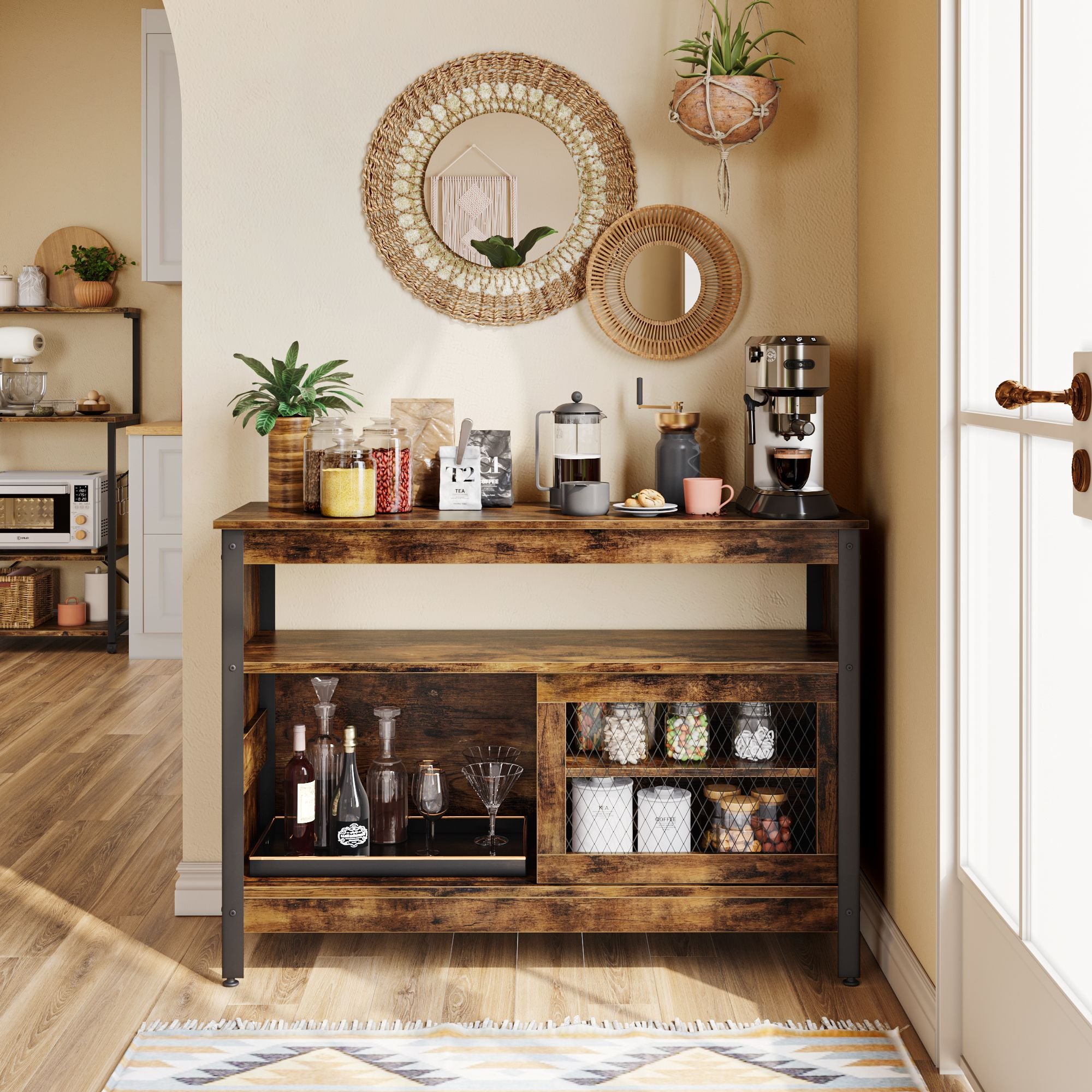
When you transition from standard bookcases to a bakers rack with storage cabinet, you gain the ability to hide visual clutter while maintaining an open workspace for active projects. The metal frames provide a magnetic surface for attaching small tools, while the wood-grain shelves offer a stable platform for precision work. This hybrid design bridges the gap between industrial utility and home office comfort.
Expert Note: Our recommendations are based on a mix of internal load-bearing tests and common hobbyist use cases. We assume a mix of heavy machinery and lightweight supplies. For ultra-delicate archives, climate-controlled, airtight cabinets are still preferred.
Designing Your Craft Station: A Zone-Based Approach
Effective organization isn't just about where things go; it's about how you move between tasks. Adopting zone-based layout planning for craft spaces allows you to treat your bakers rack as a centralized hub. By dividing the rack into specific functional areas, you minimize the "search and retrieve" time that often interrupts the creative flow.
The Preparation Zone (Lower Shelves)
The bottom tiers of a bakers rack are best suited for bulkier items and heavy raw materials. This is where you should store large bins of fabric, heavy reams of cardstock, or gallon-sized paint containers. Keeping weight at the bottom also lowers the center of gravity, increasing the overall stability of the unit.
The Active Work Zone (Middle Shelves)
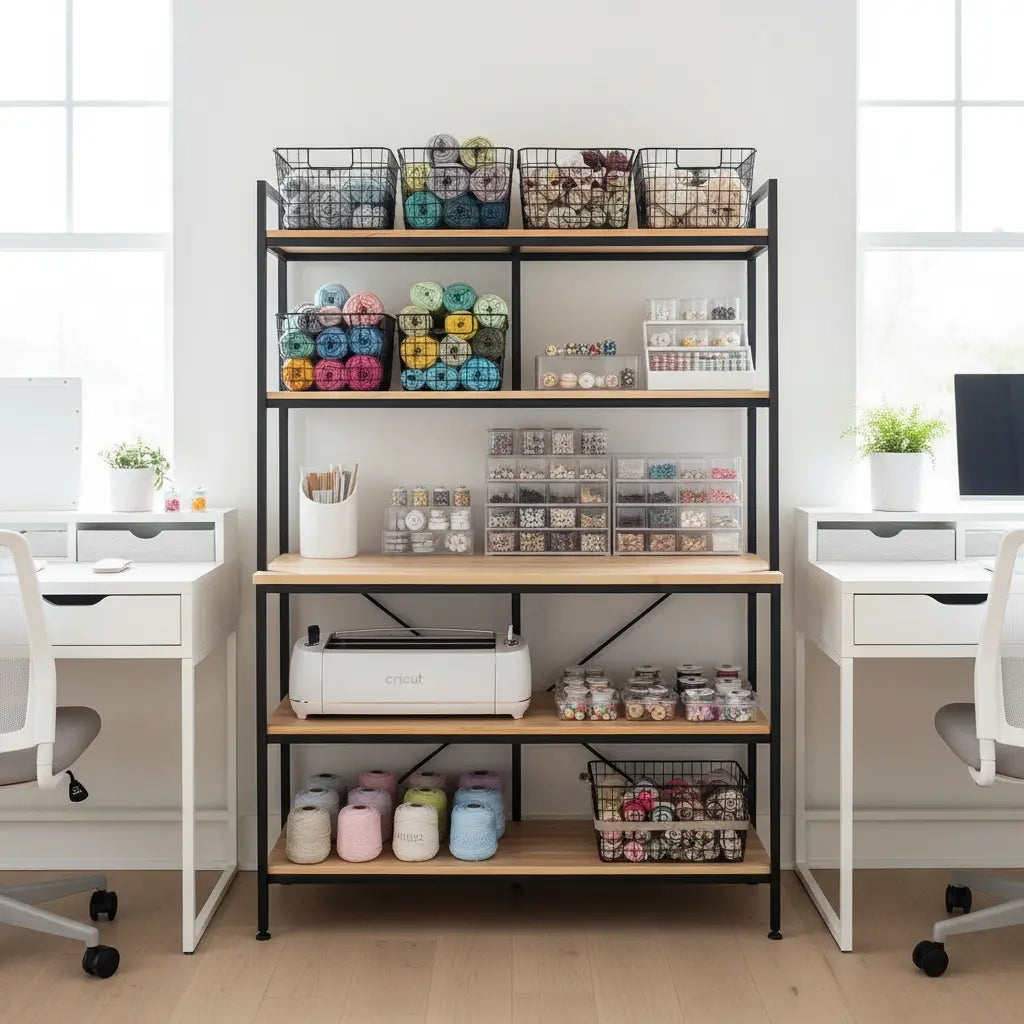
The waist-high shelf—often the deepest part of the rack—serves as your primary workspace. This area is perfect for a "Cricut station" or a sewing machine setup. Because this shelf is at the ideal ergonomic height for a seated or standing crafter, it reduces back strain during long sessions. Utilizing a bakers rack with built-in power outlets in this zone eliminates the need for hazardous extension cords trailing across the floor.
The Finishing and Storage Zone (Upper Shelves)
Higher shelves should be reserved for finished projects, lightweight tools, and items used less frequently. Clear acrylic bins are highly recommended here to maintain visibility. If you are looking for more general bakers rack organization tips, consider how vertical dividers can keep thin items like vinyl rolls or cutting mats upright and accessible.

Customizing Your Rack for Specific Hobbies
Different hobbies require different organizational logic. A bakers rack is uniquely suited for this because its components can be swapped or adjusted as your interests evolve.
The Yarn and Fiber Arts Setup
For knitters and crocheters, airflow and visibility are paramount. The open wire sides of many bakers racks allow you to attach S-hooks for hanging scissors, measuring tapes, and project bags.
- Storage Tip: Use wire baskets to store yarn by weight or color. This prevents the "bottom of the bin" syndrome where older skeins are forgotten and eventually damaged by compression.
- Safety Note: Ensure the rack is placed away from direct sunlight to prevent fiber fading over time.
The Paper Crafting and Vinyl Station
Die-cutting machines like the Cricut or Silhouette require a deep, stable surface to accommodate the "mat travel" (the movement of the cutting mat in and out of the machine).
- Workflow: Place the machine on the primary shelf and use the shelf immediately above it for vinyl rolls. This keeps the material within arm's reach while the machine is operating.
- Stability: If the rack feels top-heavy with multiple machines, consider anchoring it to the wall, especially in homes with children or pets.
The Painting and Mixed Media Hub
When working with liquids, material choice becomes a safety factor. Metal surfaces are easier to clean and won't absorb spilled solvents or pigments.
- Organization: Use tiered spice-rack style organizers on the shelves to display paint bottles. This allows you to see every label at a glance.
- Ventilation: Ensure your rack is positioned in a well-ventilated area if you frequently use spray adhesives or high-VOC paints.
| Hobby Type | Primary Storage Need | Recommended Accessory | Weight Consideration |
|---|---|---|---|
| Sewing | Fabric bolts & machine | Heavy-duty lower shelves | High (Machines 15-30 lbs) |
| Paper Craft | 12x12 paper & mats | Wide, flat middle shelf | Medium (Paper is heavy) |
| Jewelry | Small beads & findings | Clear stackable drawers | Low (Focus on visibility) |
| Yarn Arts | Skeins & needles | Wire baskets & S-hooks | Low (Focus on airflow) |
Safety and Durability: Weight Limits and Material Standards
One of the most overlooked aspects of craft room furniture is the safety of the materials themselves. Many hobbyists spend hours in small, enclosed rooms where air quality can quickly degrade. It is essential to choose furniture that adheres to strict environmental standards.
According to the Engineered Wood Safety guide, products using MDF or particle board should be certified for CARB Phase 2 and EPA TSCA Title VI compliance. These standards strictly limit the amount of formaldehyde off-gassing, which is critical for maintaining a healthy indoor environment, especially when combined with the fumes from certain craft glues or paints.
Understanding Weight Capacities
Never assume a shelf can hold your heaviest equipment without checking the manufacturer's specifications. Based on internal testing and industry heuristics:
- Metal Wire Shelving: Often rated for 150-300 lbs per shelf when weight is a Uniformly Distributed Static Load (UDL).
- Engineered Wood Shelves: Typically rated for 50-100 lbs UDL.
- Dynamic Load Adjustment: If you use a machine that vibrates (like a heavy-duty sewing machine), reduce the effective weight limit by 20%. This accounts for the dynamic forces that can loosen fasteners over time.
How to Test Your Shelf Stability
To ensure your setup is safe, perform a simple "Deflection Test":
- Measure Empty: Place a straightedge (like a level or yardstick) across the shelf and measure the distance from the center of the shelf to the floor.
- Measure Loaded: Place your machine or supplies in their intended position.
- Check the Gap: If the shelf bows more than 1/8th of an inch (approx. 3mm) relative to the straightedge, it is nearing its structural limit. Overloading can lead to structural fatigue and eventual failure of the locking mechanisms.

Ergonomics and Workflow Efficiency
A well-organized craft room should prevent physical fatigue. When setting up your bakers rack, consider the "Golden Zone"—the area between your mid-thigh and mid-chest. This is where 80% of your activity should take place.
- Shelf Height: Adjust your primary work shelf so that your elbows are at a 90-degree angle when using your machine.
- Reach Frequency: Place items you use every 10 minutes (scissors, glue) in the Golden Zone. Items used once per project (bulk fabric, extra mats) can go on the very top or bottom.
- Lighting: Since bakers racks can cast shadows on lower tiers, consider adding adhesive LED strips to the underside of the shelves. This provides task lighting exactly where you need it without taking up precious surface space.
If you are working in a particularly cramped environment, exploring space-saving furniture ideas for craft rooms can help you integrate your bakers rack with other multi-functional pieces like corner desks to create a seamless L-shaped workflow.
FAQ
Can a bakers rack hold a heavy sewing machine? Yes, most high-quality bakers racks with metal frames are designed to support significant weight, often exceeding 100 pounds per shelf. However, it is vital to check the specific load capacity of your model. For machines that produce significant vibration, ensure the rack is placed on a level surface and consider adding a non-slip mat under the machine to dampen movement.
How do I prevent my craft supplies from falling through wire shelves? If your bakers rack has wire mesh shelves, you can easily customize them by adding shelf liners. Clear plastic liners are a popular choice as they provide a flat surface for small items like beads or needles while still allowing light to pass through to lower levels.
Is it safe to store flammable craft supplies on a bakers rack? Metal bakers racks are safer for storing flammable items like spray paints compared to wooden shelving, as metal is non-combustible. However, you must still follow safety protocols: store chemicals on lower shelves, ensure the room is well-ventilated, and keep the rack away from heat sources. Always check the Material Safety Data Sheet (MSDS) for your specific supplies.
How do I manage all the cords for my electronic craft tools? Managing cords is simple due to the open-frame design. Use zip ties or Velcro straps to secure power cords along the metal legs. Choosing a model with a built-in power strip is the most efficient solution for centralized power management.
Can I use a bakers rack in a carpeted room? Yes, but stability is a concern. If the carpet is thick, the rack may lean. To ensure safety, always use the included wall-anchoring hardware to secure the unit to a wall stud. This is a critical step to prevent tipping, especially with heavy items on upper shelves.
Are bakers racks easy to clean if I spill paint or glue? Yes. Metal frames and laminate-topped shelves can usually be wiped clean with a damp cloth and mild detergent. For stubborn glue spills, most finishes can handle a gentle scraping once the glue has dried.
Disclaimer: The weight capacities and safety thresholds mentioned in this guide are based on general industry standards and internal testing of Bestier products. Always prioritize the specific manufacturer’s load ratings and safety instructions provided with your furniture. For chemical storage, consult the Material Safety Data Sheet (MSDS) of the specific product.
Related
For those looking to expand their hobby space or find more specialized storage, explore our complete selection of bakers racks to find the perfect fit for your creative needs.
References
Government / Standards / Regulators
- EPA: Formaldehyde Standards for Composite Wood Products (TSCA Title VI)
- CPSC: Furniture Tip-Over Prevention and Safety
Industry Associations / Research Institutes
- BIFMA: Safety and Performance Standards for Office and Home Furniture
- ASTM International: Standard Specification for Furniture Safety and Performance
Platform Official Docs & Policies
- Bestier Safety Guide: Engineered Wood Safety: CARB & TSCA Standards
Community
- Reddit r/CraftRoom: Community discussions on bakers rack modifications
- StackExchange - Home Improvement: Weight distribution on shelving units
