
Summary
A well-organized bakers rack serves as the functional backbone of a modern kitchen, balancing vertical storage efficiency with structural safety and aesthetic appeal. By applying practical stability principles to weight distribution and adhering to appliance clearance standards, you can transform a simple shelving unit into a high-performance workstation that adapts to various rooms and needs in 2026.
Safety Disclaimer: This guide provides general organizational and safety recommendations based on typical furniture use. Always prioritize the specific assembly instructions, load limits, and safety warnings provided by your product's manufacturer. For households with children or pets, professional installation of anti-tip hardware is mandatory for safety.
Key takeaways
- Prioritize structural integrity by placing the heaviest items on the lowest shelves to maintain a low center of gravity and prevent tipping.
- Ensure electrical safety by using integrated power outlets for high-wattage appliances and maintaining a 2-3 inch ventilation gap for heat dissipation.
- Optimize vertical space with modular bins and hooks, keeping frequently used items at eye level and seasonal items on top tiers.
- Verify material safety by choosing racks that meet CARB Phase 2 and EPA TSCA Title VI standards for indoor air quality.
- Extend functionality beyond the kitchen by repurposing bakers racks for home bars, office storage, or entryway organization.

Engineering & Safety Foundation: Weight Distribution and Material Strength
When organizing a bakers rack, the first consideration must be the physics of load-bearing. Most residential bakers racks are constructed from powder-coated steel or a combination of metal frames and engineered wood shelves. Understanding the structural limits of these materials is crucial for long-term stability. A common mistake is overloading the top shelves with heavy appliances like stand mixers or microwave ovens, which significantly raises the center of gravity and increases the risk of a tip-over accident.
Stability-First Heuristic: The 60/30/10 Rule
While you must always follow the manufacturer’s specific per-shelf weight ratings, a common industry "rule of thumb" for vertical shelving is the 60/30/10 distribution. This heuristic helps ensure the unit remains bottom-heavy and stable:
- 60% of total weight should reside on the bottom two tiers (e.g., heavy cast iron, gallon jugs, or large microwaves).
- 30% of total weight should be placed on the middle shelves (e.g., toaster ovens, coffee makers, or dinnerware).
- No more than 10% of total weight should be on the top-most shelf (e.g., light baskets, linens, or decorative items).
Note: For ultra-slim or extra-wide units, lateral stability becomes the primary concern. If your rack feels "top-heavy" or wobbles when touched, immediately move heavier items to a lower level.
Furthermore, if your rack features engineered wood components, verify that the materials comply with modern safety regulations. According to the CARB Phase 2 and EPA TSCA Title VI standards, which regulate formaldehyde emissions, choosing certified furniture is a critical step for maintaining healthy indoor air quality.
Practical Example: Estimating and Allocating Weight
To ensure you aren't exceeding limits, you can estimate the weight of common kitchen items using a standard kitchen scale or by checking product packaging.
Scenario: Organizing a 5-Tier Rack with a 300 lb Total Capacity
-
Inventory Weights:
- Large Microwave: 35 lbs
- Stand Mixer: 25 lbs
- Air Fryer: 15 lbs
- Stack of 12 Dinner Plates: 18 lbs
- Pantry Staples (Flour, Sugar, Canned Goods): 40 lbs
- Total Estimated Load: 133 lbs
-
Allocation Strategy:
- Bottom Tiers (60% target = ~80 lbs): Place the Microwave (35 lbs), Pantry Staples (40 lbs), and heavy cast iron here.
- Middle Tiers (30% target = ~40 lbs): Place the Stand Mixer (25 lbs) and Dinner Plates (18 lbs) here.
- Top Tier (10% target = ~13 lbs): Place the Air Fryer (15 lbs) here only if the shelf is rated for it; otherwise, move the Air Fryer to a middle tier and put lightweight baskets on top.
Technical Applications: Appliance Clearance and Electrical Safety
Modern kitchens in 2026 rely heavily on small appliances. However, storing a microwave or air fryer requires technical planning for heat and electricity. Placing an air fryer directly against a wall or under a low-clearance shelf can lead to overheating or damage to the rack's finish.
A minimum clearance of 3 inches on all sides is recommended for heat-generating appliances to allow for proper airflow. Utilizing a 5-tier bakers rack with power outlets allows you to plug in multiple devices without stretching cords across walkways, which is a significant trip hazard.
Typical Appliance Requirements (Example Values)
| Appliance Type | Recommended Side Clearance | Recommended Rear Clearance | Power Requirement (Typical Range) |
|---|---|---|---|
| Microwave Oven | 2-3 inches | 1-2 inches | 800W - 1200W |
| Air Fryer | 4-5 inches | 4-5 inches | 1400W - 1700W |
| Coffee Maker | 1-2 inches | 1 inch | 600W - 1000W |
| Toaster Oven | 4-6 inches | 4-6 inches | 1200W - 1500W |
Note: These are market-typical ranges. Always refer to your specific appliance's nameplate or user manual for exact wattage and required clearances to ensure fire safety.
Critical Safety: Anti-Tip Anchoring Steps
To prevent accidental tip-overs—a leading cause of furniture-related injuries—anchoring your rack to the wall is essential. Organizations like Safe Kids Worldwide emphasize that even heavy furniture can become unstable if a child climbs on it.
Recommended Tools & Hardware:
- Stud Finder: To locate the strongest mounting point.
- Power Drill: With a 1/8" bit for wood studs or a 1/4" bit for drywall anchors.
- Hardware: Use 2-inch wood screws for studs. For drywall-only mounting, use toggle bolts or heavy-duty steel anchors (plastic "plug" anchors are often insufficient for tall racks).
How to anchor your bakers rack:
- Locate the Stud: Use a stud finder to locate a wooden wall stud. If no stud is available, you must use specialized hollow-wall anchors (like toggle bolts).
- Position the Bracket: Align the anti-tip bracket with the stud at the level of the top shelf or the highest point of the frame.
- Drill Pilot Holes: Drill a small pilot hole into the stud to prevent the wood from splitting.
- Secure the Strap: Screw the bracket into the stud and attach the safety strap or cable to the rack's metal frame. Ensure the connection is taut.
Modern Innovations: Integrated Lighting and Smart Storage
As we move further into 2026, the integration of technology into furniture has become a standard expectation. Integrated LED lighting is one of the most impactful additions, providing task lighting for food preparation or accent lighting for decorative displays.

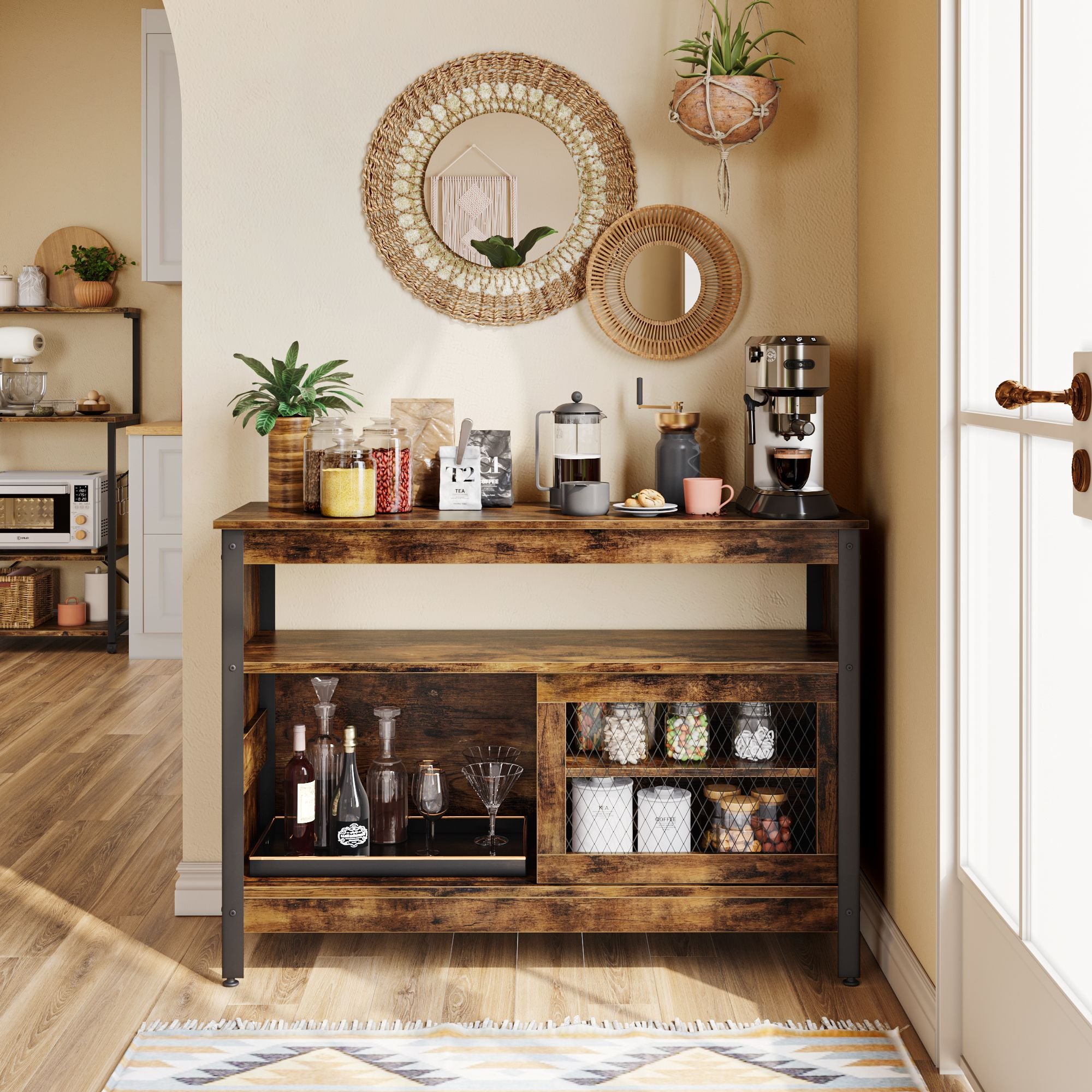
For those creating a dedicated coffee bar setup, lighting plays a dual role in functionality and aesthetics. Use under-shelf LED strips to illuminate the espresso machine's controls while highlighting your collection of artisanal mugs. Smart organization also involves inventory management; using clear, labeled bins for dry goods allows for quick visual checks, reducing food waste.
Multi-Room Adaptation: Beyond the Kitchen
In small apartments, the debate of bakers rack vs. kitchen island often comes down to footprint and flexibility. A bakers rack offers a smaller footprint while providing significantly more vertical storage, making it the superior choice for narrow walkways.
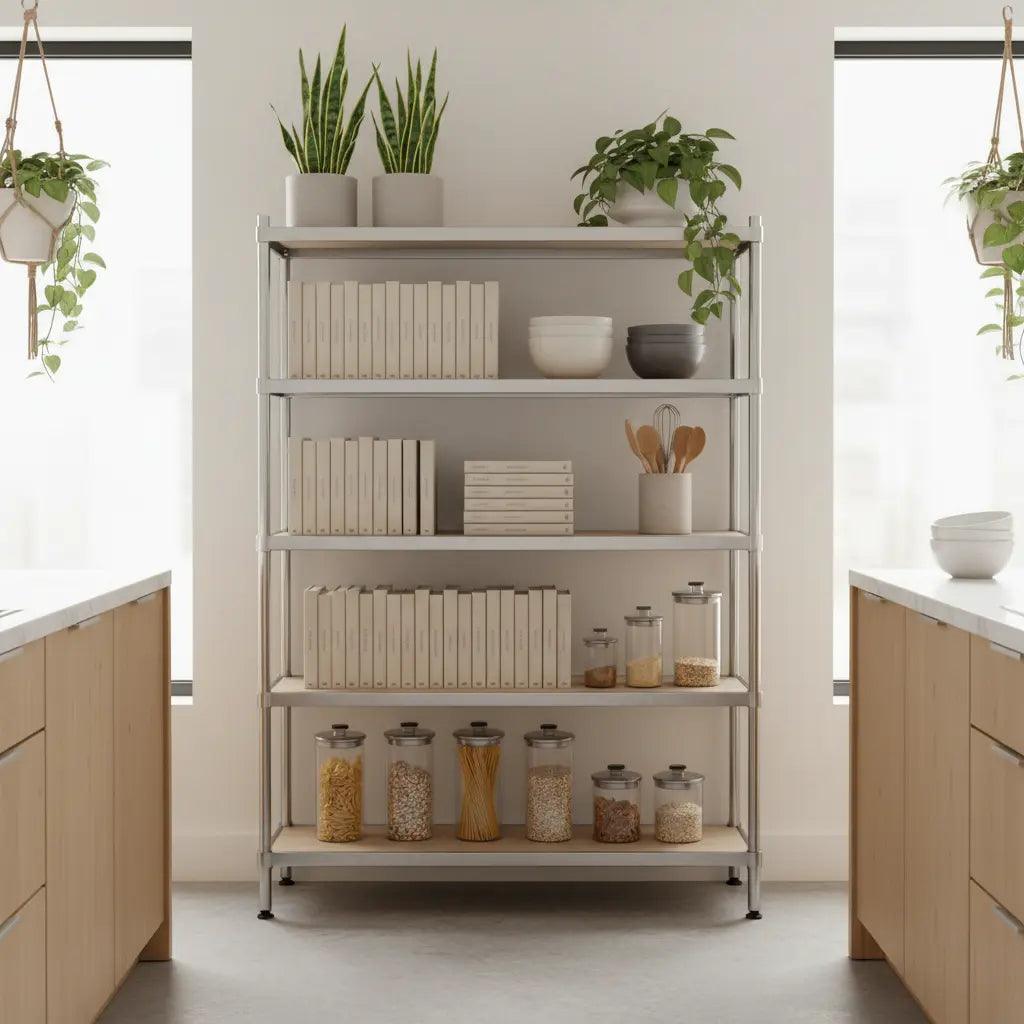
In a living room or home office, a bakers rack can transition into a sophisticated shelving unit for books, plants, and electronics. The open-wire design is particularly useful for electronics that require ventilation, such as gaming consoles or mesh Wi-Fi routers. When styling a bakers rack for non-kitchen use, aim for a balance of 70% functional items and 30% decorative elements to maintain a clean, intentional look.
Maintenance and Longevity: Protecting Your Investment
To ensure your bakers rack remains a staple in your home for years, a regular maintenance routine is essential:
- Steel Frames: A monthly wipe-down with a damp microfiber cloth prevents the buildup of kitchen grease and dust.
- Wooden Shelves: Avoid harsh chemical cleaners. Use a mild soap solution and dry the surface immediately to prevent moisture damage.
- Hardware Check: Periodically check all screws and bolts for tightness, as vibrations from appliances like blenders can cause hardware to loosen over time.
Cluster map
| Topic | Focus Area | Link |
|---|---|---|
| Styling & Decor | Aesthetic tips for modern kitchens | How to Style a Bakers Rack |
| Small Space Solutions | Comparing islands and racks | Bakers Rack vs. Kitchen Island |
| Beverage Stations | Small apartment bar ideas | Bakers Rack Home Bar Ideas |
| Creative Uses | 5 ways to use racks beyond the kitchen | Creative Ways to Use a Bakers Rack |
| Product Selection | Browse our full range of storage | Bakers Racks Collection |
FAQ
How much weight can a standard bakers rack hold? Most residential bakers racks support between 50 and 100 pounds per shelf, depending on construction. Steel wire shelves typically have a higher capacity than thin engineered wood. Always consult the manufacturer's specific load ratings.
Is it safe to put a microwave on a bakers rack? Yes, provided the shelf is rated for the microwave's weight (typically 30-50 lbs) and there is sufficient ventilation clearance. Ensure the rack is anchored to the wall to prevent movement when the door is opened.
How do I prevent my bakers rack from wobbling? Wobbling is often caused by uneven flooring or loose hardware. Tighten all assembly bolts and use adjustable leveling feet if provided. If instability persists, ensure the heaviest items are on the bottom and use an anti-tip kit.
Can I use a bakers rack in a bathroom? Yes, but consider humidity. Standard powder-coated steel may rust over time, and untreated wood can warp. Ensure the room is well-ventilated and choose a model with a moisture-resistant finish.
Do I need to anchor my bakers rack to the wall? Yes, anchoring is highly recommended for all tall furniture, especially in homes with children or pets, or in earthquake-prone areas. Anchoring to a wall stud significantly reduces the risk of tip-over accidents.
References
Government & Independent Safety Standards
- CPSC Safety Standard for Clothing Storage Units (Anti-Tip)
- Safe Kids Worldwide: Furniture Tip-Over Prevention
- EPA TSCA Title VI Formaldehyde Emission Standards
- ASTM F2057 - Standard Safety Specification for Clothing Storage Units
