
Summary
Maximizing a small space home office requires a strategic shift from horizontal expansion to vertical utilization and multi-functional furniture integration. By prioritizing L-shaped desks that reclaim underused corners and implementing zone-based layout optimization, professionals can create high-performance workspaces in as little as 15 to 20 square feet without sacrificing ergonomic health or mental focus.
Key takeaways
- Prioritize Corner Real Estate: L-shaped desks provide up to 30% more usable surface area than straight desks within the same footprint by utilizing corner "dead zones."
- Verticality is Essential: Shift storage upwards using wall-mounted shelving and pegboards to keep the primary work surface clear and reduce cognitive clutter.
- Safety Standards Matter: In small, often poorly ventilated rooms, choosing furniture that meets engineered wood safety standards like CARB Phase 2 is critical for maintaining indoor air quality.
- The "Cloffice" Framework: Converting a closet into an office requires precise measurements of depth and door swing clearance to ensure a functional, ergonomic setup.
- Acoustic and Lighting Balance: Small rooms amplify sound and shadows; integrating acoustic panels and layered lighting (task and ambient) is necessary for professional-grade video calls and focus.

Navigating the Small Space Crisis: A 2026 Perspective
As we move through 2026, the "Small Space Crisis" has evolved from a temporary workaround to a permanent urban reality. With remote and hybrid work models firmly established, the challenge is no longer just finding a place to sit, but creating a professional-grade environment within limited square footage. The modern home office must now function as a high-productivity hub, a professional video studio, and a healthy living space simultaneously.
This guide serves as a comprehensive roadmap for navigating these constraints. We move beyond basic furniture suggestions to explore deep architectural hacks, material safety, and the psychological nuances of working in confined quarters. Whether you are carving out a "cloffice" (closet office) or optimizing a studio apartment, the goal is to transform physical limitations into a streamlined workflow.
Cluster map
To help you navigate specific aspects of space optimization, we have curated a selection of deep-dive guides. Use this map to explore the areas most relevant to your current setup.
| Topic Focus | Recommended Resource |
|---|---|
| Studio Apartments | Small Corner Desk with Shelves: The Ultimate Studio Apartment Hack |
| Layout Comparisons | L-Shaped Desk vs. Straight Desk: Choosing the Right Layout |
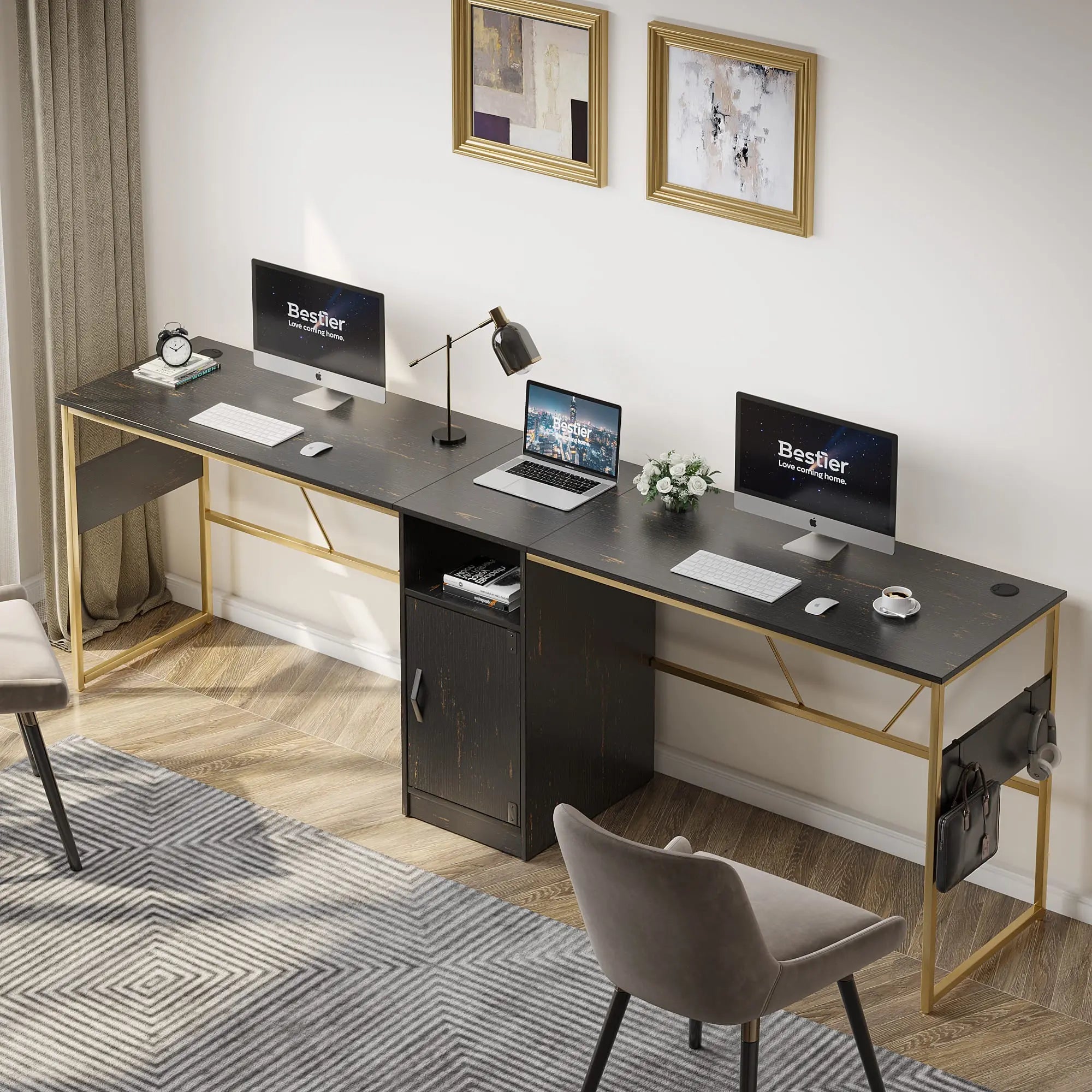
| Shared Spaces | 2-Person Desk Setup Ideas: Shared Home Office Layouts for Couples |
| Bedroom Integration | 7 L-Shaped Desk Layouts for Small Bedroom Offices |
The Foundation of Efficiency: Choosing the Right Desk Layout
The desk is the anchor of any office, but in a small room, it is also the largest consumer of floor space. The traditional straight desk often leaves corners empty and unusable, creating "dead zones" that collect dust rather than data. In contrast, the L-shaped desk has emerged as the gold standard for small-space productivity.
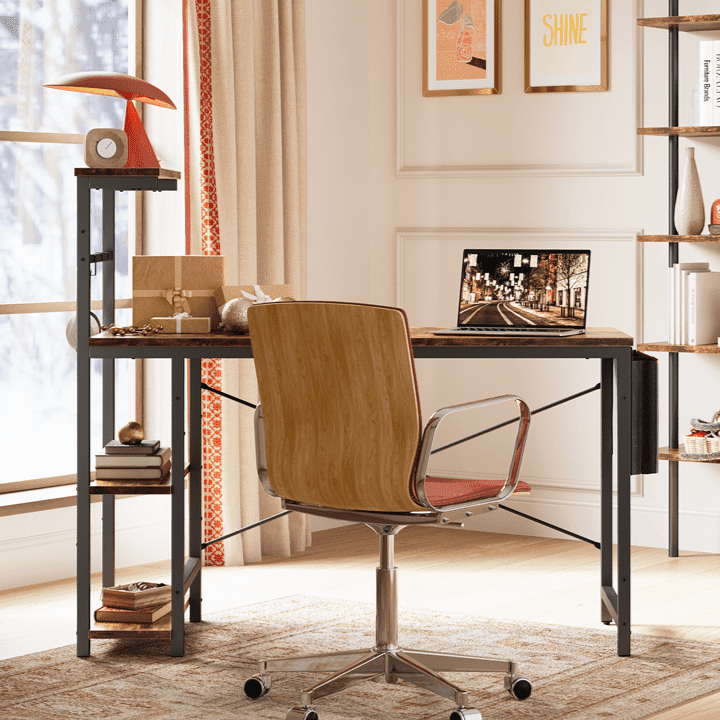
By wrapping around the user, an L-shaped desk provides two distinct zones: one for primary computer work and another for analog tasks, such as note-taking or secondary device management. This separation is crucial for cognitive switching; it allows the brain to associate different physical areas with different types of work. When browsing L-shaped desk collections, look for models that include built-in shelving to further reduce the need for separate storage units.
Logic Summary: We recommend L-shaped configurations because they maximize the "reach zone"—the area a user can access without standing up. This is particularly effective in rooms smaller than 100 square feet where every inch of floor space must be justified.
Maximizing Vertical Real Estate: Storage Strategies for Tight Quarters
When floor space is exhausted, the only remaining frontier is the wall. Vertical storage is not merely about hanging shelves; it is about creating an "active" versus "archival" storage hierarchy. Items used daily should be at eye level or within immediate reach, while seasonal or reference materials move toward the ceiling.

Implementing zone-based layout optimization helps in categorizing these items. For example, a pegboard system above the desk can hold headphones, cables, and stationery, freeing up the desk surface for what matters most: your hands and your hardware. This "clear desk" policy is proven to reduce cortisol levels and improve focus, especially in environments where the workspace is visible from the bed or sofa.
The "Cloffice" Revolution: A Measurement Framework for Success
The closet office, or "cloffice," is the ultimate space-saving maneuver, but it is often executed poorly due to a lack of planning. A successful cloffice requires more than just shoving a desk into a closet; it requires a detailed understanding of ergonomics and clearance.
Before purchasing furniture for closet office setups, use the following measurement framework to ensure the space is actually habitable.
| Measurement Factor | Requirement | Why it Matters |
|---|---|---|
| Minimum Depth | 20–24 inches | Ensures enough room for a monitor and keyboard without cramping your wrists. |
| Leg Clearance | 27–30 inches (height) | Prevents knees from hitting the desk underside while seated in an ergonomic chair. |
| Door Swing | 36 inches (radius) | If using a standard door, ensure it doesn't hit your chair or block entry. |
| Elbow Room | 30 inches (width) | Minimum width to avoid feeling "boxed in" and to allow for natural arm movement. |
Logic Summary: These measurements are based on standard BIFMA (Business and Institutional Furniture Manufacturers Association) ergonomic guidelines adjusted for residential constraints. If your closet is shallower than 20 inches, consider a "floating" desk or a keyboard tray to reclaim depth.
Indoor Environmental Quality: Safety and Comfort in Small Offices
A critical, yet often overlooked, aspect of small space design is the air you breathe. Small rooms have less air volume, meaning that pollutants can reach higher concentrations more quickly. This is especially true for furniture made from engineered wood, which can emit formaldehyde if not properly regulated.
When selecting pieces from home office furniture collections, it is vital to verify compliance with national safety standards. For instance, the authoritative guide on engineered wood safety standards highlights that CARB Phase 2 and EPA TSCA Title VI certifications are the benchmarks for low-emission products. These standards ensure that the MDF or particle board used in your desk won't compromise your health during long work sessions.
Acoustic Optimization for Small Rooms
Small rooms are notorious for "flutter echoes"—the sharp, ringing sound caused by sound waves bouncing between parallel hard surfaces. To improve audio quality for video calls:
- Introduce Soft Textures: Rugs, heavy curtains, or even a bookshelf filled with books can act as natural diffusers.
- Strategic Padding: Place acoustic foam or felt panels at "first reflection points"—the spots on the wall directly to your left and right when seated.
Lighting for Dual-Purpose Spaces
In a small room that serves as both a bedroom and an office, lighting must be adaptable. Avoid a single overhead light, which creates harsh shadows. Instead, use a "three-point" approach:
- Task Light: A dedicated desk lamp with adjustable color temperature (3000K for evening, 5000K for focus).
- Ambient Light: Soft, indirect light to reduce eye strain.
- Accent Light: LED strips behind the desk or monitor to provide "bias lighting," which improves perceived screen contrast and reduces fatigue.
The Psychology of Small Workspaces: Maintaining Focus and Boundaries
Working in a confined space can lead to a "cabin fever" effect, where the boundaries between professional and personal life blur. To combat this, you must implement physical and psychological "fences."
If your office is in your bedroom, use a folding screen or a tall plant to hide the desk from view when the workday ends. This visual "off-switch" is essential for sleep hygiene. Additionally, consider corner desk solutions for studio apartments that allow you to face away from the rest of the room, creating a "micro-environment" dedicated solely to work.
Logic Summary: Environmental psychology suggests that "enclosure" can actually aid focus by reducing peripheral distractions. However, this only works if the enclosure feels intentional and organized, rather than cluttered and cramped.
FAQ
How do I choose the best desk for a small bedroom without it feeling cluttered? The key is to look for a desk with a "light" visual footprint, such as those with thin metal frames or open shelving. An L-shaped desk placed in a corner often feels less intrusive than a straight desk jutting out into the middle of a wall. Additionally, choosing a desk color that matches your wall color can help the furniture "blend in" and make the room feel more spacious.
Are L-shaped desks better than straight desks for productivity? In small spaces, L-shaped desks are generally superior because they provide more surface area per square foot of floor space. They allow for a "cockpit" style setup where everything is within arm's reach. However, if your room has very narrow walkways, a slim straight desk might be necessary to maintain safe traffic flow.
What are the most important safety standards for home office furniture? The most critical standards are CARB Phase 2 and EPA TSCA Title VI, which regulate formaldehyde emissions in engineered wood products. In small rooms with limited ventilation, these standards are essential for maintaining healthy indoor air quality. Always check for these certifications when purchasing desks or shelving made from MDF or particle board.
How can I manage cables in a tiny office setup? Cable management is vital in small spaces because "cable spaghetti" creates visual clutter that makes a room feel smaller. Use desks with built-in cable grommets or power strips mounted to the underside of the desk. Cable sleeves and J-channels can also hide wires running down desk legs, keeping the floor clear and easy to clean.
Can I fit a dual-monitor setup in a small apartment office? Yes, but you must think vertically. Use a dual-monitor arm that clamps to the back of the desk to free up the surface area underneath the screens. Alternatively, an L-shaped desk provides the necessary depth and width to accommodate two monitors while still leaving room for a laptop or notebook on the side wing.
What is the best way to light a small home office? Avoid relying solely on a single overhead light. Instead, use a combination of natural light from a window, a dedicated LED task lamp for your desk, and bias lighting (LED strips) behind your monitor. This layered approach reduces eye strain and prevents the "cave" feeling often associated with small, poorly lit rooms.
References
Government / Standards / Regulators
- California Air Resources Board (CARB): Formaldehyde Emission Standards for Composite Wood Products
- Environmental Protection Agency (EPA): Formaldehyde Emission Standards for Composite Wood Products Act (TSCA Title VI)
- Occupational Safety and Health Administration (OSHA): Computer Workstations eTool - Ergonomics
Industry Associations / Research Institutes
- BIFMA: Ergonomics and Furniture Standards
- Illuminating Engineering Society (IES): Lighting for Outdoor and Indoor Environments
- Acoustical Society of America: Room Acoustics and Noise Control
Platform Official Docs & Policies
- Bestier Safety & Compliance: Engineered Wood Safety: A Comprehensive Guide to CARB & TSCA Standards
Community (Intent only; not authoritative)
- Reddit r/HomeOffice: Discussions on Small Space Layouts and Cloffice Hacks (Intent discovery only)
- Reddit r/Workspaces: Visual Inspiration for Minimalist and Compact Setups (Intent discovery only)
