
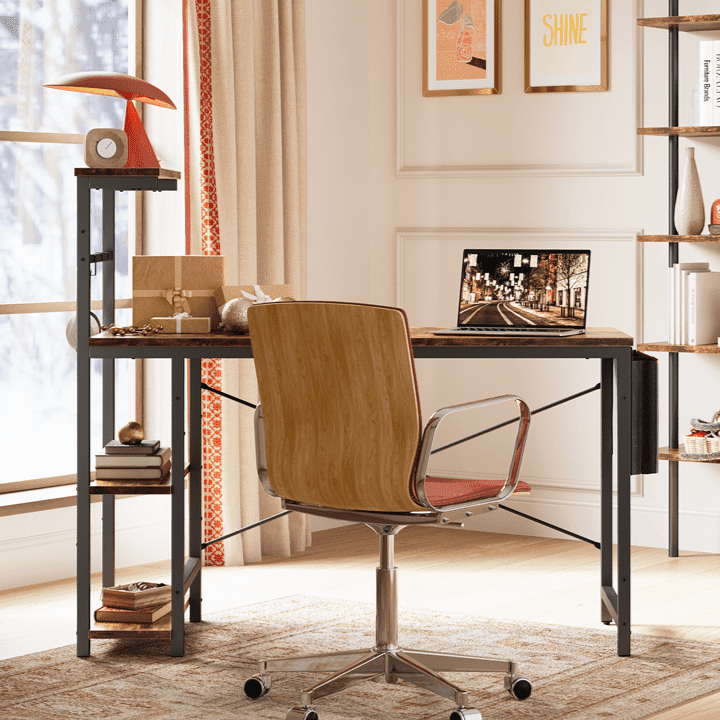
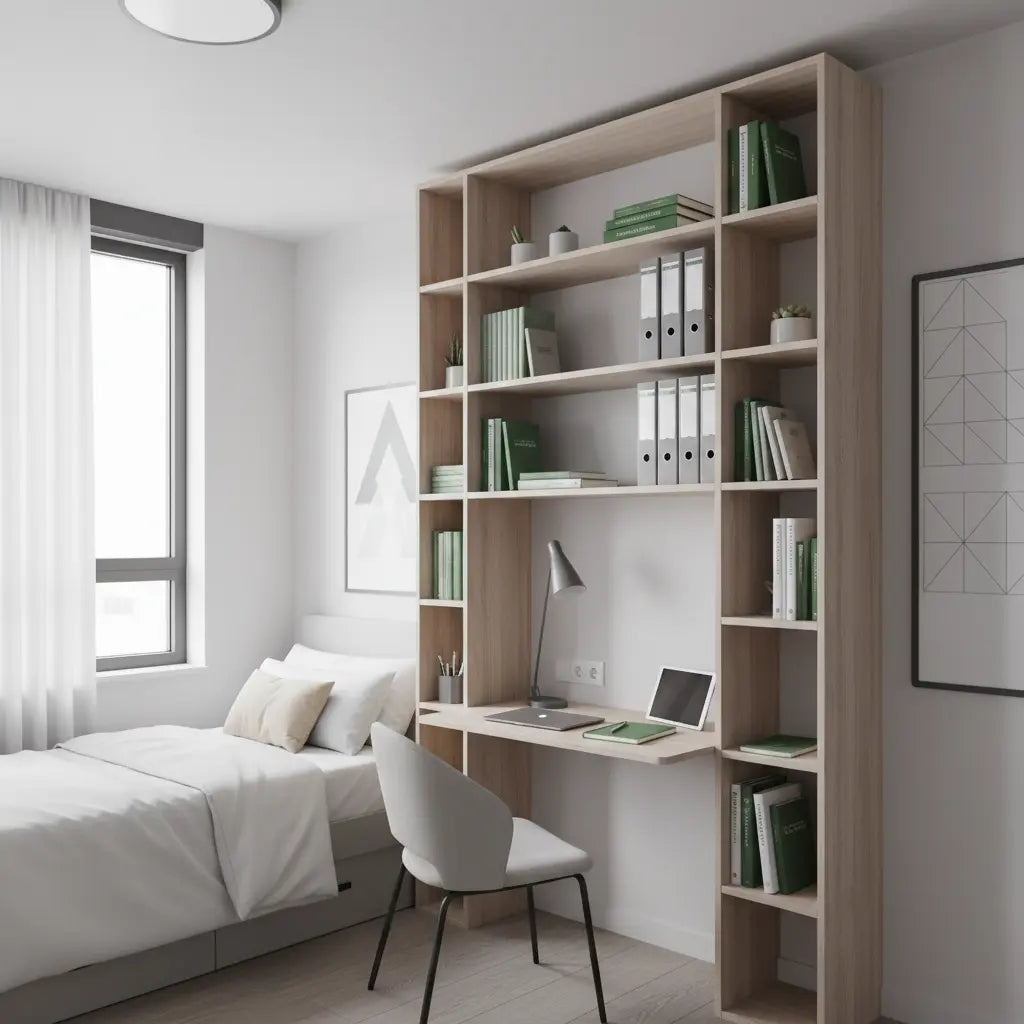
Dorm rooms rarely offer enough floor space for a full desk, separate shelving, and storage all at once. A shelf-desk hybrid can combine study space, vertical storage, and light organization into one compact footprint, making it a practical choice for many students when the room dimensions support it.
Why Vertical Storage Matters in Dorm Rooms
College dorms are famous for tight layouts. Many halls provide basic furnishings such as a bed, desk, chair, dresser, or bookshelf, but the exact combination and available space vary significantly by residence hall. This variation means students should always verify their specific room dimensions before purchasing new furniture. As official housing guidance from Texas Tech University explains, room dimensions and furnishings vary by hall, so measuring first prevents buying something that simply will not fit.
The core challenge is not just limited square footage but the need to support multiple daily functions. Students often require a place to study, game, charge devices, and store snacks or supplies without turning the room into an obstacle course. A shelf-desk hybrid addresses this by stacking storage above or beside a work surface, freeing up floor area that would otherwise be occupied by separate pieces.
Some residence halls also use built-in or non-movable furniture, which further restricts reconfiguration. In these cases, a vertical unit that works around fixed elements can be more practical than trying to add standalone shelves and a desk. However, the solution only works when the chosen piece respects the room's actual clearances.

When Shelf-Desk Hybrids Make Sense
Shelf-desk hybrids tend to shine in very small dorms or studio apartments where floor space is the primary constraint. They allow students to keep books, peripherals, snacks, and gaming gear within arm's reach while maintaining a usable work surface. This multi-function capability is especially valuable during back-to-school season or exam periods when clutter can quickly overwhelm limited space.
Budget-conscious students and parents often look for compact computer desks or small desks for apartments that deliver storage without breaking the bank. A hybrid design can reduce the need for multiple purchases, helping keep costs down while creating an organized appearance. That said, the added shelves do not automatically solve every organization issue. Clutter can simply migrate upward if daily habits do not support the layout.
Ergonomics remain important regardless of the furniture style. Workstation setup can influence comfort and reduce musculoskeletal strain during long study or gaming sessions. Official resources like the USDA ergonomics program note that proper desk height, monitor placement, and posture matter in any computer workstation. Monitor risers or arms can help reclaim desktop real estate in tight setups, as described in Berkeley Lab's ergonomics guidance.
Scenario Comparison: Hybrid vs Standard Desk
The best choice depends heavily on the specific room and usage pattern. A shelf-desk hybrid is often preferable when floor space is extremely limited and the student needs integrated storage for study materials, snacks, or gaming accessories. It performs well in shared housing or micro-apartments where every inch must serve multiple purposes.
Conversely, a standard dorm room desk plus separate shelving may be better when the room has slightly more clearance or the student prioritizes a larger uninterrupted work surface for long study blocks. If ergonomics or frequent rearrangement matter more than consolidated storage, separating the pieces usually provides more flexibility.
Here is a heuristic visualization to help map your own situation:
Dorm Fit Heuristic: Shelf-Desk Hybrid vs Standard Desk
Dorm Fit Heuristic: Shelf-Desk Hybrid vs Standard Desk chart.
View chart data
| Series | Tight floor space fit | Vertical storage need | Ergonomics priority | Long study sessions | Scenario flip risk |
|---|---|---|---|---|---|
| Shelf-desk hybrid | 5.0 | 5.0 | 2.0 | 2.0 | 4.0 |
| Standard desk | 2.0 | 2.0 | 5.0 | 5.0 | 1.0 |
Heuristic guide built from the provided scenario_matrix and constraint_first_filter modules. Uses relative categories only: tight floor space (<10 sq ft usable), vertical storage need, and ergonomics priority. This is illustrative, not measured; it shows decision thresholds and scenario flips rather than superiority.
This radar chart illustrates relative strengths using heuristic scores. Shelf-desk hybrids score higher on tight floor space and vertical storage needs, while standard desks perform better for ergonomics and extended study sessions. Treat the visualization as a decision aid rather than precise measurements. Actual results depend on your room's layout and personal workflow.
Common Myths About Shelf Desks in Small Spaces
Several misconceptions circulate about vertical furniture solutions for dorms. One widespread claim is that any shelf desk automatically solves small-room organization problems. In reality, added shelves only reduce clutter when the layout matches the room's geometry and the user's daily habits. Without proper placement, vertical storage can create awkward reach patterns or make the workspace feel even more cramped.
Another myth suggests vertical designs are universally superior in any constrained space. The evidence shows they are most useful when floor space is the limiting factor and the hybrid can fit without compromising movement or posture. If the dorm already includes built-in furniture or has slightly more clearance, a simpler compact desk paired with separate shelves may offer better long-term usability.
Many assume that buying a budget desk with shelves guarantees an organized, professional-looking setup. The truth is that organization depends more on how the student uses the space than on the furniture itself. Measuring the room first and planning zones for different activities usually delivers better results than relying on the furniture to fix habits.
How to Choose and Set Up a Shelf-Desk Hybrid
Start by measuring your actual dorm space, including wall length, corner depth, chair clearance, and height to the ceiling or any lofted bed. Housing offices consistently recommend confirming dimensions before major purchases to avoid disappointment.
Next, evaluate your primary needs. If most work involves short study sessions, light gaming, and frequent access to supplies, a hybrid often delivers good value. For extended computer use or multiple monitors, prioritize a design with adequate depth and consider adding a monitor riser to improve viewing height and free surface area.
Look for models that fit common dorm dimensions while offering stable construction. Safety standards for engineered wood products, such as those meeting CARB Phase 2 and TSCA Title VI requirements, are worth checking for better indoor air quality, especially in small shared rooms. Our guide to engineered wood safety and formaldehyde standards provides more detail on what to verify.
Practical checklist before buying
- Confirm your room's exact measurements and any built-in furniture restrictions
- Calculate required chair pull-out space and walking clearance
- Decide whether storage or a larger work surface matters more for your routine
- Check weight capacity if you plan to place monitors, printers, or heavier items
- Evaluate cable management and power access for devices and gaming setups
- Consider whether the finish and height complement existing dorm furnishings
Improper workstation setup can create discomfort over time, so take a moment to assess posture once the desk is in place. Resources from state labor departments like Maine.gov emphasize evaluating and adjusting computer stations to reduce hazards.

Related Solutions for Small-Space Living
Students interested in corner placements may find value in exploring small corner desk with shelves arrangements that utilize otherwise dead space. For broader inspiration, review our ultimate guide to multi-functional furniture that covers vertical storage and space optimization strategies suitable for 2026 dorms and apartments.
Gamers looking for compact options should check small gaming desk ideas for studio apartments and dorms that incorporate storage without sacrificing style or function. Budget shoppers can compare features in our overview of budget gaming desks under $200.
For those prioritizing focus, consider ADHD-friendly desk setup principles that emphasize visual organization and zoning within limited space. Additional ideas appear in small space furniture solutions that highlight corner utilization.
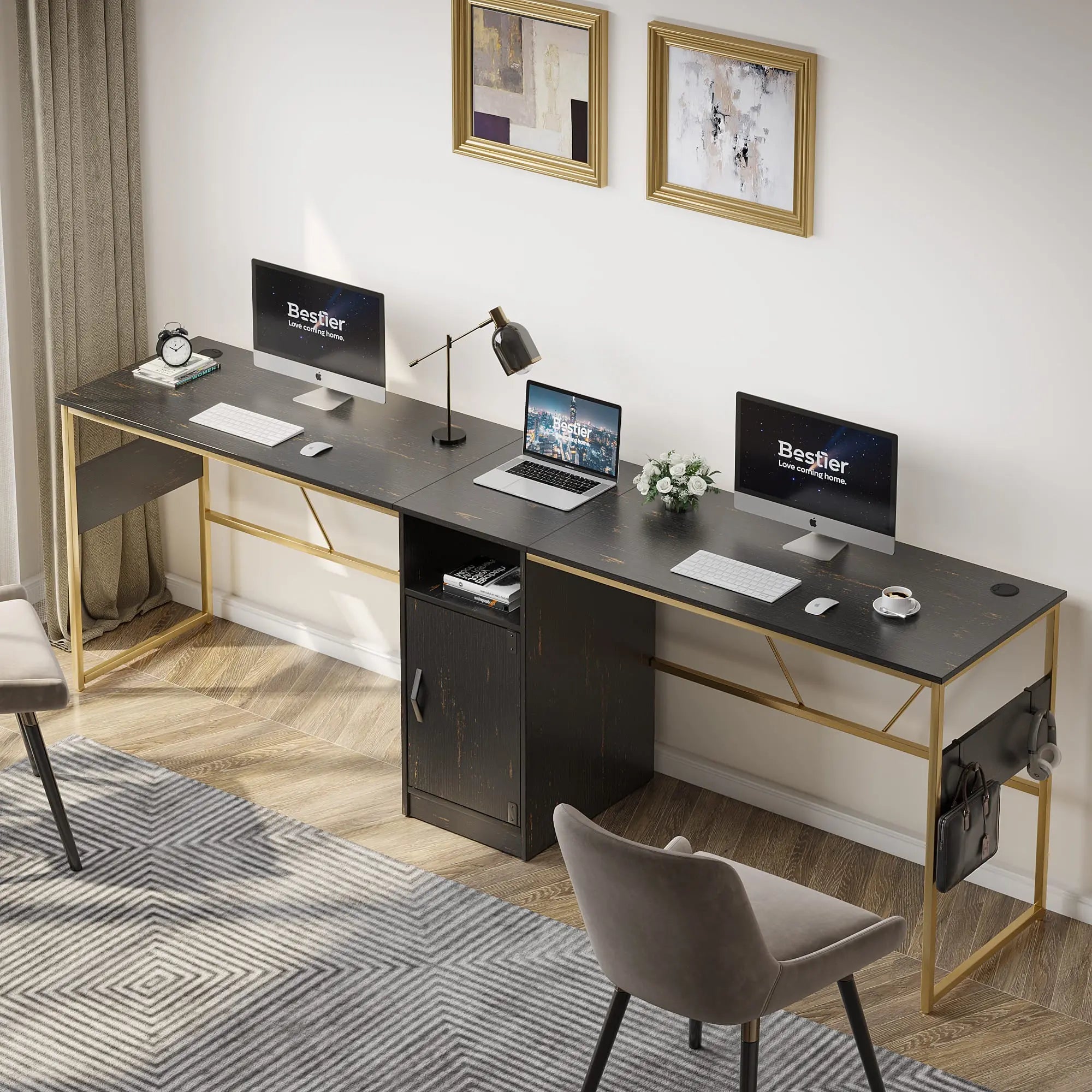
If you are shopping for a specific model, the Bestier 42" Reversible L-Shaped Gaming Desk offers integrated power outlets, LED lighting, storage shelves, and hooks that can adapt well to many dorm or bedroom layouts.
Final Thoughts
Shelf-desk hybrids can be an effective way to create a functional study and storage zone in cramped dorm rooms, particularly when floor space is tight and multiple activities share the same area. Their success depends far more on accurate room measurements, realistic expectations about ergonomics, and thoughtful placement than on the furniture category alone. By measuring first, matching the design to your actual workflow, and setting up with basic ergonomic principles in mind, you can build a vertical workspace that supports studying, gaming, and daily needs without overwhelming your room.
This article discusses comfort and setup considerations only. It does not constitute medical advice, diagnosis, or treatment. If you experience persistent discomfort or have existing health conditions, consult a qualified professional.
Remember that dorm layouts vary widely, so the hybrid that works beautifully for one student may feel constraining for another. Focus on your room's specific constraints and your personal study habits to make the right choice for your space.
